
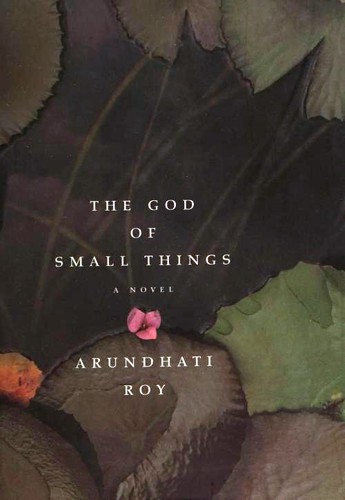
The God of Small Things
Arundhati Roy · b. 1961 · India
Why it matters
Twins in Kerala, a drowned cousin, and a forbidden love punished by the 'Love Laws', told in backwards loops and invented words. A Booker-winning debut of ferocious originality; caste as the machinery of heartbreak.
At a glance
Nonlinear timeline and invented, child's-eye language require careful piecing-together.
Deep dive
Why Arundhati Roy tells you exactly how the story ends in her opening pages, and what that foreknowledge does to the grief that follows.
Written for readers who have finished the book. No plot recap, and nothing here is safe to read first.
Themes & symbolism
The "Love Laws" — Roy's own phrase for the codes that decide "who should be loved, and how, and how much" — are the real subject, and caste is where they're enforced most violently: Velutha, an untouchable Paravan carpenter, and Ammu, a divorced upper-caste woman, cross a line the entire social order exists to police, and the machinery that destroys them for it — Baby Kochamma's jealousy dressed as propriety, a police force that beats a man to death for a crime of desire, a family that lets a child's false accusation stand because the truth is unbearable — is presented as foregone well before it happens. Roy tells the reader in the opening chapter that Sophie Mol will drown and Velutha will die; the novel isn't generating suspense about what happens, it's generating dread about how, circling the same handful of days from a dozen angles until the full mechanism of an already-known catastrophe comes into focus.
Pappachi's moth — a new species he identified but was never credited for naming, which becomes for Roy a private image of dread, settling on people's hearts at the story's worst moments — sits opposite the novel's title concept: a "god of small things," the counter-deity of ordinary desire and pleasure that has no chance against History and its big, hot days of caste and property. Rahel and Estha, "two-egg twins" who feel and think as a single divided consciousness, are the novel's clearest casualty of that asymmetry — separated for over twenty years by a trauma neither can speak about, they return as adults and, wordlessly, become lovers, an act the novel refuses to romanticize or condemn, framing it instead as two shattered halves of one person reaching for the only intimacy that predates the catastrophe.
A Story Told Out of Order
Roy structures the novel as a spiral rather than a line, jumping between 1969 and the twins' adult reunion and revealing the ending's key facts — Sophie Mol's death, Velutha's — within the first chapter, then spending the rest of the book filling in how and why. That achronology isn't a puzzle to be solved so much as an argument about how trauma is actually experienced: not as a single blow but as an event the mind keeps returning to from new angles, each pass adding detail the earlier ones couldn't bear to include, until the final chapter can finally show the very beginning of what caused it all.
A Child's Grammar for Unspeakable Things
The novel's invented, backwards, capitalized language — the twins read familiar words in reverse and turn ordinary phrases into Important Things by capitalizing them mid-sentence — belongs to Rahel and Estha's child's-eye consciousness, a private vocabulary built to hold experiences too large for ordinary syntax. Roy, who trained as an architect, treats prose structure the same way she treats the plot's structure: fracturing conventional grammar to mirror fractured understanding, so the reader processes Sophie Mol's funeral or Velutha's beating through the same defensive, associative logic a traumatized seven-year-old would use to survive witnessing it.
The last seal: what actually happens, and why it lands the way it does.
The ending, explained
The novel's actual final chapter loops back past everything the book has already shown us and lands on the very beginning: the first night Ammu and Velutha become lovers, meeting secretly by the river after years of unspoken feeling. Roy narrates their first touch with unguarded tenderness — two people briefly outside the Love Laws that will kill one of them and ruin the other within weeks. The chapter, and the novel, ends on Velutha's single whispered word to Ammu: "Naley" — Malayalam for "tomorrow." Because the reader already knows everything that tomorrow holds — the accusation, the police, the death, the banishment — the word lands as pure dramatic irony, hope and catastrophe folded into one syllable. Roy refuses to end on the violence itself, choosing instead to leave her characters at the one unguarded moment before History arrives to collect its due.
Where to go next
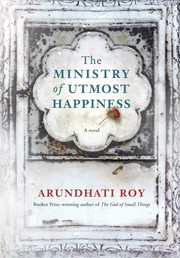 Arundhati Roy · 2017The Ministry of Utmost HappinessLvl 7Slow burn
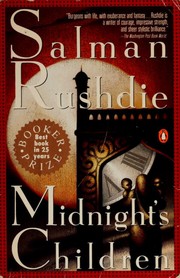 Salman Rushdie · 1981Midnight's ChildrenLvl 8Medium pace
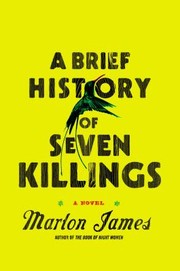 Marlon James · 2014A Brief History of Seven KillingsLvl 8Fast paced
 Geetanjali Shree · 2018Tomb of SandLvl 8Slow burn
 Rohinton Mistry · 1995A Fine BalanceLvl 4Medium pace
 William Faulkner · 1930As I Lay DyingLvl 9Medium pace