
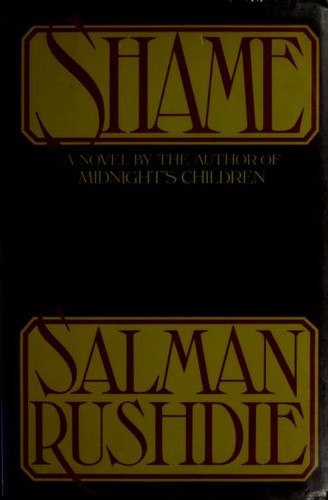
Shame
Salman Rushdie · b. 1947 · India / England
Why it matters
Two entangled families, modeled loosely on Bhutto and Zia, act out honor, humiliation, and revenge in a hallucinatory Pakistan Rushdie insists is 'not quite' the real one. A ferocious political fable written in Midnight's Children's afterglow.
At a glance
Nonlinear, essayistic digressions and a dense political allegory require tracking two intertwined family lines.
Deep dive
A girl born to blush at everything her family would rather not feel grows up beside a boy raised to feel nothing at all, and Rushdie spends the whole novel asking what a country does with the shame it refuses to carry itself.
Written for readers who have finished the book. No plot recap, and nothing here is safe to read first.
Themes & symbolism
Shame and shamelessness structure the whole novel as a pair rather than a spectrum, mapped onto a Pakistan the narrator insists, unconvincingly, on calling a country 'not quite' itself: Omar Khayyam Shakil is raised without any capacity for embarrassment at all, while Sufiya Zinobia, born into the same world, blushes uncontrollably from infancy, absorbing every unfelt humiliation around her into her own body until she can no longer hold it.
Raza Hyder and Iskander Harappa, the pious general and the charismatic populist he topples, track the real careers of Zia-ul-Haq and Zulfikar Ali Bhutto closely enough that the disguise is transparent by design, and Bilquis, Hyder's wife, gets her own recurring image in the Loo, the hot desert wind that once stripped her naked in public and left her permanently veiled, terror translated directly into cloth.
Sufiya's transformation into what the other characters simply call the Beast is Rushdie's most literal device in the book: shame, dammed up across three generations rather than felt and released, doesn't dissipate, it mutates into violence, and the novel insists that a country built on the same repression should expect the same outcome.
Three Mothers, No Shame: Omar Khayyam's Upbringing
Omar Khayyam is raised communally by three sisters, Chhunni, Munnee, and Bunny, who share the role of mother without ever revealing which of them actually bore him, and who deliberately withhold any lesson in shame from his upbringing, producing an adult perfectly suited to become a hypnotist, a seducer, and eventually Sufiya's husband precisely because he feels nothing when other people would. Rushdie makes Omar's shamelessness and Sufiya's excess two halves of the same failed equation, a marriage between a man built with none and a woman carrying everyone else's.
Hyder and Harappa: History Wearing a Thin Disguise
The narrator interrupts the story periodically to insist that this is a country occupying the same physical space as Pakistan but at a slight angle to reality, a fig leaf nobody is meant to believe. The device doesn't hide the target; it makes the concealment itself part of the satire, a history too dangerous to name directly even inside a novel about it.
The last seal: what actually happens, and why it lands the way it does.
The ending, explained
Sufiya's transformation into the Beast culminates in Q., where Omar and Bilquis have retreated with the fallen Raza Hyder to hide from the country's fury. Bilquis dies there of illness before the final confrontation. When Sufiya arrives, she kills Omar, her own husband, while Hyder is killed separately by the vengeance closing in around him, and Rushdie ends the sequence with the house itself destroyed in an explosion that erases the family along with the specific political history, thinly disguised as fiction, it was built to carry. Nothing about it offers relief: shame, dammed up for three generations, finally breaks its banks and takes everyone with it, including the country it was standing in for.
Where to go next
 Salman Rushdie · 1981Midnight's ChildrenLvl 8Medium pace
 Salman Rushdie · 1988The Satanic VersesLvl 9Slow burn
 Salman Rushdie · 1990Haroun and the Sea of StoriesLvl 2Fast paced
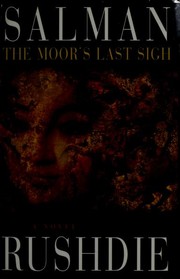 Salman Rushdie · 1995The Moor's Last SighLvl 7Medium pace
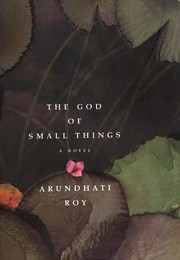 Arundhati Roy · 1997The God of Small ThingsLvl 7Slow burn
 Gabriel García Márquez · 1967One Hundred Years of SolitudeLvl 6Medium pace