
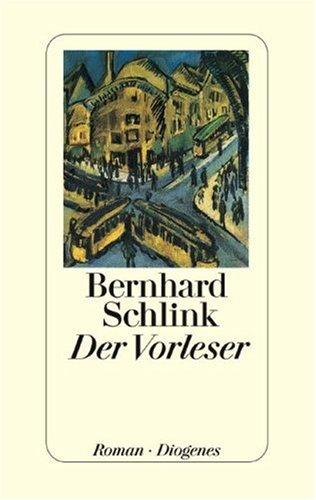
The Reader
Bernhard Schlink · b. 1944 · Germany
Originally Der Vorleser (German) · translated by Carol Brown Janeway
Why it matters
A teenage boy's affair with an older woman resurfaces years later when he discovers her hidden wartime role and her illiteracy. A postwar German generation's reckoning with inherited guilt, rendered as intimate confession.
At a glance
Plain, restrained confessional prose accessible on a first read.
Deep dive
The secret Michael keeps for Hanna at trial is the real crux of the book — and why extending sympathy to her is the novel's most argued-over choice.
Written for readers who have finished the book. No plot recap, and nothing here is safe to read first.
Themes & symbolism
Hanna's illiteracy retroactively reorganizes everything that precedes its reveal: the reading ritual with the teenage Michael wasn't a quirky prelude to sex but the entire relationship's real content, a way for her to access literature without exposing what she considered a disqualifying shame. That shame turns out to outrank her own legal defense. At trial, rather than admit she can't read or write — which would prove she couldn't have authored the incriminating report the prosecution pins on her, and would likely reduce her sentence relative to co-defendants who let her absorb blame that was properly theirs — she accepts a harsher verdict. Schlink is deliberately not asking readers to forgive the church-fire atrocity; he's isolating a stranger question, of how a personal, unrelated shame can override even a war criminal's instinct for self-preservation, and forcing Michael, who alone recognizes the tell, to decide whether outing her secret to soften her sentence would be a mercy or another violation.
Michael functions as a stand-in for the postwar German generation raised by people who might have been complicit, and the novel refuses him — and the reader — an easy resolution. His silence about Hanna's illiteracy is never validated as clearly right, only depicted as the choice he actually makes and has to live with, which is the book's larger point about inherited guilt: it isn't atoned for in a single decisive act but carried forward, ambivalently, into ordinary adult life, disfiguring Michael's later relationships and his sense of his own capacity for love.
The risk of a sympathetic perpetrator
The novel's most contested move is refusing to make Hanna legible as a monster. She is guarding a shame we can all recognize — the fear of being caught illiterate — right alongside guilt for a genuine wartime atrocity, and Schlink lets those two facts sit in the same body without resolving their disproportion. Critics have pushed back hard on this, arguing that illiteracy functions almost as an alibi for the reader's sympathy, softening a former camp guard into someone whose worst secret feels, moment to moment, more like the shame than the killing. The novel doesn't fully answer the objection; it stages it, deliberately, as the discomfort Michael himself can't shake.
The last seal: what actually happens, and why it lands the way it does.
The ending, explained
Long after the trial, Michael begins mailing Hanna, now serving a life sentence, cassette tapes of himself reading aloud — reviving their old ritual without a single accompanying word of his own. Using the tapes against library books, Hanna teaches herself to read and write, eventually sending back halting notes in her own hand. As her release nears, Michael visits her in prison for the first time since the trial and finds a diminished old woman he can no longer square with either the lover or the defendant he remembers; he agrees, uneasily, to arrange her release housing. She hangs herself the night before her release, leaving her savings not to Michael but to the daughter of a woman who survived the church fire — a final gesture of acknowledgment more direct than anything she offered in court.
Where to go next
 Heinrich Böll · 1974The Lost Honour of Katharina BlumLvl 4Fast paced
 Günter Grass · 1959The Tin DrumLvl 8Medium pace
 Jenny Erpenbeck · 2015Go, Went, GoneLvl 5Medium pace
 Elfriede Jelinek · 1983The Piano TeacherLvl 7Slow burn
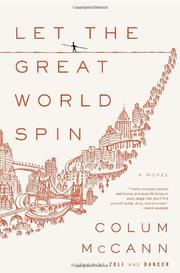 Colum McCann · 2009Let the Great World SpinLvl 5Medium pace
 Daniel Kehlmann · 2005Measuring the WorldLvl 4Fast paced