
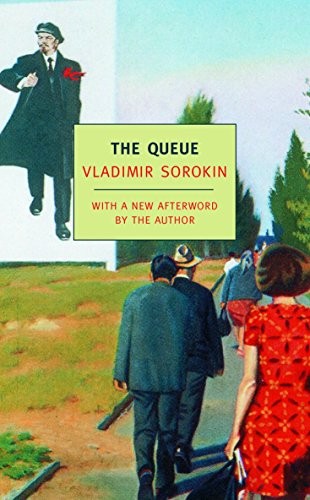
The Queue
Vladimir Sorokin · b. 1955 · Russia
Originally Очередь (Russian)
Why it matters
An entire novel told only in overheard fragments of dialogue among people waiting in an endless, purposeless Soviet queue. Sorokin's formally radical debut, a portrait of late-Soviet life built from pure voice.
At a glance
Composed entirely of unattributed dialogue fragments, with no narration to orient the reader.
Deep dive
An entire novel made only of overheard voices in an endless Soviet line, and nobody in it, including the reader, ever quite finds out what's actually being sold.
Written for readers who have finished the book. No plot recap, and nothing here is safe to read first.
Themes & symbolism
Sorokin builds the whole novel out of unattributed dialogue fragments, snatches of small talk, flirtation, gossip, and bureaucratic rumor overheard as an anonymous crowd waits, shifts, thins overnight, and swells again for a shipment of some unnamed consumer good, with no narrator ever stepping in to identify a speaker, describe a face, or confirm what exactly the line has formed for. That absence is the novel's whole method: late-Soviet scarcity produced a culture so organized around the physical act of queueing that the object at the end of the line became almost beside the point, waiting itself the actual, exhausting, socially binding activity, and Sorokin strips away everything except the voices that activity generates to prove it.
Individual speakers surface just long enough to become recognizable by verbal habit rather than name, a flirtation between two people who keep finding each other at different points in the line develops entirely through their overheard exchanges, and Sorokin lets small human warmth, jokes, petty grievances, tentative romance, thread through hours of collective tedium without ever granting the reader the narrative comfort of a stable cast list. The form is a formal dare as much as a satire: a novel that refuses interiority, description, and attribution is also refusing the state's own preferred narrative mode, the confident authorial voice explaining what its citizens should think about their own conditions.
A Debut That Announced a Method
Sorokin wrote The Queue in 1983 and it circulated first in samizdat and then in a Paris edition well before he could publish inside the Soviet Union at all, establishing on his very first novel the conceptualist habit of borrowing an official or vernacular form wholesale and following its logic to an extreme his later, more openly grotesque fiction would keep returning to. The dialogue-only technique never recurs quite this purely again in his work, but the underlying method, letting a form speak for itself until its own absurdity becomes visible, defines everything Sorokin wrote afterward, from the ritualized bureaucratic language of his dystopias to the culinary and sexual taboos of his later, more explicitly grotesque novels. Even readers who find those later books shocking tend to trace their technique back to this quieter, funnier debut, where the joke is simply that Soviet life had already organized itself into a script nobody needed to embellish.
Where to go next
 Vladimir Sorokin · 2006Day of the OprichnikLvl 5Fast paced
 Viktor Pelevin · 1992Omon RaLvl 5Fast paced
 Georgi Gospodinov · 2020Time ShelterLvl 6Medium pace
 Ludmila Ulitskaya · 2010The Big Green TentLvl 5Medium pace
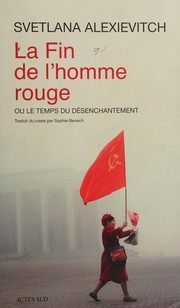 Svetlana Alexievich · 2013Secondhand TimeLvl 4Medium pace
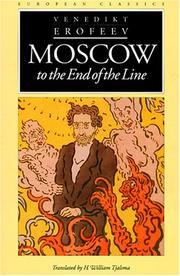 Venedikt Yerofeev · 1970Moscow-PetushkiLvl 7Fast paced