

The Big Green Tent
Ludmila Ulitskaya · b. 1943 · Russia
Originally Zelyony Shatyor (Russian)
Why it matters
Three Moscow schoolboys grow up through samizdat, informers, and small acts of courage in the late Soviet decades. Ulitskaya maps the moral weather of dissident life through the endurance of friendship.
At a glance
A large ensemble cast and nonlinear, interlocking timelines require careful tracking.
Deep dive
Three Moscow schoolboys, bound together by one teacher's underground reading list, spend the rest of their lives finding out what different kinds of courage under the same regime actually cost.
Written for readers who have finished the book. No plot recap, and nothing here is safe to read first.
Themes & symbolism
Ilya, Sanya, and Mikha meet as boys in a Moscow school not long after Stalin's death, drawn together by a literature teacher who quietly introduces them to poetry and books the state has no interest in them reading, and Ulitskaya builds the whole novel outward from that friendship rather than around a single protagonist, cutting away for entire chapters into the lives of friends, lovers, and near-strangers who orbit the three men across the following decades. The mosaic structure is itself an argument about how dissent actually worked under late Soviet rule: not through a handful of famous names but through a dense, mostly anonymous web of people passing samizdat, sheltering the vulnerable, and taking small risks that rarely made anyone a hero and often cost them everything anyway.
The title comes from a folk tale about a great green tent in the sky that shelters every soul, offered to the boys as a child's way of processing Stalin's death, and Ulitskaya returns to the image across the book as a form of ironic comfort: a fiction sturdy enough for children to survive on, useless as actual protection from what the state can still do to any one of them individually. Ilya's documentary photography, Sanya's musical ambitions cut short by an injury, and Mikha's fierce, unguarded idealism represent three different postures toward the same pressure, and the novel's real interest is in showing how little any of those postures, courage, compromise, or retreat, actually determines who survives a system built to grind down all three equally.
Mikha and the Price of Being Unable to Compromise
Of the three friends, Mikha is the one temperamentally incapable of the small daily accommodations that let the others get by, and it's Mikha the KGB eventually targets for recruitment as an informant against his own circle, using the leverage of his precarious teaching job and his outsider status as a Jewish orphan raised on state charity. Ulitskaya doesn't stage his refusal as a triumphant act of dissident heroism; it reads instead as the simple incapacity of a man who was never built to perform the compromises everyone around him has already learned to make, and the novel treats that incapacity as tragic rather than admirable, a trait every bit as consequential and unchosen as talent.
The last seal: what actually happens, and why it lands the way it does.
The ending, explained
Pressured past what he can absorb, Mikha is driven to his death rather than becoming the informant the KGB wants, and Ulitskaya lets the loss ripple outward through the surviving mosaic of characters rather than closing on it directly, several more chapters carry other lives forward as though the novel itself is refusing to let one friend's death become its single center of gravity. Ilya and Sanya both go on, changed but intact, into the freer, messier decades after the union's collapse, and the novel's last notes are elegiac rather than vindicating: the system that could not be defeated by any of the three friends individually eventually dissolved anyway, on its own schedule, too late to have spared the one of them least equipped to wait it out.
Where to go next
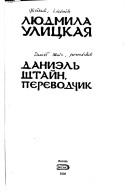 Ludmila Ulitskaya · 2006Daniel Stein, InterpreterLvl 6Medium pace
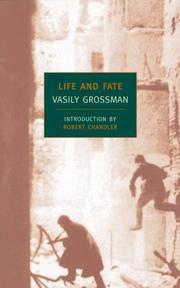 Vasily Grossman · 1980Life and FateLvl 7Medium pace
 Vladimir Sorokin · 2006Day of the OprichnikLvl 5Fast paced
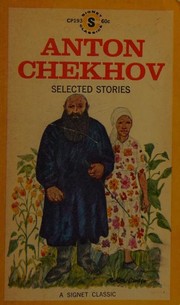 Anton Chekhov · 1899Selected StoriesLvl 4Medium pace
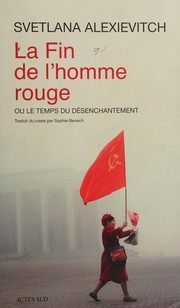 Svetlana Alexievich · 2013Secondhand TimeLvl 4Medium pace
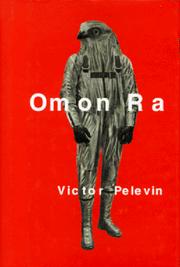 Viktor Pelevin · 1992Omon RaLvl 5Fast paced