
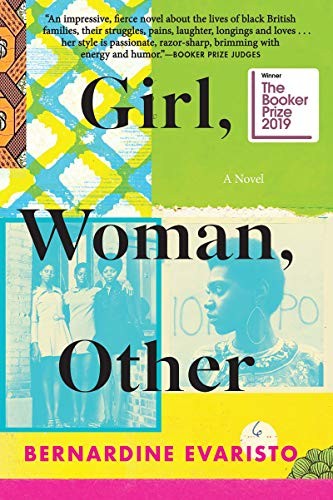
Girl, Woman, Other
Bernardine Evaristo · b. 1959 · England
Why it matters
Twelve interlinked lives (Black British women and one nonbinary character, spanning a century and every class) converge on one London opening night. The 2019 Booker winner, told in warm, unpunctuated 'fusion fiction' that reads like talk and scans like verse.
At a glance
No full stops and twelve protagonists, but the verse-prose flows conversationally.
Deep dive
Why Evaristo builds an entire novel's politics into its punctuation — or the lack of it — and what letting twelve wildly different women narrate without hierarchy is actually arguing for.
Written for readers who have finished the book. No plot recap, and nothing here is safe to read first.
Themes & symbolism
Evaristo's 'fusion fiction' — unpunctuated, lowercase-heavy prose that breaks like verse but reads like speech — is itself a political choice as much as a stylistic one: standard punctuation and capitalization carry an implicit authority the novel wants to redistribute, letting each of its twelve narrators' voices arrive with equal formal weight regardless of class, generation, or how much cultural capital they'd be granted in a more conventionally punctuated book. The twelve lives, spanning roughly a century of Black British women's (and one nonbinary person's) experience, deliberately refuse to cohere into a single representative story — Evaristo is arguing against the flattening expectation that any one character could stand in for a whole community's experience, insisting instead on irreducible difference across class, sexuality, politics, and generation.
The opening-night play that draws several narrators together functions as more than a convenient plot device — it's a staged occasion for exactly the kind of communal visibility the novel itself is performing on the page, Black British women's lives finally granted a shared spotlight rather than isolated, single-story treatment. Amma, the playwright at the novel's center, gives the book its clearest self-portrait: a woman who spent decades on the margins of British theatre finally reaching its mainstream center, without the novel pretending that arrival resolves every tension it took to get there.
Fusion Fiction as Democratic Form
Evaristo has described her invented form as deliberately porous between poetry and prose, built to carry oral rhythms and multiple registers — code-switching, generational slang, formal English — without hierarchy between them. The absence of full stops keeps sentences running into each other the way thought and speech actually do, refusing the reader the usual pauses that tell you which observation matters most; every detail arrives with the same unbroken momentum, democratizing attention across a huge cast the way the book's politics democratizes whose stories count as central.
The Epilogue's Hidden Threads
The novel's closing pages pull back to reveal genealogical and personal connections between several of the twelve narrators that none of the characters themselves fully register during the main narrative — hidden threads of family and history linking generations who've been treated, for most of the book, as entirely separate stories. The device retroactively reframes the whole novel's structure: what read as twelve discrete portraits turns out to have been a single, widely dispersed family history all along, without the book ever forcing that connection into the characters' own conscious awareness.
Where to go next
 Alan Hollinghurst · 2004The Line of BeautyLvl 5Slow burn
 Linda Grant · 2000When I Lived in Modern TimesLvl 5Medium pace
 Rose Tremain · 2007The Road HomeLvl 3Medium pace
 Zadie Smith · 2000White TeethLvl 5Medium pace
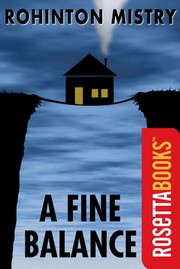 Rohinton Mistry · 1995A Fine BalanceLvl 4Medium pace
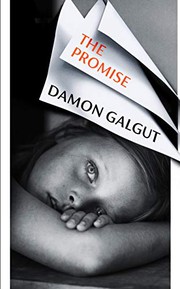 Damon Galgut · 2021The PromiseLvl 6Medium pace