
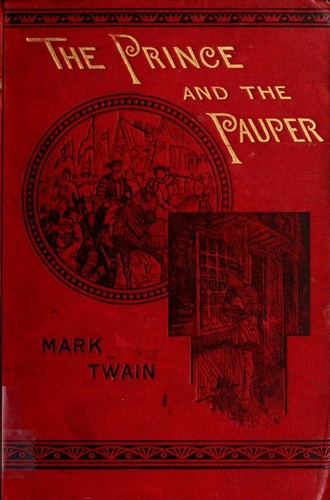
The Prince and the Pauper
Mark Twain · 1835–1910 · USA
Why it matters
A Tudor prince and a beggar boy who look identical swap places on a lark and can't swap back, each discovering the other's world is crueler than imagined. Twain's identity-swap fable makes class itself the costume.
At a glance
Simple period prose and a clear dual plot aimed at a broad readership.
Deep dive
What a Tudor prince learns about his own kingdom once a game of trading clothes with a beggar boy strands him, unrecognized, among the subjects his own laws are busy punishing.
Written for readers who have finished the book. No plot recap, and nothing here is safe to read first.
Themes & symbolism
Tom Canty, a pauper boy from Offal Court who has spent his childhood fantasizing about princes, and Edward Tudor, heir to Henry VIII, meet by chance, swap clothes as a lark, and discover neither can swap back once the world outside has already decided which of them is which: Tom is trapped inside a royal court that assumes he's simply gone mad, and Edward is cast out into a London his own future laws will go on enforcing against people exactly like the ones now refusing to believe he's the king.
Twain sends Edward through the underside of his own kingdom, whipping posts, debtors' prisons, executions handed down for petty theft, a vicious internal hierarchy among the thieves and beggars who've built their own brutal order out of shared desperation, turning a children's fable into a fairly direct piece of social protest: the boy who will eventually write the laws first has to survive being punished by them. Tom, meanwhile, coached by a sympathetic clerk into performing kingliness convincingly, governs well enough that the novel lets a reader wonder, without ever quite saying so, whether the pauper might make the better monarch.
The Great Seal as a Nutcracker
The Great Seal of England, the one object that could prove Edward's identity beyond argument, sits forgotten through most of the novel because Edward himself used it, before the swap, to crack nuts, and its recovery becomes a running joke that doubles as a serious point: the physical trappings of royal authority mean nothing at all once the people who hold them have forgotten what they were ever for.
Tom, meanwhile, mistaken for mad whenever he tries to explain the swap honestly, learns fast that the palace rewards a confident performance of kingship far more than it rewards the truth, and Twain lets that lesson sit uncomfortably close to the novel's larger argument about Edward: a throne, like the Seal itself, cares less what a person actually is than what they can be made to convincingly resemble.
The last seal: what actually happens, and why it lands the way it does.
The ending, explained
At the coronation meant to crown Tom, who has been coached through the deception by the loyal soldier Miles Hendon and a handful of insiders, the real king shoulders his way into the abbey, and Tom, rather than pressing the advantage of a throne he's just about to legally receive, immediately steps aside and backs Edward's claim. Edward proves himself by recalling exactly where the missing Great Seal was left, is crowned, and rules afterward with a mercy his father's court never modeled, softening sentences he now understands from having served time under them himself, and rewarding rather than punishing Tom and Miles Hendon for their part in the deception. Twain closes on the fable's central wish granted outright: that suffering, undergone by precisely the right person, can be converted directly into better government, a claim the book's grimmer chapters never quite earn but which its fairy-tale frame lets him grant anyway.
Where to go next
 Mark Twain · 1876The Adventures of Tom SawyerLvl 3Fast paced
 Mark Twain · 1883Life on the MississippiLvl 4Medium pace
 Mark Twain · 1884Adventures of Huckleberry FinnLvl 5Fast paced
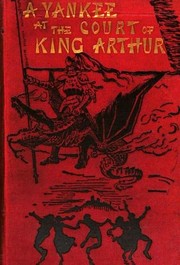 Mark Twain · 1889A Connecticut Yankee in King Arthur's CourtLvl 5Fast paced
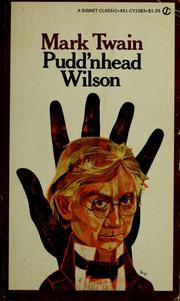 Mark Twain · 1894Pudd'nhead WilsonLvl 5Fast paced
 Charles Dickens · 1861Great ExpectationsLvl 4Medium pace