
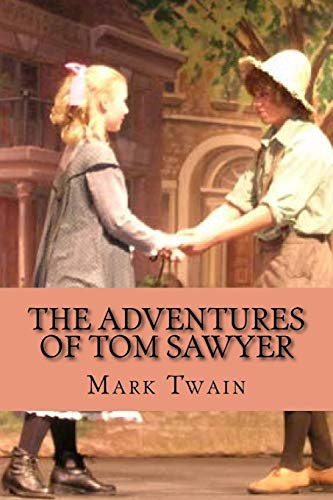
The Adventures of Tom Sawyer
Mark Twain · 1835–1910 · USA
Why it matters
A boy's idyll of mischief, caves, and buried treasure along the Mississippi. Twain's sunnier prelude to Huckleberry Finn defined the American boyhood myth: nostalgia with a satirist's wink.
At a glance
Straightforward episodic narration aimed at young readers.
Deep dive
Why the boy who tricks his friends into whitewashing a fence for him is also the only witness willing to risk his own neck testifying against the man everyone else is too afraid to name.
Written for readers who have finished the book. No plot recap, and nothing here is safe to read first.
Themes & symbolism
Tom Sawyer's early chapters, the whitewashing con, the courtship of Becky Thatcher through pure showmanship, the blood oaths and pirate fantasies staged on Jackson's Island with Huck Finn and Joe Harper, establish a boy's world run entirely on invented honor codes, superstition, and total self-confidence, unmoored from any adult consequence Twain lets land on it. The comedy depends on that unmooring: Tom's schemes work precisely because nothing in his world has yet cost anyone anything real.
Real consequence arrives in the graveyard, where Tom and Huck secretly witness Injun Joe murder Doc Robinson and let a drunk, harmless man named Muff Potter take the blame, and Twain lets the boy's-adventure register curdle just enough to matter: the same child who fakes his own death to enjoy his town's grief at his funeral is also the one forced to decide, at genuine physical risk from a man he's seen kill, whether to testify and save an innocent man from hanging.
Attending Your Own Funeral
Believed drowned after running away to Jackson's Island, Tom sneaks back into his own memorial service and watches the town mourn him with a sincerity he finds delicious rather than troubling, and Twain plays the scene entirely straight, letting the manufactured grief of a congregation eulogizing a boy who is very much alive and hiding in the balcony become the novel's sharpest joke about how little most funeral oratory has to do with the person actually being buried.
The stunt costs Tom nothing but a scolding from Aunt Polly, whose relief at getting him back outweighs any real punishment, and Twain's refusal to let the prank carry consequence is itself part of the joke: a boy can vanish, let an entire town grieve him publicly, and return to be forgiven within a chapter, a forgiveness real orphans and real fugitives in Twain's fiction rarely get to count on.
The last seal: what actually happens, and why it lands the way it does.
The ending, explained
Lost for days with Becky in McDougal's Cave during a town picnic, Tom keeps them both alive on a single scrap of wedding cake and a failing candle, and Twain quietly raises the stakes of what has otherwise been a comic register by nearly starving the children before rescue. Injun Joe, who has been using the same cave as a hideout, is trapped inside once the county seals the entrance against future explorers, and is found dead at the very door he couldn't force open, starved within reach of the outside world he never sees again. Tom and Huck later return to the cave and find Injun Joe's hidden treasure, and the money resolves the town's practical anxieties, Huck is adopted by the Widow Douglas and given his share, in the same stroke that resolves its moral ones, though Huck's open discomfort at being civilized is the one loose thread Twain leaves for the very different book he was already planning to write about him next.
Where to go next
 Mark Twain · 1881The Prince and the PauperLvl 3Fast paced
 Mark Twain · 1883Life on the MississippiLvl 4Medium pace
 Mark Twain · 1884Adventures of Huckleberry FinnLvl 5Fast paced
 Mark Twain · 1889A Connecticut Yankee in King Arthur's CourtLvl 5Fast paced
 Mark Twain · 1894Pudd'nhead WilsonLvl 5Fast paced
 Charles Dickens · 1861Great ExpectationsLvl 4Medium pace