
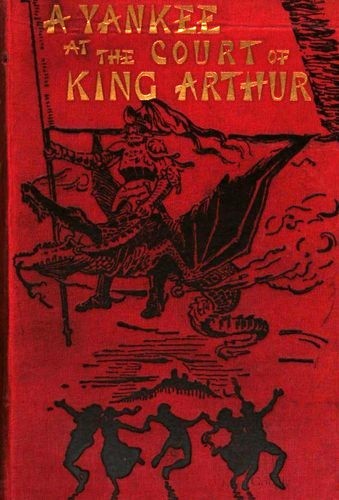
A Connecticut Yankee in King Arthur's Court
Mark Twain · 1835–1910 · USA
Why it matters
A nineteenth-century factory foreman wakes in Camelot and tries to modernize it with gunpowder, newspapers, and Yankee know-how, until progress curdles into massacre. Twain's satire of technology and feudalism turns savage by its last page.
At a glance
Episodic burlesque comedy darkens late into dense, bitter satire.
Deep dive
A nineteenth-century factory foreman wakes up in sixth-century Camelot convinced he can modernize it with gunpowder and good Yankee sense, and the joke gets considerably less funny the further Twain lets it run.
Written for readers who have finished the book. No plot recap, and nothing here is safe to read first.
Themes & symbolism
Hank Morgan, knocked unconscious in a Connecticut arms factory, wakes in Arthurian Britain, uses foreknowledge of a solar eclipse to terrify Merlin's court into naming him the Boss, and sets about industrializing Camelot in secret, telephone lines, schools, a stock exchange, newspapers, while ostensibly still serving Arthur. Twain's satire runs in two directions at once: mocking feudal superstition and chivalric vanity, and, increasingly, mocking Hank's own unexamined faith that Yankee efficiency and democracy are simply good, full stop, regardless of what actually gets done in their name.
Sold into slavery alongside a disguised Arthur during a journey through the countryside, Hank has his abstract case against feudal bondage forced into direct, humiliating experience, and his real tenderness toward Sandy, the woman he eventually marries, complicates a satire that could otherwise stay purely cynical. The Church's interdict and the old nobility's growing hostility toward Hank's civilizing project close in as the book proceeds, and Twain lets the comic register darken steadily rather than snapping back to safety once the joke has run its course.
The Battle of the Sand Belt
In the novel's climax, Hank and fifty-two loyal boy cadets defend a fortified position against the assembled chivalry of England using Gatling guns, electrified fences, and buried mines, killing some twenty-five thousand knights in a single engagement that Twain narrates with a flatness closer to an industrial casualty report than an adventure-novel battle, a choice that reads, from a Gilded Age vantage on mechanized warfare, as horror rather than triumph.
The Boy Cadets as Hank's Real Legacy
Hank recruits his fifty-two defenders from among the boys he's personally educated in his secret schools, the one generation raised entirely on his Yankee curriculum rather than on chivalric romance, and Twain makes their willingness to die manning his machinery the novel's bitterest irony: the students Hank is proudest of turning modern are also the ones his modernizing project gets killed first, trapped alongside him in the very fortress meant to prove civilization had finally arrived in Camelot.
The last seal: what actually happens, and why it lands the way it does.
The ending, explained
Having won the battle, Hank and his surviving boys find themselves besieged inside their own fortress by the unburied dead of the knights they've just killed, the corpses rotting fast enough to turn the battlefield itself into a plague the victors can't cross to escape. Merlin, disguised among them as a servant, casts a genuine sleep spell on the wounded Hank as revenge for a career spent debunking Merlin's own magic as fraud, and the framing narrator, a nineteenth-century traveler who has been reading Hank's manuscript throughout, resumes to find Hank waking centuries displaced again, delirious and dying, calling for Sandy and the child he's lost. Twain closes on grief rather than satire or triumph, a modernizing project that poisoned itself with the very machinery that made it possible, progress requiring, in the end, exactly the industrialized killing its inventor believed he'd left safely in the future.
Where to go next
 Mark Twain · 1876The Adventures of Tom SawyerLvl 3Fast paced
 Mark Twain · 1881The Prince and the PauperLvl 3Fast paced
 Mark Twain · 1883Life on the MississippiLvl 4Medium pace
 Mark Twain · 1884Adventures of Huckleberry FinnLvl 5Fast paced
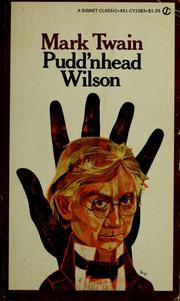 Mark Twain · 1894Pudd'nhead WilsonLvl 5Fast paced
 Charles Dickens · 1861Great ExpectationsLvl 4Medium pace