
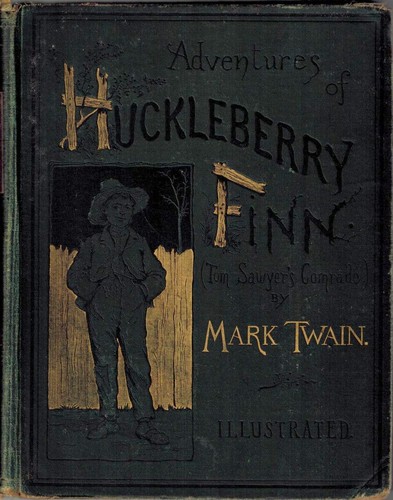
Adventures of Huckleberry Finn
Mark Twain · 1835–1910 · USA
Why it matters
A boy and an escaped enslaved man on a raft down the Mississippi: the vernacular voice put at the center of American literature. Huck's 'All right, then, I'll go to hell' is the American conscience's finest sentence.
At a glance
Heavy period vernacular and dialect spelling slow modern readers despite a simple plot.
Deep dive
Why Huck's own 'conscience' keeps telling him to do the wrong thing, and why Twain spends the book's last hundred pages turning the raft's moral seriousness into an elaborate boys' game.
Written for readers who have finished the book. No plot recap, and nothing here is safe to read first.
Themes & symbolism
Huck drafts a letter turning Jim in, feels virtuous doing it, then tears it up: "All right, then, I'll go to hell." The joke and the tragedy sit in the same sentence — his "conscience" is entirely the internalized catechism of a slaveholding culture telling him that helping a runaway is theft and sin; what actually wins is unschooled feeling, memory of Jim's kindness on the raft. Twain stages morality as a fight between trained doctrine and lived experience and lets feeling win, but frames the victory as Huck believing himself damned for it — he never unlearns the racist framework he was raised in, he just defies it once, person by person, at real personal cost.
Structurally, the raft is the only egalitarian space in the book — two runaways, property law suspended, "solid and calm" — while every trip ashore delivers a fresh sample of civilization's rot: the Grangerford-Shepherdson feud, an honor culture killing children over a cause nobody remembers; the Duke and King's cons, charlatan royalty milking gullible river towns, itself a joke about a nominally anti-monarchical country's hunger for hierarchy; the lynch-mob cowardice Colonel Sherburn diagnoses in a crowd that backs down the moment one man calls its bluff. Society, on shore, is the actual danger; the river is sanctuary, except that it carries the raft steadily deeper into slave territory, so even the sanctuary runs on a clock.
Jim Beneath the Minstrel Mask
Jim is written partly within minstrel-show conventions of the period — superstition, credulousness, comic malapropism — a limitation critics from Ralph Ellison onward have flagged directly. But Twain also gives him material almost no other white-authored 19th-century character possesses: grief for a wife and children he's been separated from, a remembered act of violence against his deaf daughter Elizabeth before he realized she couldn't hear him, plans to buy or steal his family back. That interiority keeps surfacing to complicate the comic frame built around him, which is exactly why the ending's return to slapstick lands, for many readers, as a retreat from ground the novel had already claimed.
The Vernacular Revolution
Hemingway's claim that "all modern American literature comes from" this book points at technique, not theme: Twain writes the entire novel in Huck's spoken idiom — ungrammatical, regionally exact, funny without straining for it — at a moment when American prose still largely deferred to genteel, Latinate models. Trusting a barely literate boy's voice to carry irony he doesn't consciously intend was the technical break that let later American writers build style out of plain speech instead of around it.
The last seal: what actually happens, and why it lands the way it does.
The ending, explained
At the Phelps farm, Tom Sawyer learns of Huck's plan to free Jim and insists on staging an absurdly baroque "evasion" — secret messages, a rope ladder baked into a pie, snakes in Jim's cell — modeled on adventure novels, purely for his own amusement. Tom already knows Jim was freed weeks earlier by Miss Watson's will and lets him suffer the charade anyway. Jim is shot in the leg during the escape and nursed by a remorseful Huck before Tom finally reveals the truth. Offered adoption and "sivilizing" by Aunt Sally, Huck decides instead to "light out for the Territory." Critics from Eliot and Hemingway onward have prized the novel while singling out this stretch as a falling-off — Jim's suffering repurposed as farce just when the book's moral seriousness mattered most.
Where to go next
 Mark Twain · 1876The Adventures of Tom SawyerLvl 3Fast paced
 Mark Twain · 1881The Prince and the PauperLvl 3Fast paced
 Mark Twain · 1883Life on the MississippiLvl 4Medium pace
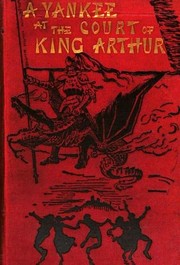 Mark Twain · 1889A Connecticut Yankee in King Arthur's CourtLvl 5Fast paced
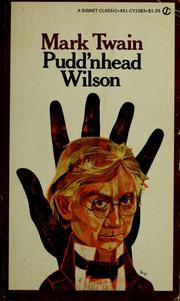 Mark Twain · 1894Pudd'nhead WilsonLvl 5Fast paced
 Charles Dickens · 1861Great ExpectationsLvl 4Medium pace