
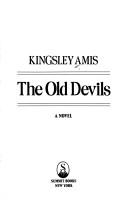
The Old Devils
Kingsley Amis · 1922–1995 · England
Why it matters
A celebrity 'professional Welshman' retires home to Wales, upending the drinking circle of old friends (and old lovers) he left behind. Amis's Booker winner: late-life comedy with real cruelty and, more surprisingly, real tenderness.
At a glance
A large cast of bibulous pensioners to keep straight; the prose is impeccably clear.
Deep dive
Why the funniest thing in a novel about aging drunks turns out to be how badly, underneath the cruelty, they need each other.
Written for readers who have finished the book. No plot recap, and nothing here is safe to read first.
Themes & symbolism
Alun Weaver has built a media career performing an exportable, telegenic Welshness — television appearances, a lucrative sideline lecturing on the legacy of the invented dead poet Brydan — while the friends he left behind still live the unglamorous, actual Wales of pub rounds, chapel funerals, and mortgages. His return exposes the gap between Wales-as-brand and Wales-as-daily-fact, and Amis's satire lands as much on the audiences hungry for packaged national identity as on Alun for supplying it to them.
Pubs and drinking rounds structure the novel's days almost literally, and Amis treats alcohol as both things at once: the social glue holding this circle of old friends and old lovers together decades after they've stopped having much else in common, and a slow, undramatic form of self-destruction. The comedy of hangovers and blackouts sits directly beside real bodily failure — strokes, weight, failing hearts — so that what reads at first as pure farce keeps tipping, a chapter later, into something closer to elegy for bodies and marriages both running out of road.
The novel's women get more interior weight than Amis's earlier reputation for comic misogyny might predict, particularly Alun's wife Rhiannon, whom several of the men, including the narrator's closest surrogate, once loved or still do, and whose calm forbearance functions as a quiet rebuke to the men's decades of self-important drinking and grievance-nursing. Old affairs and old resentments resurface with Alun's return not as fresh scandal but as unfinished business finally getting a hearing, and Amis is careful to let the women's long-deferred grievances land with real weight rather than serving merely as backdrop to the men's comic set pieces.
Brydan and the Dylan Thomas Industry
Brydan, the novel's dead poet, is never seen alive and is transparently modeled on Dylan Thomas, but he exists in the book mainly as intellectual property: Alun has built a television and lecture career narrating Brydan's genius to audiences who want charismatic bardic myth more than they want the actual poems. Inventing rather than naming his model lets Amis satirize the whole apparatus of literary-heritage tourism — the professional interpreters, the guided tours of a dead man's haunts — without having to libel a real poet's estate to do it.
The last seal: what actually happens, and why it lands the way it does.
The ending, explained
Alun Weaver, whose return set the whole reunion in motion, dies of a heart attack before the novel's close, and his death — sudden, almost incidental, undercutting his own outsized performance of vitality — reshuffles the group a second time. What's left is a quieter, more forgiving accommodation among the survivors: marriages that outlasted infidelity and boredom settle into something closer to tenderness, and the same pub rounds resume, older and sadder but unbroken, less because anything has actually been resolved than because the ritual itself is what these people have instead of resolution.
Where to go next
 Evelyn Waugh · 1945Brideshead RevisitedLvl 5Medium pace
 Howard Jacobson · 2010The Finkler QuestionLvl 5Medium pace
 Muriel Spark · 1961The Prime of Miss Jean BrodieLvl 4Fast paced
 Anthony Burgess · 1962A Clockwork OrangeLvl 7Fast paced
 George Orwell · 1949Nineteen Eighty-FourLvl 4Fast paced
 J. G. Farrell · 1973The Siege of KrishnapurLvl 5Medium pace