
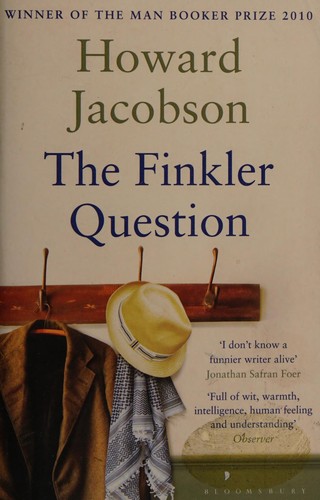
The Finkler Question
Howard Jacobson · b. 1942 · England
Why it matters
A gentile Londoner mugged in the street finds himself bewilderingly eager to be Jewish, tangling grief, comedy, and the era's Israel-Palestine arguments together. Jacobson's Booker winner is one of the rare outright comic novels the prize has ever recognized.
At a glance
Dense comic riffing and philosophical digression slow an otherwise simple plot.
Deep dive
A mugging that reads as a conversion narrative: why Julian Treslove, the one gentile in a novel obsessed with Jewishness, becomes its most devoted convert.
Written for readers who have finished the book. No plot recap, and nothing here is safe to read first.
Themes & symbolism
Treslove's mugging is the novel's founding misreading: he decides his attacker, a woman, called him "Ju" — his private theory being she meant "Jew," not the more mundane possibility she meant his own name, Julian. From that flimsy scrap he builds an entire identification, envying in Finkler and Libor a gravity of suffering and belonging he suspects his own placid gentile life has never earned. Jacobson's comedy is merciless here: Treslove doesn't want to convert to Judaism so much as to a feeling, and the novel keeps needling how much of ethnic identity, for outsiders and insiders both, is projection onto a category rather than lived content.
Sam Finkler's public act runs the opposite direction but lands in the same trap. His founding of the "ASHamed Jews" — a group of prominent Jews publicly disavowing Israeli policy — reads less as principled dissent than as another performance of belonging, self-criticism as its own club with its own rules of admission. Jacobson doesn't caricature the politics so much as expose the vanity underneath declaring oneself ashamed in public: renunciation, like Treslove's envy, is still a bid to be seen as authentically Jewish, just from the opposite flank.
Libor's grief for his wife Malkie is the novel's one register without irony, and it throws the other two men's performances into relief. An old-world Czech emigre mourning without an audience or an argument to make, he's the closest thing the book has to a stable center — proof that Jewishness, stripped of the identity-tourism and the politics, can just be a life, fully lived and fully lost.
Treslove's day job sharpens the joke further: he earns his living impersonating celebrities at corporate events, a professional double whose entire livelihood already depends on approximating someone else's more definite identity. That he drifts from impersonating minor stars into impersonating a whole ethnicity isn't a break in character but a continuation of one — Jacobson's real target isn't Treslove's specific fixation on Jewishness so much as the more general modern hunger to borrow an identity fully formed rather than sit with the discomfort of an unfinished one.
Comedy as Argument
The Booker judges' surprise at rewarding an outright comic novel misses that the comedy is the argument, not a coating on it. Jacobson keeps grief, circumcision jokes, and Middle East politics in the same paragraph, sometimes the same sentence, because his case is that Jewish survival has always run on gallows humor — that treating the subject with unbroken solemnity is itself a kind of disrespect, flattening a living, arguing, self-mocking culture into a memorial.
The Jewish Question, Rebranded
The title deliberately echoes the nineteenth-century antisemitic pamphlet genre that asked, with hostile intent, what to do about the Jews. Jacobson repurposes the phrase as a question Jews are now asking themselves, with Israel as the fault line: is criticism of the state a moral obligation or a fashionable self-flagellation, is philosemitism from men like Treslove a compliment or its own subtle insult. The novel refuses to resolve either question, which is the point — Finkler's certainties and Treslove's yearning are both, finally, evasions of the harder work Libor's quiet grief actually does.
Where to go next
 Kingsley Amis · 1986The Old DevilsLvl 4Medium pace
 Julian Barnes · 2011The Sense of an EndingLvl 4Medium pace
 Graham Swift · 1996Last OrdersLvl 5Medium pace
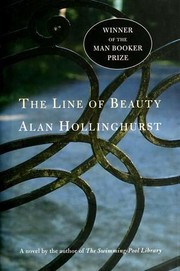 Alan Hollinghurst · 2004The Line of BeautyLvl 5Slow burn
 Anita Brookner · 1984Hotel du LacLvl 5Slow burn
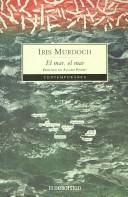 Iris Murdoch · 1978The Sea, the SeaLvl 6Slow burn