
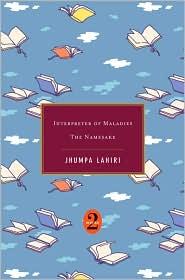
The Namesake
Jhumpa Lahiri · b. 1967 · United States
Why it matters
A Bengali-American son named after a Russian author struggles between his parents' world and his own. Lahiri's first novel extends her precise attention to the immigrant generational divide.
At a glance
Clean chronological prose in Lahiri's characteristic restrained style.
Deep dive
What the train wreck Ashoke survived as a young man has to do with the name he gives his son, and why Gogol doesn't hear the real story until he's nearly out of chances to ask his father about it.
Written for readers who have finished the book. No plot recap, and nothing here is safe to read first.
Themes & symbolism
Ashoke Ganguli survives a catastrophic train derailment as a young man in India, found barely alive among the wreckage only because rescuers spotted the pages of the Nikolai Gogol story he'd been reading, 'The Overcoat,' fluttering in his hand as a signal of life. He names his American-born son Gogol as a private, largely unexplained tribute to the accident that should have killed him, and Lahiri builds the entire novel around the gap between that intensely personal, unspoken meaning and the name's total meaninglessness to the son who has to grow up carrying it through a Massachusetts childhood, an identity assigned for reasons he isn't told until it's almost too late. Bengali custom formally separates a private pet name from a public good name meant for the world, and Gogol was only ever supposed to hold the placeholder role until a letter from his great-grandmother in Calcutta arrived with the real one; the letter never comes, and a hospital birth form quietly makes the placeholder permanent.
Gogol's discomfort with his name, neither properly Bengali nor American, neither a proper formal name in the Bengali sense nor an ordinary American one, drives him to legally change it to Nikhil at eighteen, a rebranding Lahiri treats as sympathetic and also as a kind of self-erasure, since the people who actually know him, his parents, his childhood friends, keep calling him Gogol regardless of the paperwork. His relationships track the same tension outward: Maxine, an affluent white girlfriend whose family's easy, generationally settled Americanness he envies and briefly tries to borrow, and later Moushumi, a fellow Bengali-American whose own resistance to arranged expectation ends up wrecking their marriage from a direction Gogol never anticipated.
A Name Explained Too Late
Ashoke tells Gogol the truth behind his name only once, offhandedly, on a drive when Gogol is in his twenties, and Gogol, distracted and unready to hear it, barely absorbs the story at the time, a missed conversation Lahiri stages as ordinary rather than dramatic precisely because that's how most families actually lose their most important stories, not in a single dramatic revelation but in a moment nobody realized was the only chance.
The last seal: what actually happens, and why it lands the way it does.
The ending, explained
Ashoke dies suddenly of a heart attack while working alone in Ohio, and the abruptness, no final scene, no chance for Gogol to ask the questions he'd been putting off, forces Gogol to reconstruct his father's meaning for him after the fact rather than from him directly. In the novel's last pages, with his mother Ashima preparing to sell the family house and split her time between India and the United States, Gogol finally sits down with the copy of Gogol's stories his father gave him years earlier and never read, opening it for the first time as an adult finally ready to receive the inheritance his name was always meant to carry.
Where to go next
 Jhumpa Lahiri · 1999Interpreter of MaladiesLvl 3Medium pace
 Jeffrey Eugenides · 2002MiddlesexLvl 6Medium pace
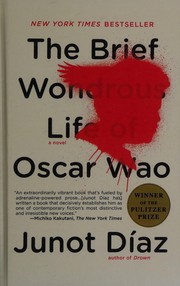 Junot Díaz · 2007The Brief Wondrous Life of Oscar WaoLvl 7Fast paced
 Michael Chabon · 2000The Amazing Adventures of Kavalier and ClayLvl 5Fast paced
 Jonathan Franzen · 2001The CorrectionsLvl 6Medium pace
 Sandra Cisneros · 1984The House on Mango StreetLvl 3Fast paced