

Middlesex
Jeffrey Eugenides · b. 1960 · United States
Why it matters
A Greek-American intersex narrator traces three generations of family history from a Smyrna catastrophe to 1970s Detroit. A Pulitzer-winning epic of genetics, immigration, and identity.
At a glance
Sweeping multigenerational scope narrated by a genre-bending narrator.
Deep dive
A single recessive gene, married into the family by its own founders, takes three generations and a war to finally express itself — and the whole epic turns out to be that gene's biography.
Written for readers who have finished the book. No plot recap, and nothing here is safe to read first.
Themes & symbolism
Eugenides structures the novel as a genetic mystery, tracing a mutation on the fifth chromosome from Cal's grandparents' incestuous marriage in Smyrna, through Prohibition-era Detroit, to its expression in Callie generations later. The intersex condition isn't deployed as a twist ending; it's the culmination of everything the family has spent decades hiding, literalizing how a family's buried history gets encoded and eventually, inevitably, expressed in the body of someone who never chose any of it — inheritance as fate with a molecular mechanism instead of a curse.
Cal's retrospective narration blends memoir with self-conscious epic — Homeric invocations, mock-heroic scale applied to a Greek-American family's very unheroic Detroit decline — recasting the recessive gene as a modern, secularized version of the ancient family curse. Against that inherited plot sits Dr. Luce, the clinical authority urging surgical assignment to resolve Callie into an unambiguous girl; Cal's eventual decision to live as a man on his own terms, refusing the doctor's tidy binary, is the novel's real center of gravity — self-determination asserted against both family secrecy and medical certainty, neither of which had any interest in what Cal actually wanted. The house that gives the novel its title, an ostentatious modernist box the family moves into mid-book, literalizes the theme architecturally: a home designed to erase the distinction between formal and informal space, public and private, much as Cal's own body eventually refuses the clean binary the rest of the family, and the culture around them, keeps trying to impose on it.
A Greek Epic in Suburban Detroit
Eugenides borrows structure and tone from Greek epic and tragedy deliberately: an invoking narrator, a founding catastrophe (the burning of Smyrna in 1922) that scatters the family into exile, and an incest motif that echoes Oedipus without repeating his ignorance — Cal's grandparents know exactly what they're doing when they marry, and choose each other anyway, converting a Greek tragic device into an act of willed, complicit desire. Detroit's own arc, from immigrant boomtown through the 1967 riots to Rust Belt decline, is staged as the family's fortunes writ large, a city's body and a family's genetics failing in visible parallel, the Zebra Room bar and the family's auto-industry fortunes rising and falling on the same historical clock.
Ahead of the Conversation It Helped Start
Middlesex won the Pulitzer in 2003 and was widely praised, at the time, as a rare literary novel to center an intersex protagonist with real empathy rather than freakshow curiosity. As intersex and trans advocacy and terminology matured in the following decades, some readers and activists have revisited the novel more critically, questioning whether its conflation of intersex and transgender experience holds up — a sign less of the book's failure than of how much of the conversation it helped bring into literary fiction in the first place.
The last seal: what actually happens, and why it lands the way it does.
The ending, explained
After a doctor's proposed surgery would force Callie into an assigned female identity she doesn't recognize, she runs away rather than submit to it, living briefly and precariously on her own before the family's crisis catches up with her. Her father Milton, driving to find her, dies in a car accident during the search — the novel's central family tragedy, arriving just as Cal is working out who he actually is. The adult Cal who narrates the book has reached a hard-won self-acceptance on the far side of that loss, living openly as a man and, crucially, on terms he chose for himself rather than terms medicine or family secrecy chose for him.
Where to go next
 Jeffrey Eugenides · 1993The Virgin SuicidesLvl 5Medium pace
 Jonathan Franzen · 2001The CorrectionsLvl 6Medium pace
 Jhumpa Lahiri · 1999Interpreter of MaladiesLvl 3Medium pace
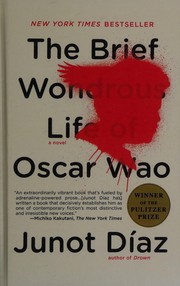 Junot Díaz · 2007The Brief Wondrous Life of Oscar WaoLvl 7Fast paced
 Elena Ferrante · 2011My Brilliant FriendLvl 3Fast paced
 D. H. Lawrence · 1913Sons and LoversLvl 5Medium pace