

Interpreter of Maladies
Jhumpa Lahiri · b. 1967 · United States
Why it matters
Stories of Bengali-American marriages, misunderstandings, and displacement across two continents, told with exceptional restraint. Lahiri's Pulitzer-winning debut collection.
At a glance
Clear, controlled prose, accessible despite its emotional density.
Deep dive
How nine stories of Bengali-American marriages and near-misses use restraint itself as the emotional instrument, from a Cambridge apartment's blackouts to a boardinghouse in Rhode Island.
Written for readers who have finished the book. No plot recap, and nothing here is safe to read first.
Themes & symbolism
"A Temporary Matter" opens the collection on Shukumar and Shoba, a couple whose infant did not survive birth, using a scheduled week of nightly power outages to trade confessions in the dark that they could never manage to say with the lights on, and Lahiri lets the game's warmth curdle in its final minutes into a confession that ends the marriage rather than repairing it. That pattern, intimacy made possible only by some external constraint, blackout, distance, a stranger's presence, recurs across nearly every story here.
The title story sends Mr. Kapasi, a tour guide and part-time medical interpreter, driving an Indian-American family through Konarak, and lets him misread a visiting wife's confession of an affair as romantic interest in himself rather than what it actually is, a stranger's desperate need for an interpreter of an entirely different kind of malady. Lahiri's restraint is exact here: Kapasi's humiliation is never stated, only inferred from a slip of paper with his address on it, blown away and gone by the story's last page.
"Mrs. Sen's" and "The Third and Final Continent" work the collection's other register, immigrant loneliness observed patiently rather than dramatized: Mrs. Sen, a professor's wife babysitting an American boy, measures her homesickness in fish she can't get fresh in Massachusetts, while the unnamed narrator of the closing story builds, across decades, an entire American life out of a boardinghouse room rented from a hundred-and-three-year-old widow. Lahiri closes the book on that story deliberately, its quiet accumulation of small victories is the collection's argument that displacement can resolve into something other than grief.
Mrs. Croft's Century as a Measuring Stick
The closing story's landlady, Mrs. Croft, born in the nineteenth century and fixated on the moon landing as proof of how much the world has changed in her lifetime, gives the young Bengali narrator an external scale against which to measure his own more modest transformation, an arranged marriage that grows, slowly and without drama, into real affection. Lahiri uses Mrs. Croft's extreme longevity to make an ordinary immigrant's decades of adjustment feel, by comparison, entirely survivable.
What Kapasi Actually Interprets
Kapasi's day job translating a doctor's diagnoses for patients who don't share his language gives the collection its title and its clearest picture of what several of these stories are actually about, one person needing another to translate feeling they can't articulate directly, a spouse, a stranger, a child. Mrs. Das's confession in the title story asks Kapasi to interpret guilt the way he interprets a stomach complaint, and his failure to do it well is the story's real subject, not the drive through Konarak's temples that frames it.
Where to go next
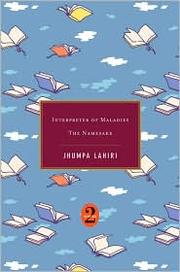 Jhumpa Lahiri · 2003The NamesakeLvl 3Medium pace
 Jeffrey Eugenides · 2002MiddlesexLvl 6Medium pace
 Junot Díaz · 2007The Brief Wondrous Life of Oscar WaoLvl 7Fast paced
 Michael Chabon · 2000The Amazing Adventures of Kavalier and ClayLvl 5Fast paced
 Jonathan Franzen · 2001The CorrectionsLvl 6Medium pace
 Sandra Cisneros · 1984The House on Mango StreetLvl 3Fast paced