
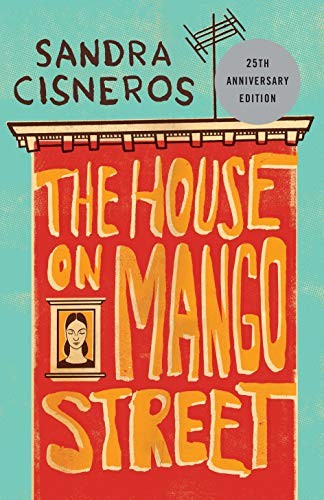
The House on Mango Street
Sandra Cisneros · b. 1954 · United States / Mexico
Why it matters
Vignettes of a Latina girl coming of age in a poor Chicago barrio, in prose that verges on poetry. Cisneros's slim, luminous book put Mexican-American girlhood at the center of the American canon.
At a glance
Short poetic vignettes in plain, direct language make this highly accessible.
Deep dive
How forty-four short, poem-close vignettes narrated by one Chicago girl add up to a single promise she makes about the neighborhood she's trying to leave.
Written for readers who have finished the book. No plot recap, and nothing here is safe to read first.
Themes & symbolism
Esperanza Cordero narrates in vignettes rarely longer than a page, prose pulled so close to poetry that individual sentences work as much by rhythm and repetition as by information, a house of her own, not a flat, not an apartment in back, not a man's house, not a daddy's. The house itself, red, cramped, embarrassing to a nun who assumes the family must be poorer than they are, becomes the book's central image of the gap between what Esperanza has and what she wants, a house quiet and white with trees and a yard, like the houses on television.
Cisneros builds the neighborhood almost entirely through women glimpsed from Esperanza's child's-eye view, Marin waiting by the window for a man to change her life, Sally married off young to an abusive husband who locks her in the house, Esperanza's own great-grandmother, her namesake, who was carried off by a man as if she were a fancy chandelier and spent the rest of her life looking out a window. Each is a version of a life Esperanza is watching in order to refuse it, the book's real coming-of-age plot.
The vignette form itself argues something: Mango Street never gives Esperanza, or the reader, a continuous linear story, only fragments a girl would actually notice and remember, a name, a smell, a humiliation, which is exactly how the book earns its ending's authority. When Esperanza finally states what she's learned, it isn't delivered as a lesson dropped onto the narrative from outside, it grows directly out of a hundred small, accumulated observations.
Names as the Book's Real Inheritance
Esperanza spends an early vignette rejecting her own name, inherited from a great-grandmother she never met and meaning, in English, hope or sadness depending on the language you're standing in, and wishing for something nobody else has claimed first. The book's closing pages reverse that rejection without softening it: Esperanza decides to keep telling her own story precisely because a name, like a street, is something you can eventually choose to own rather than simply inherit.
The House as an Argument, Not a Setting
Nearly every vignette measures some other space, a friend's tidy apartment, a landlord's promise, a nun's disapproving glance, against the house on Mango Street, so that the book's title functions less as a location than as a recurring rebuttal Esperanza is constantly making to other people's assumptions about her. The house she actually wants at the end, small, hers, with room enough for her writing, deliberately answers every earlier vignette's version of what a house is supposed to prove about the family living in it.
The last seal: what actually happens, and why it lands the way it does.
The ending, explained
The book's closing vignettes, "A House of My Own" and "Mango Says Goodbye Sometimes," bring the fragments to a single, stated resolution: Esperanza commits to becoming a writer specifically so she can leave Mango Street, and just as directly commits to coming back for it. Three mysterious women from an earlier vignette, aunts of a sort, told her that leaving doesn't mean forgetting where you come from, that she has to return for the ones who cannot get out, the girls and women trapped in houses like the ones the book has spent a hundred pages cataloguing. Esperanza's last lines picture herself already gone and already writing about the street, turning the whole vignette structure retroactively into the book she promised she'd write, an ending that isn't a plot resolution so much as a girl's private vow finally spoken aloud.
Where to go next
 Sandra Cisneros · 1991Woman Hollering CreekLvl 4Medium pace
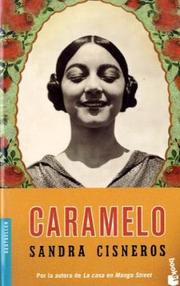 Sandra Cisneros · 2002CarameloLvl 5Medium pace
 Jhumpa Lahiri · 1999Interpreter of MaladiesLvl 3Medium pace
 Louise Erdrich · 1984Love MedicineLvl 6Medium pace
 Michael Chabon · 2000The Amazing Adventures of Kavalier and ClayLvl 5Fast paced
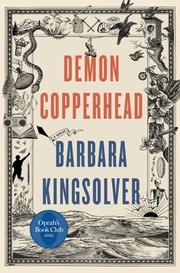 Barbara Kingsolver · 2022Demon CopperheadLvl 4Fast paced