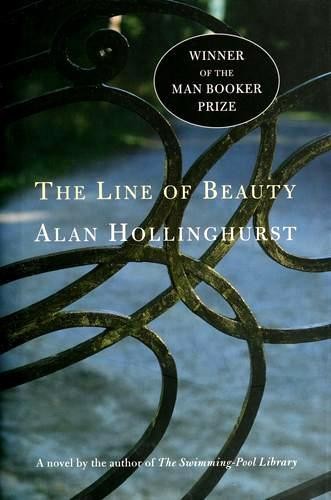
The Line of Beauty
Alan Hollinghurst · b. 1954 · England
Why it matters
Nick Guest, gay, beautiful, and besotted with style, lodges with a Tory MP's family through Thatcherism's champagne years as AIDS gathers offstage. The 2004 Booker winner: the political novel written in perfect Jamesian sentences.
At a glance
Long, poised Jamesian sentences and irony that never announces itself.
Deep dive
Why the line Nick finds most beautiful isn't a person's body but a curve in a Hogarth drawing — and what that says about everything he mistakes for love.
Written for readers who have finished the book. No plot recap, and nothing here is safe to read first.
Themes & symbolism
Nick's central romantic attachment isn't to Leo or Wani but to style itself — Hogarth's 'line of beauty,' an S-curve he explains to anyone who'll listen as the visual essence of pleasure, becomes his private religion, and he keeps mapping it onto bodies, architecture, and the rolling contours of the Feddens' Notting Hill drawing room with the same aesthete's rapture. That confusion of aesthetic and moral judgment is the novel's engine: Nick can tell instantly whether a house or a sentence has taste, and is correspondingly slow, sometimes willfully so, to notice that the family he's attached himself to is rotten underneath its excellent furniture.
Cocaine runs through the novel's second half as Nick's other, more literal line of beauty — a substitute intimacy that lets him feel briefly frictionless and adored inside a social world that has always kept him one tactful step outside it, a lodger's gratitude mistaken, again and again, for belonging. AIDS is handled with the same oblique control: Hollinghurst keeps it almost entirely offstage for most of the book, a rumor and a funeral glimpsed sideways, so that when the threat finally closes in on Nick directly in the final pages, the reader feels the same vertiginous shift from aesthetic distance to bodily fact that the whole novel has been training Nick, unsuccessfully, to resist.
Henry James as Mirror
Nick is writing a graduate thesis on Henry James, and Hollinghurst borrows James's own long, qualifying, socially attuned sentences as the novel's narrating instrument — a style perfectly built to register exactly how much cruelty a beautifully mannered room can contain without ever raising its voice. The Jamesian debt isn't homage for its own sake: a prose style organized around perceiving nuance and withholding direct statement turns out to be the ideal tool for a protagonist whose whole flaw is preferring nuance to plain truth.
Thatcherism as an Aesthetic, Not Just a Politics
Gerald Fedden's Tory MP career and the champagne confidence of the mid-1980s give the novel its historical frame, and Hollinghurst is precise about how thoroughly the era's politics and its taste in surfaces reinforced each other — property, style, and self-satisfaction accumulating together as though good furniture were itself a form of moral vindication. Nick's own aestheticism, which reads at first as apolitical connoisseurship, turns out to be exactly the sensibility the decade rewarded and ultimately used him for.
The last seal: what actually happens, and why it lands the way it does.
The ending, explained
The Feddens' world collapses when Gerald's affair and financial improprieties become public, and the family, needing someone convenient to blame for the scandal's optics, coldly cuts Nick loose — years of grateful, besotted attachment repaid with expulsion the moment he stops being decorative. Alone and displaced from the glamour he'd organized his adult life around, Nick ends the novel contemplating his own health with a new, quiet dread, the AIDS crisis that the book has kept mostly offstage finally arriving at his own door. Hollinghurst declines to confirm a diagnosis outright; the fear itself, arriving exactly as Nick loses every social cushion that made his life bearable, is the novel's actual last note.