
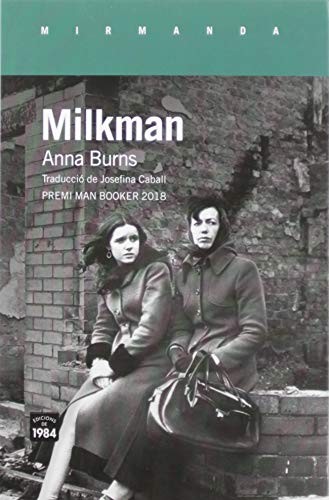
Milkman
Anna Burns · b. 1962 · Northern Ireland
Why it matters
In an unnamed Belfast, 'middle sister' reads while walking and is claimed, deniably and terrifyingly, by a paramilitary called the milkman. The 2018 Booker winner: surveillance, gossip, and sexual menace rendered in a voice like no other in contemporary fiction.
At a glance
Long looping paragraphs in which no person or place is ever named; the style is the point.
Deep dive
Why nobody in this novel has a name — and what it means that the most dangerous man in it is only ever known by his deniable nickname.
Written for readers who have finished the book. No plot recap, and nothing here is safe to read first.
Themes & symbolism
Burns strips every character of a proper name — 'middle sister,' 'maybe-boyfriend,' 'first brother-in-law,' the milkman himself — and the effect isn't stylistic quirk but the novel's whole argument about life under paramilitary surveillance and gossip: in a community this politically saturated, identity gets absorbed into relationship and role, because naming things precisely is itself a small act of exposure in a place where exposure gets people killed. The milkman's own title works the same way from the threat's side — he's not a name attached to a rank or a specific atrocity, he's a designation vague enough to be denied, which is exactly what lets him stalk 'middle sister' with total impunity: nothing he does is ever quite sayable in terms the community's watching eyes can act on.
Reading while walking, middle sister's own defining habit, is treated by her community as suspicious in itself — deviation from communal norms, even something as private as reading Jane Eyre on a public street, gets folded into rumor and read as evidence of secret allegiance, so the novel makes gossip itself a form of paramilitary control every bit as coercive as the milkman's direct menace. Burns is precise about the mechanics of that coercion: the milkman never touches her, never issues an explicit threat, and that very deniability is the point — a system of control that operates entirely through implication leaves its target with no legible harm to report and no language the community will credit if she tries.
The Grammar of Not Naming
The unnamed setting (widely read as Troubles-era Belfast, though never stated outright) and unnamed conflict function the same way as the unnamed characters — Burns generalizes the specific, sectarian, historically located violence of the Troubles into something that reads as universally recognizable to anyone who's lived under any regime of surveillance, gossip, and enforced allegiance. That refusal to name places is a formal risk that pays off in the novel's reception: readers from other conflict zones have recognized their own experience in a book that never once uses the words Belfast, IRA, or Troubles.
A Voice Like No Other
The novel's looping, digressive, comma-heavy sentences, run on for pages without releasing tension, formally enact the same surveillance-state vigilance the plot describes — middle sister's mind can't relax into a simple declarative sentence because nothing in her world is simple or safe to state declaratively. Burns's 2018 Booker win for a novel this formally uncompromising was itself treated as a small victory for difficulty over easy readability in contemporary literary fiction.
Where to go next
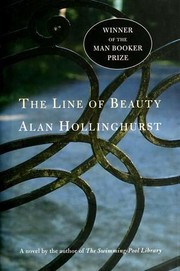 Alan Hollinghurst · 2004The Line of BeautyLvl 5Slow burn
 Antonio Tabucchi · 1994Pereira MaintainsLvl 4Medium pace
 Herta Müller · 2009The Hunger AngelLvl 7Slow burn
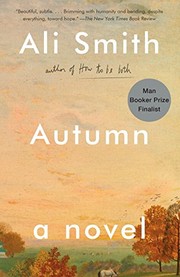 Ali Smith · 2016AutumnLvl 5Slow burn
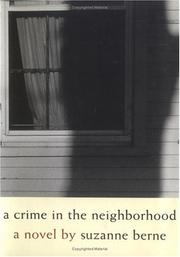 Suzanne Berne · 1997A Crime in the NeighborhoodLvl 4Medium pace
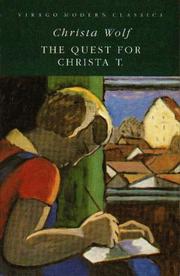 Christa Wolf · 1968The Quest for Christa T.Lvl 7Slow burn