
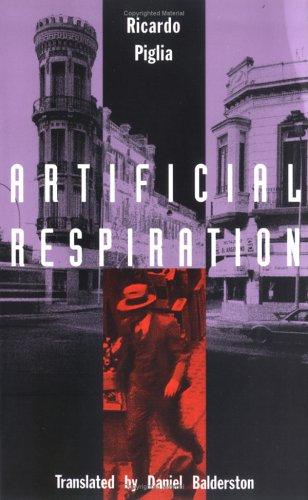
Artificial Respiration
Ricardo Piglia · 1941–2017 · Argentina
Originally Respiración artificial (Spanish) · translated by Daniel Balderston
Why it matters
A missing-persons search unfolds through letters, literary theory, and the unspoken shadow of Argentina's dictatorship. A novel about what fiction can still say when the state is listening, written and published under censorship.
At a glance
Letters, essays, and literary theory interleave to circle what censorship forbids saying directly.
Deep dive
The missing-persons plot is a decoy; the novel's real subject is how far fiction can travel, in code, when saying the plain thing out loud would be dangerous.
Written for readers who have finished the book. No plot recap, and nothing here is safe to read first.
Themes & symbolism
Marcelo Maggi's disappearance is never named as a political disappearance in the sense Argentine readers of 1980 would immediately recognize — the novel keeps its distance, letting the resonance with the dictatorship's actual desaparecidos operate as implication rather than statement. That displacement is doubled formally: Maggi's own research concerns Enrique Ossorio, a nineteenth-century secretary compromised inside Rosas's authoritarian regime while privately opposed to it, giving Piglia a historical mirror through which to discuss censorship, complicity, and state violence without ever directly naming the present dictatorship. Writing and publishing under active censorship, Piglia treats historical displacement not as evasion but as the only available form of direct address.
The title names the novel's argument outright: literature and critical thought as artificial respiration, a way of keeping ideas, memories, and truths alive through indirection when the state has made direct speech impossible or lethal. Renzi, Piglia's recurring authorial stand-in, investigates his uncle mostly through letters and historical documents rather than through action, which mirrors the novel's own method — meaning arrives mediated, secondhand, coded, because that is the only form testimony can take under a listening state. The long essayistic detour on Kafka near the novel's center isn't a digression from the mystery; it's the mystery's actual solution, arguing that oblique, essayistic, historically-displaced fiction is itself a legitimate and necessary act of political speech.
The Kafka conversation as the novel's real center
Roughly midway through, the missing-persons plot gives way almost entirely to an extended conversation about literature, exile, and foreignness within one's own language, centered on Kafka. Readers expecting the investigation to resume treat this as a stalling maneuver; it's the opposite. Piglia is staging, in essayistic form, the argument the whole novel has been building toward — that under censorship, literary and critical discourse about seemingly unrelated writers becomes the vehicle for saying what cannot be said about the present. The conversation is where Artificial Respiration actually makes its case, more than the plot ever does.
Renzi and the historical mirror
Emilio Renzi recurs across Piglia's fiction as a stand-in for the author, and here his position — a writer piecing together a vanished relative's life through secondhand documents rather than direct witness — literalizes the book's whole method of indirection. Maggi's own historical research into Ossorio, a functionary compromised inside an authoritarian court while covertly opposed to it, gives Renzi (and Piglia) a nineteenth-century vocabulary sturdy enough to carry present-tense political meaning past the censor without ever naming names.
The last seal: what actually happens, and why it lands the way it does.
The ending, explained
Maggi's disappearance is never solved. No account of what happened to him, who took him, or where he ended up arrives by the last page, and that irresolution isn't a failure of plotting — it's the accommodation the novel makes to what could actually be printed under an active censorship regime. The real resolution lives in the Kafka conversation's implicit claim: that literature's indirection is itself a legitimate form of testimony when direct political speech is forbidden. The novel's title supplies the final image — Argentina's culture, memory, and truth-telling kept alive on artificial respiration, sustained but not cured, surviving the dictatorship only in a compromised, coded form.
Where to go next
 Ricardo Piglia · 1997Money to BurnLvl 5Fast paced
 Jorge Luis Borges · 1944FiccionesLvl 7Slow burn
 César Aira · 1990GhostsLvl 5Slow burn
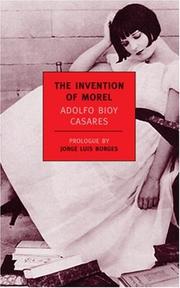 Adolfo Bioy Casares · 1940The Invention of MorelLvl 5Fast paced
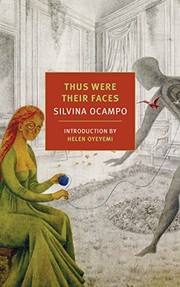 Silvina Ocampo · 1959Thus Were Their FacesLvl 5Fast paced
 Julio Cortázar · 1959Blow-Up and Other StoriesLvl 6Medium pace