

Piranesi
Susanna Clarke · b. 1959 · England
Why it matters
A diarist lives alone but for the occasional visitor in an infinite House of statues, tides, and clouds that he believes is the entire world, until clues suggest a hidden truth about his own identity. A spare, Borgesian mystery of dawning, unsettling recognition.
At a glance
Spare, precise prose is easy to follow, though its slow-dawning mystery rewards patience.
Deep dive
A man who believes an endless House of statues, tides, and clouds is the whole of the world keeps a careful, loving record of it, and the novel spends its length finding out why his memory only goes back so far.
Written for readers who have finished the book. No plot recap, and nothing here is safe to read first.
Themes & symbolism
The diarist who calls himself Piranesi catalogs the House with a scientist's rigor and a devotee's affection, numbering its halls, tracking its tidal floods to the minute, naming its statues as though they were saints, and Clarke builds the entire first half of the novel on the sincerity of that devotion: this is not a man trapped and miserable but a man who has made a coherent, even beautiful life inside constraints he doesn't recognize as constraints at all. The House's statues, an albatross giving birth, a faun teaching two children, a woman carrying a beehive, function as the only culture Piranesi has, sacred images he interprets with real interpretive care despite having no idea what any of them originally meant to whoever built them.
The name Piranesi itself is not his own; it is bestowed by the only other living person he regularly sees, a fastidious academic he calls the Other, in a joke referencing the real eighteenth-century engraver famous for labyrinthine prison etchings, and the fact that the narrator accepts a name given to him by someone who is actively deceiving him becomes the novel's central image of erased identity. He has been renamed by his captor and doesn't know it, has forgotten his own history so thoroughly that he mistakes his prison for the whole of creation, and the slow return of that history is less a mystery-novel reveal than a genuinely painful process of a self reassembling itself from fragments.
Clarke's prose owes an explicit debt to Borges, an infinite, indifferent architecture that organizes itself by logic rather than malice, and the novel resists making the House purely sinister even after its true purpose as a prison for a missing academic becomes clear: Piranesi's numbered halls and tidal charts and genuine tenderness toward the statues remain real achievements, a mind making meaning under circumstances designed to erase meaning altogether.
Arne-Sayles and the Cult of Liminal Knowledge
The House exists because of Laurence Arne-Sayles, a disgraced scholar convinced that ancient, forgotten knowledge once let people move between our world and other realities, and that belief, dismissed by the mainstream academy as crankery, is what draws his small circle of followers, including the man who becomes Piranesi, toward the House in the first place. Clarke uses Arne-Sayles's fringe theorizing to needle real academic gatekeeping without ever confirming his cosmology is correct; the House's rules remain mysterious even to characters who have spent years inside them, which is exactly the humility the novel asks of its reader too.
The last seal: what actually happens, and why it lands the way it does.
The ending, explained
Piranesi is eventually identified as Matthew Rose Sorensen, a researcher who vanished while investigating Arne-Sayles's theories, having been lured into the House and deliberately kept there, his memory chemically erased, by Arne-Sayles's former student Ketterley, the man Piranesi has been calling the Other and unknowingly assisting all along. A police officer's search for the missing Sorensen eventually reaches the House and Piranesi is returned to the ordinary world, where he is legally, socially, and administratively Matthew Rose Sorensen again. But Clarke declines to make the return a simple rescue: he keeps the House's calendar, its tides, its statues, as a second self he refuses to discard, moving through London still partly narrating his life in the House's patient, reverent register, a man who has integrated captivity into identity rather than simply escaping it.
Where to go next
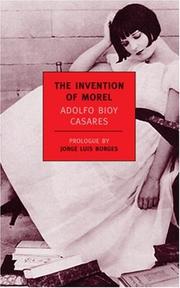 Adolfo Bioy Casares · 1940The Invention of MorelLvl 5Fast paced
 Jorge Luis Borges · 1944FiccionesLvl 7Slow burn
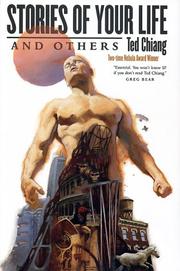 Ted Chiang · 2002Stories of Your Life and OthersLvl 5Medium pace
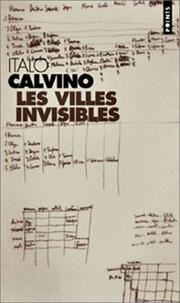 Italo Calvino · 1972Invisible CitiesLvl 5Slow burn
 César Aira · 1990GhostsLvl 5Slow burn
 Samantha Harvey · 2024OrbitalLvl 5Slow burn