
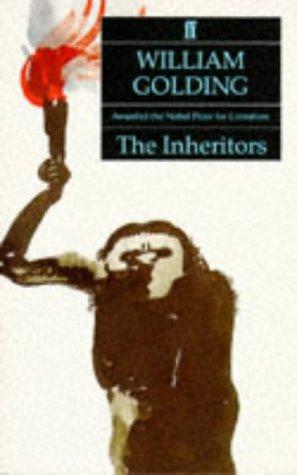
The Inheritors
William Golding · 1911–1993 · England
Why it matters
Told from inside the consciousness of a Neanderthal band encountering Homo sapiens for the first time, this narrows language itself to render a mind not yet fully human. Formally daring and quietly devastating.
At a glance
Told through a pre-linguistic consciousness that deliberately withholds ordinary vocabulary and logic.
Deep dive
A small band of Neanderthals encounters a group of more technologically capable strangers along a river, and Golding spends most of the novel making sure readers can't fully understand what they're seeing either.
Written for readers who have finished the book. No plot recap, and nothing here is safe to read first.
Themes & symbolism
Golding tells almost the entire novel through Lok's consciousness, a Neanderthal who lacks metaphor, deceit, and causal reasoning as tools of thought, so that the reader experiences the arriving Homo sapiens exactly as Lok does, as bewildering, half-glimpsed threats performing incomprehensible magic, a stick that stings from a distance, a drink that steals a man's legs from under him. Golding wrote the novel partly as a direct rebuttal to the assumption, one his own Lord of the Flies had been read as confirming, that humanity's rise represented reason triumphing over animal savagery; here the more rational, more articulate newcomers are also the more violent and more self-deceiving species, and Lok's limited understanding is the only honest vantage point available.
Lok and his mate Fa register the band's dwindling, first Mal the elder succumbs to cold and age, then others vanish or are killed, with a grief and attentiveness to each other that Golding renders as more emotionally intelligent than anything the technologically superior humans display toward one another. When the children Liku and the infant called the new one are taken by the human band, Lok and Fa's uncomprehending pursuit becomes the novel's most wrenching stretch, proof that extinction doesn't require the exterminating species to possess more feeling, only more effective tools for acting on less of it.
Oa and the Red Deer
The Neanderthal band's spiritual life centers on Oa, an earth-mother figure they invoke instinctively rather than through anything like organized ritual, and on the red deer stag whose antlers and hide Lok associates with vitality and protection throughout the novel. Golding gives this belief system real coherence and comfort within the band's world even though he never explains it to the reader the way a conventional fantasy anthropology might, keeping the Neanderthals' inner life legible through feeling rather than through the kind of systematic doctrine only the literate, tool-building newcomers could construct.
Correcting the Book That Made Golding Famous
Golding said directly that The Inheritors was written against the too-comfortable moral of Lord of the Flies, which many readers had taken simply as boys reverting to savagery once civilization's rules were removed, implying that savagery was the aberration and civilized restraint the norm. By making the toolmaking, fire-controlling, alcohol-brewing newcomers the actual savages of this second novel, murderous, terrified of what they don't understand, and already inventing religion to excuse their own violence, Golding pushed back against any reading of his first book that let modern humanity off easy.
The last seal: what actually happens, and why it lands the way it does.
The ending, explained
For the first time, Golding shifts the narration away from Lok entirely in the closing pages, following instead Tuami, an artist among the human band, as their boat pulls away from the gorge with the stolen child aboard. Tuami has carved an ivory blade sharp enough to kill the band's drunken, unstable leader Marlan, and spends the final pages deciding whether to use it, choosing not to, an ambiguous act of restraint rather than any clear resolution. The novel closes on his uncertainty, a haze over the water ahead that he can't read as either promise or threat, Golding's way of suggesting that the inheritors of the earth carry their own violence and doubt forward with them rather than leaving it behind on the riverbank with the vanished Neanderthals.
Where to go next
 William Golding · 1954Lord of the FliesLvl 3Fast paced
 William Golding · 1980Rites of PassageLvl 6Medium pace
 Evelyn Waugh · 1945Brideshead RevisitedLvl 5Medium pace
 John Fowles · 1969The French Lieutenant's WomanLvl 6Medium pace
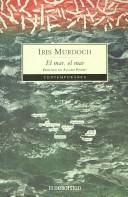 Iris Murdoch · 1978The Sea, the SeaLvl 6Slow burn
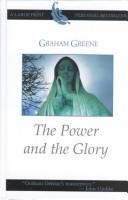 Graham Greene · 1940The Power and the GloryLvl 5Medium pace