

The House of the Spirits
Isabel Allende · b. 1942 · Chile
Originally La casa de los espíritus (Spanish) · translated by Magda Bogin
Why it matters
Clairvoyant Clara, patriarch Esteban, and three generations of Trueba women marching toward the coup that exiled Allende's own family. The Boom's magic carried into a woman's saga, and to tens of millions of readers.
At a glance
A linear multigenerational saga told in warm, accessible, uncomplicated prose.
Deep dive
Why a novel built on ghosts and prophecy behaves, by its final chapter, like a legal deposition — and how Clara's silence turns out to be the sharpest weapon in the book.
Written for readers who have finished the book. No plot recap, and nothing here is safe to read first.
Themes & symbolism
Allende borrows Garcia Marquez's total narrative confidence in the supernatural — nobody in this novel, including the narrator, ever pauses to justify Clara's telekinesis or her conversations with the dead — but relocates the magic from myth-making men to observant, largely powerless women. Clara's gifts are a private register of authority running alongside, and eventually outlasting, Esteban's public one: land, money, a Senate seat, eventually the army in the streets. Her retreats into silence, after Rosa's death and again after Esteban strikes her, aren't passivity so much as the one form of refusal available to a woman who owns nothing and controls nothing else; withdrawing her voice is the only leverage she has over a man who has already taken everything but that.
The novel's real subject is how violence reproduces itself across class lines disguised as family lines. Esteban's rape of Pancha Garcia doesn't stay in the past — it returns, decades later, as Esteban Garcia's rape and torture of Alba, revenge exacted not against the man who wronged him but against the granddaughter who embodies everything his illegitimacy denied him: a name, a house, standing in the world. The coup and the family's private cruelties are staged as the same mechanism at different scales, hereditary entitlement eventually answered by hereditary resentment, which is why the book can move from a poisoned wedding trousseau to a military junta without ever changing register.
Clara's Notebooks, Alba's Book
The novel is quietly framed as a document: Alba assembles it from Clara's diaries, which Clara kept, we're told, 'to see things in their true perspective and not lose the sense of proportion' rather than to organize plain fact. That framing turns the whole book into an argument about testimony as a counter to political erasure — the notebooks survive the dictatorship's attempt to erase what happened the way memory outlives a regime that would rather nothing be written down at all. It's not hard to hear Isabel Allende's own family history in this, cousin to a president overthrown and killed, writing a novel that insists the record must exist somewhere even when the state refuses one.
An Unnamed Country
The country is never named as Chile, the coup never dated as 1973, though nobody who picks up the book mistakes it for anywhere else. That refusal to name names is doing real work rather than coy evasion: it lets the household's magical register and the country's documentary one share a sentence without friction, since neither is bound to a specific, checkable historical record. The unnaming also universalizes what might otherwise read as a private settling of scores — this is a novel about one family's complicity in one country's authoritarian turn, but the absence of proper nouns lets it stand for the mechanism itself, not just the instance Allende happened to live through.
The last seal: what actually happens, and why it lands the way it does.
The ending, explained
Alba survives imprisonment and torture partly by heeding her dead grandmother's spectral counsel to endure by recording everything rather than seeking revenge on her jailer. Esteban Trueba, his once-formidable authority broken by the very authoritarianism he'd have cheered in his prime, is reconciled with her in old age. She begins assembling the family chronicle from Clara's notebooks — the novel we've just read — which closes the loop the book has been building toward: testimony, not vengeance, as the only adequate answer to what's been done to her family and her country.
Where to go next
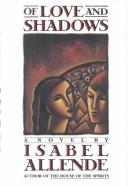 Isabel Allende · 1984Of Love and ShadowsLvl 4Medium pace
 Isabel Allende · 1987Eva LunaLvl 4Fast paced
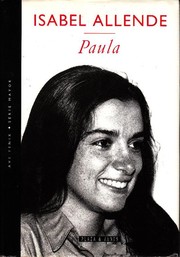 Isabel Allende · 1994PaulaLvl 4Medium pace
 Isabel Allende · 1999Daughter of FortuneLvl 4Fast paced
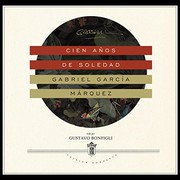 Gabriel García Márquez · 1967One Hundred Years of SolitudeLvl 6Medium pace
 Toni Morrison · 1987BelovedLvl 8Slow burn