
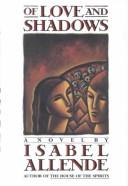
Of Love and Shadows
Isabel Allende · b. 1942 · Chile
Originally De amor y de sombra (Spanish) · translated by Margaret Sayers Peden
Why it matters
A journalist and a photographer investigate a young woman's disappearance and uncover a massacre a dictatorship buried in a mine shaft. Allende's angriest early book: love story and testimonio fused into one act of documentation.
At a glance
Accessible, linear storytelling carries a grim political subject without structural difficulty.
Deep dive
A journalist and a photographer chase a small human-interest story about a peasant girl's disappearance and end up uncovering exactly the kind of evidence a military government spends its whole existence trying to keep buried.
Written for readers who have finished the book. No plot recap, and nothing here is safe to read first.
Themes & symbolism
Irene Beltrán, a magazine journalist, and Francisco Leal, the photographer assigned to her, set out to cover Evangelina Ranquileo, a peasant girl whose seizures have made her a local curiosity, and the assignment escalates once Evangelina is taken by soldiers and never returns home. Allende bases the investigation that follows on real events documented during Pinochet's rule, most directly the 1978 discovery of mass graves at an abandoned lime kiln in Lonquén, and the novel tracks with procedural precision how a story that begins as filler content turns, almost against Irene and Francisco's own caution, into the kind of reporting a dictatorship treats as a direct threat to its survival.
The romance that develops between Irene and Francisco runs parallel to the investigation rather than as relief from it, and Allende insists on treating the two as inseparable: falling in love under a regime that punishes inconvenient truth becomes its own form of political defiance, since intimacy and trust are exactly what a surveillance state works hardest to make impossible. Francisco's family, several of them former activists now more cautious than he is, adds another register to that theme, the exhaustion and calculated silence of people who have already paid for resistance once and are reluctant to pay again, set against Irene and Francisco's slower, riskier decision to keep pursuing the story anyway.
Fiction as a Form of Documentation
Allende wrote the novel in exile, drawing directly on reports compiled by Chile's Vicaría de la Solidaridad, the Catholic human rights office that documented disappearances the state refused to acknowledge, and dedicated the book to the real victims found at Lonquén. That choice makes Of Love and Shadows function less as fiction loosely inspired by history than as a deliberate act of public record-keeping conducted through the novel form, at a moment when Chile's actual press was barred from reporting the same facts. The book's insistence on naming, in fictional guise, exactly what the regime was denying gives it a documentary weight closer to testimonio than to conventional romantic drama, even as it keeps Irene and Francisco's relationship at its emotional center.
The last seal: what actually happens, and why it lands the way it does.
The ending, explained
Irene and Francisco's investigation culminates in the exhumation of a hidden mine shaft packed with the bodies of Evangelina and more than a dozen other disappeared peasants, physical proof that directly contradicts the military's official account of her case. Publishing it comes at a steep personal cost: Irene is shot and severely wounded by soldiers sent to silence her, and both she and Francisco are forced to flee the country once the story breaks, their exile standing in for the fate of countless real journalists and witnesses under the dictatorship. Allende ends on that costly, incomplete victory rather than a clean triumph: the evidence gets out and the truth is now undeniable, but truth alone doesn't restore what a state built on disappearance has already taken.
Where to go next
 Isabel Allende · 1982The House of the SpiritsLvl 4Fast paced
 Isabel Allende · 1987Eva LunaLvl 4Fast paced
 Isabel Allende · 1994PaulaLvl 4Medium pace
 Isabel Allende · 1999Daughter of FortuneLvl 4Fast paced
 Gabriel García Márquez · 1967One Hundred Years of SolitudeLvl 6Medium pace
 Toni Morrison · 1987BelovedLvl 8Slow burn