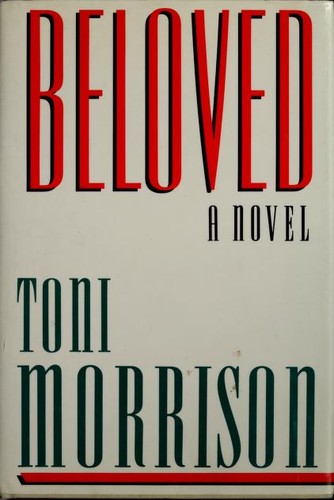
Beloved
Toni Morrison · 1931–2019 · USA
Why it matters
A mother kills her daughter rather than return her to slavery, and the daughter comes back. The American novel's deepest reckoning with its founding crime: Nobel-sealing, canon-defining, unforgettable.
At a glance
Fractured time, haunting narration, and elliptical trauma-telling resist a linear read.
Deep dive
What the ghost in 124 is actually made of — an unpaid debt made flesh — and why Sethe's love alone can't settle the account she owes.
Written for readers who have finished the book. No plot recap, and nothing here is safe to read first.
Themes & symbolism
Sethe's act reframes motherlove as the one thing slavery couldn't confiscate, then shows exactly how monstrous that love becomes once its only available expression is destruction: "I stopped him. I took and put my babies where they'd be safe" is Sethe's own syntax for infanticide, a logic the community can't forgive precisely because they understand it. Beloved's return literalizes an unpaid debt — eighteen years of a mother's presence, of milk not given — and she comes back demanding to be fed it bodily, draining Sethe in a mirror image of the neglect she's avenging.
Morrison's key term is rememory: trauma isn't something that recedes into the past, it's a place that still exists and that you can physically walk back into, the way Sethe insists Sweet Home is still standing somewhere, waiting. The chokecherry-tree scar on Sethe's back — beautiful language draped over a whipping — and the theft of her breast milk by schoolteacher's nephews (recorded, notoriously, on the same ledger page that lists her animal characteristics) work the same way: language and paperwork doing violence that looks, on its surface, almost administrative.
Rememory and the Shape of the Novel
The book withholds the killing itself for most of its length, circling it through fragments given to Sethe, Denver, and finally Beloved in competing, overlapping first-person passages that refuse chronological order. This isn't ornamentation — it's the novel enacting its own thesis, that traumatic memory doesn't sit quietly in the past tense but erupts sideways, unbidden, exactly the way Beloved herself does.
Margaret Garner and the History Behind the Story
Morrison based the novel on Margaret Garner, an enslaved woman who in 1856 killed her daughter rather than see her returned to slavery under the Fugitive Slave Act, a case Morrison encountered as a newspaper clipping while editing an anthology of Black history. The dedication — "Sixty Million and more" — gestures past Garner to the uncounted dead of the Middle Passage, framing the novel as a monument for people history kept no ledger of at all.
The last seal: what actually happens, and why it lands the way it does.
The ending, explained
Thirty women from the community, led by Ella, gather outside 124 and drive Beloved out not with violence but with collective sound — singing, shouting, breaking the isolation that had let Sethe's guilt calcify into a private haunting. When Sethe sees Edward Bodwin arriving, her fractured mind mistakes him for schoolteacher returning to take her last child, and she runs at him with an ice pick — the same impulse as years before, but this time aimed outward, a corrected repetition that protects rather than destroys. Beloved vanishes; the town agrees to forget her, footprints coming and going by the river. The closing refrain, "This is not a story to pass on," repeated even as it's just been told, insists that this particular trauma resists being safely memorialized and yet demands remembering anyway.