
Eva Luna
Isabel Allende · b. 1942 · Chile
Originally Eva Luna (Spanish) · translated by Margaret Sayers Peden
Why it matters
An orphaned storyteller narrates her own picaresque rise through an unnamed Latin American country. Allende spins the Scheherazade tale into a feminist bildungsroman: the power of storytelling as survival.
At a glance
An accessible, episodic picaresque narrated in warm, straightforward prose.
Deep dive
An orphan raised through a chain of other people's households turns her gift for invention into a living, while a filmmaker with his own inherited history films the country's unraveling from the opposite side of the same story.
Written for readers who have finished the book. No plot recap, and nothing here is safe to read first.
Themes & symbolism
Eva Luna, born to an indigenous servant in an unnamed South American country modeled closely on Venezuela, moves through a succession of households as a child, a blind woman's companion, a Yugoslav prospector's charge, a repressive family's maid, and Allende builds the early chapters almost as a catalogue of the arrangements poor women without family protection are forced to accept in order to survive. What Eva carries out of each household intact is storytelling itself, a skill she first develops as literal currency, trading tales for food and shelter, before it becomes the means by which she eventually writes herself into economic independence as a telenovela scriptwriter, one of the only trades in the novel that pays a woman for her imagination rather than her body or her labor.
Rolf Carlé, an Austrian immigrant filmmaker whose own family history includes his father's unexamined participation in Nazi violence, runs as Eva's structural counterpart for most of the book, his documentary camera doing for the visual record of the country's political unrest what Eva's storytelling does for its private, unrecorded lives. Allende keeps the two narratives separate for most of the novel's length before letting them intersect, a structural choice that argues invention and documentation are not opposites but two methods of doing the same necessary work, holding onto a version of events that power would rather nobody kept.
The Storyteller as Her Own Author
Allende frames Eva Luna as if Eva herself were narrating the book we're reading, collapsing the distance between the character who tells stories for a living and the novel that exists because of that gift, a device that turns Eva's eventual authorship of hit telenovelas into a wink at Allende's own career, since Allende had worked in Venezuelan television before turning to fiction. The self-reflexive frame lets the novel argue for popular, commercial storytelling, exactly the kind of melodrama serious literature usually looks down on, as a legitimate and even essential way for people without institutional power to shape how their own country understands itself.
The last seal: what actually happens, and why it lands the way it does.
The ending, explained
As the country's dictatorship comes under growing pressure, Eva's storytelling and Rolf's camera converge on a single, dangerous act: helping to free Huberto Naranjo, a childhood friend turned guerrilla leader, and other prisoners, with Rolf documenting the operation's aftermath as journalism even as Eva has helped invent its cover story. The rescue succeeds, the regime's grip visibly loosens, and Eva and Rolf, who have circled each other's lives for the length of the novel without settling into partnership, finally come together as the political crisis resolves around them. Allende ends on that pairing of private and public liberation happening in the same breath, Eva's years of practiced invention and Rolf's years of practiced witnessing finally put to use on the same true story rather than separate ones.
Where to go next
 Isabel Allende · 1982The House of the SpiritsLvl 4Fast paced
 Isabel Allende · 1984Of Love and ShadowsLvl 4Medium pace
 Isabel Allende · 1994PaulaLvl 4Medium pace
 Isabel Allende · 1999Daughter of FortuneLvl 4Fast paced
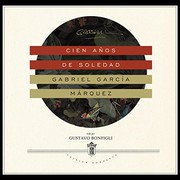 Gabriel García Márquez · 1967One Hundred Years of SolitudeLvl 6Medium pace
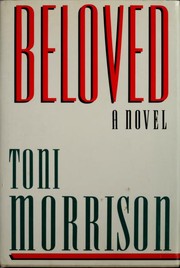 Toni Morrison · 1987BelovedLvl 8Slow burn