
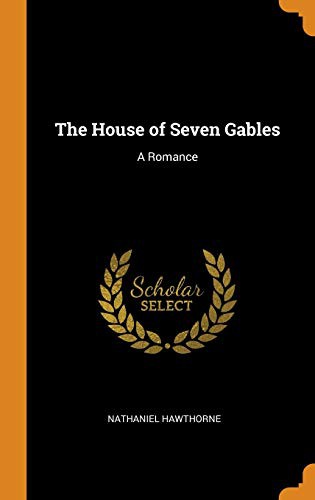
The House of the Seven Gables
Nathaniel Hawthorne · 1804–1864 · United States
Why it matters
A decaying New England family mansion carries the curse of an ancestor's judicial murder across generations. Hawthorne's Gothic study of inherited guilt and the sins that outlive their sinners.
At a glance
Hawthorne's dense, allegorical prose slows the plot to a crawl.
Deep dive
How a Puritan judge's theft of a condemned man's land two centuries earlier keeps collecting on its debt inside one crumbling gabled house, generation after generation.
Written for readers who have finished the book. No plot recap, and nothing here is safe to read first.
Themes & symbolism
Colonel Pyncheon has the carpenter Matthew Maule hanged as a witch in order to seize Maule's land and build the seven-gabled house on it, and Maule's dying curse, that God will give the Pyncheons blood to drink, recurs across two centuries as a family pattern of sudden, throat-related deaths, starting with the Colonel himself, found dead in his chair the day the house is finished. Hawthorne, whose own ancestor sat as a judge at the Salem trials, builds the novel as a study in inherited guilt: a fortune built on an unpunished crime keeps generating its own low-grade poison in every generation that lives off it without ever answering for how it was acquired.
In the novel's present, Hepzibah Pyncheon, poor and glowering, opens a cent-shop in the house's front room out of sheer necessity; her brother Clifford returns broken after decades in prison for a murder he didn't commit, framed by their cousin Judge Pyncheon, who has inherited both the family fortune and the Colonel's rapacity intact; and Phoebe, a sunny country cousin, arrives and begins undoing the house's gloom by force of temperament alone. Holgrave, a bohemian daguerreotypist boarding upstairs, is secretly the last of the Maules, drawn to Phoebe in a courtship that quietly proposes to settle, two hundred years late, the debt the Colonel never paid.
Daguerreotypy as the House's New Witchcraft
Holgrave's camera, a genuinely novel technology in the 1840s, becomes the book's modern counterpart to the Maules' rumored hypnotic power over Pyncheon women across the generations: his portraits are said to catch a sitter's true, unguarded character rather than the practiced expression a subject offers on purpose, and he uses one such image, taken of the dead Judge Pyncheon, to expose exactly the same rapacious look the Colonel wears in his own ancestral portrait. Hawthorne treats the two men's hidden faces as literally the same face, inherited whole across two hundred years of respectable disguise.
The last seal: what actually happens, and why it lands the way it does.
The ending, explained
Pressuring Clifford for the location of a deed to a vast, long-disputed tract of Maine land, Judge Pyncheon dies suddenly and alone in the same chair the Colonel died in, of the same hereditary throat ailment, an event the terrified Hepzibah and Clifford flee before anyone else realizes he's dead, briefly suspected of a crime that is, this time, heredity's doing rather than anyone's. Holgrave locates the genuinely lost deed hidden behind the Colonel's portrait, worthless now as a legal claim but decisive as a symbol, and he and Phoebe marry, joining Pyncheon blood to Maule blood at last. The survivors leave the old gabled house for the Judge's more modern country estate, letting two centuries of grievance stand empty behind them, Hawthorne's stated moral, that one generation's sin becomes the next generation's calamity until somebody finally chooses otherwise, arriving exactly as promised.
Where to go next
 Nathaniel Hawthorne · 1850The Scarlet LetterLvl 7Slow burn
 Edgar Allan Poe · 1839Selected Tales of Mystery and ImaginationLvl 6Fast paced
 Herman Melville · 1851Moby-DickLvl 8Slow burn
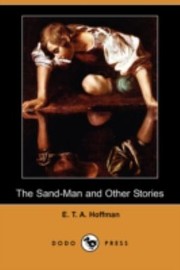 E. T. A. Hoffmann · 1816The SandmanLvl 6Medium pace
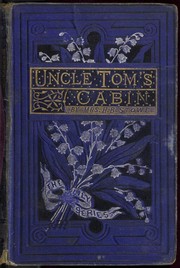 Harriet Beecher Stowe · 1852Uncle Tom's CabinLvl 4Medium pace
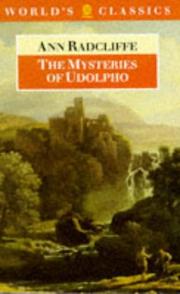 Ann Radcliffe · 1794The Mysteries of UdolphoLvl 5Slow burn