
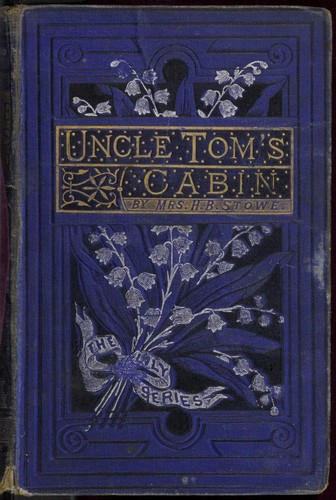
Uncle Tom's Cabin
Harriet Beecher Stowe · 1811–1896 · United States
Why it matters
An enslaved man's suffering and endurance is dramatized for a mass white readership that had never been forced to confront it directly. The century's bestselling novel after the Bible, credited with hardening Northern opposition to slavery.
At a glance
Direct, moralizing prose written for broad accessibility.
Deep dive
A novel built to weaponize the reader's tears — and the reason its own hero became, a century later, the very insult its admirers never saw coming.
Written for readers who have finished the book. No plot recap, and nothing here is safe to read first.
Themes & symbolism
Stowe wasn't writing for posterity; she was writing to move a specific, comfortable Northern white readership to specific political action, and the novel's sentimentality — the extended deathbed scenes, the direct authorial appeals to mothers in the audience, the piling-on of pathos — is a deliberate rhetorical technology rather than a lapse in taste. It worked: the book is credited with hardening Northern opposition to slavery in the run-up to the Civil War more than any political tract of its era managed, precisely because it converted an abstract institution into an unbearable procession of individual suffering that readers could not hold at arm's length.
But the novel hedges its own argument with the model of resistance it endorses. Tom's path is passive, Christian endurance — he refuses complicity in cruelty but never strikes back, and dies forgiving his killers in terms the novel frames as Christlike martyrdom. Eliza and George Harris get the opposite arc: active flight, a river crossed on breaking ice, armed self-defense, and a successful escape to freedom. The novel needs both models to make its case, but it's Tom's passivity that the title enshrined, and it's exactly that passivity — dignified within the book's own terms — that curdled across the twentieth century into 'Uncle Tom' as a slur for racial servility, a reversal Stowe could not have anticipated and that now sits uneasily over the novel's abolitionist intentions. Modern critics have also noted, with more discomfort than Stowe's original readers registered, that even the novel's sympathetic portraits lean on racial stereotype — Tom's saintly patience, Topsy's comic wildness — so that a book built to argue for enslaved people's full humanity does so partly through the era's own limited vocabulary for imagining Black characters at all.
The Book That Started a War
It was the best-selling American novel of the nineteenth century, outsold only by the Bible, and the (possibly embellished, endlessly repeated) story of Lincoln greeting Stowe as the little woman who started the great war captures something real about its reception: fiction as direct political instrument, credited with converting private sympathy into public will in a way pamphlets and speeches hadn't managed.
A Villain Imported from the North
Simon Legree is pointedly not a native Southern planter but a transplanted New Englander who has gone further into cruelty than the Southern-born characters around him ever do — a detail that keeps Stowe's argument from letting Northern readers off the hook by regionalizing evil. The novel's real target is the institution itself and the economic logic that lets any man, wherever he's from, treat people as property once the law permits it.
The last seal: what actually happens, and why it lands the way it does.
The ending, explained
Simon Legree has Tom beaten to death after Tom refuses, on religious grounds, to whip a fellow enslaved woman; Tom dies forgiving Legree and his enforcers, having already converted two of Legree's own overseers to gentleness through the example of his suffering. George Shelby, son of Tom's original owner, arrives just after death to buy back and free him, too late — but resolves on the spot to free everyone still enslaved on the family estate, explicitly invoking Tom's cabin and memory as the occasion. The ending converts Tom's individual martyrdom into a call for collective, if belated, emancipation, closing the novel's central argument that Christian conscience and slavery cannot coexist.
Where to go next
 Edgar Allan Poe · 1839Selected Tales of Mystery and ImaginationLvl 6Fast paced
 Herman Melville · 1851Moby-DickLvl 8Slow burn
 Nathaniel Hawthorne · 1850The Scarlet LetterLvl 7Slow burn
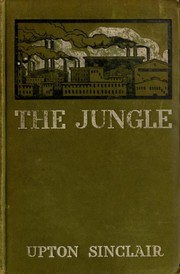 Upton Sinclair · 1906The JungleLvl 4Medium pace
 Victor Hugo · 1862Les MisérablesLvl 5Slow burn
 Heinrich von Kleist · 1810Michael KohlhaasLvl 6Fast paced