The American Renaissance
Poe, Hawthorne, Melville, and Stowe give the young republic its own dark Romanticism.
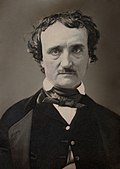
The young republic's literature found its own dark Romanticism in the decades before the Civil War. Edgar Allan Poe engineered dread with mathematical precision, inventing the detective story and the modern horror tale within one restless career. Nathaniel Hawthorne turned Puritan guilt into allegory dense enough to keep arguing with itself, The Scarlet Letter's scarlet A refusing to mean just one thing. Herman Melville then took the novel out to metaphysical open water: Moby-Dick chases a whale and the nature of evil in the same breath.
Harriet Beecher Stowe proved a novel could move a nation: Uncle Tom's Cabin sold more copies than anything published in America before it and hardened abolitionist feeling into a cause Lincoln reportedly credited with starting the war outright. The movement's other engine was the short story itself, refined into a deliberate art form; Poe's theory of the 'single effect' gave the form its first serious aesthetic argument. Together they proved American fiction could carry both a nation's conscience and its nightmares.
How to spot it on the page
- Puritan guilt and inherited sin worked out as dense, multivalent allegory
- Dread engineered with near-mathematical precision toward a single controlling effect
- The sea, the forest, or the frontier as a metaphysical proving ground
- A moral emblem (a scarlet letter, a white whale) that refuses to mean just one thing
- Sentimental appeal deployed deliberately as a political weapon
- The short story elevated from filler to a serious, theorized art form
What it left behind
The Civil War the era had been writing toward finally arrived and absorbed its energies; Melville died half-forgotten and was rediscovered only in the 1920s. But its dark inheritance never left American fiction: Poe fathered horror, detective fiction, and the unreliable narrator in one stroke, and Hawthorne's allegorical guilt runs straight through Faulkner into the Southern Gothic he helped invent at one remove.
Defining works
For a guided order with notes, follow the reading path →
Nathaniel Hawthorne · 1850
An adulteress is forced to wear a scarlet 'A' embroidered on her chest in Puritan Boston, while her secret partner's guilt eats him alive in silence. American fiction's founding study of sin, shame, and hypocrisy.
Herman Melville · 1851
A whaling voyage that swells into metaphysics: Ahab against the white whale, with chapters on cetology, rope, and God. It sank Melville's career and now stands as the great American novel's great American rival.
Edgar Allan Poe · 1839
'The Fall of the House of Usher,' 'The Tell-Tale Heart,' 'The Cask of Amontillado': Poe's stories of premature burial, guilt, and calculated murder invented psychological horror as a literary form in miniature.
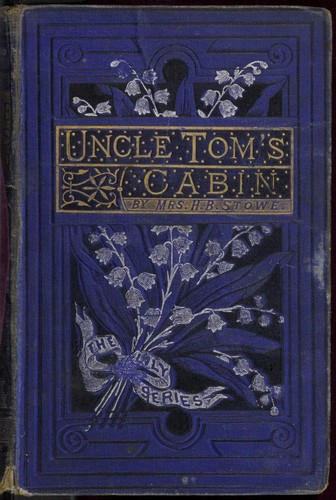
Harriet Beecher Stowe · 1852
An enslaved man's suffering and endurance is dramatized for a mass white readership that had never been forced to confront it directly. The century's bestselling novel after the Bible, credited with hardening Northern opposition to slavery.