
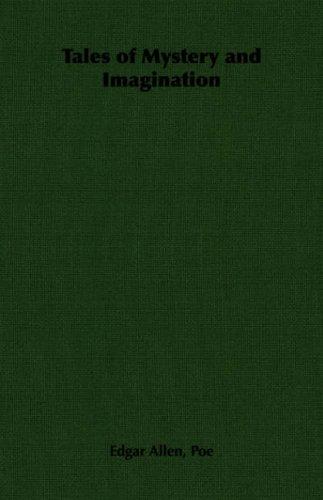
Selected Tales of Mystery and Imagination
Edgar Allan Poe · 1809–1849 · United States
Why it matters
'The Fall of the House of Usher,' 'The Tell-Tale Heart,' 'The Cask of Amontillado': Poe's stories of premature burial, guilt, and calculated murder invented psychological horror as a literary form in miniature.
At a glance
Ornate period diction and elaborate sentence structures throughout.
Deep dive
Premature burial, doubled selves, and confessions delivered by narrators who insist on their own sanity while proving otherwise, gathered into the stories that invented several genres at once.
Written for readers who have finished the book. No plot recap, and nothing here is safe to read first.
Themes & symbolism
Poe's most memorable narrators, the unnamed killer of 'The Tell-Tale Heart,' the increasingly unhinged husband of 'The Black Cat,' Montresor confessing 'The Cask of Amontillado' decades after the fact, all insist loudly on their own composure and rationality at the exact moments their telling proves otherwise. The gap between what a narrator claims about himself, calm, methodical, sane, and what his own sentences give away, obsessive rhythm, self-justifying loops, an inability to stop circling the crime, is Poe's most reliable engine across the collection, unreliable narration deployed with total confidence decades before the term existed to describe it.
Live burial and enclosure recur across these stories as literalized dread rather than metaphor: Madeline Usher sealed in a vault while still alive, the narrator of 'The Premature Burial' obsessed with a period terror real enough to have produced patented safety coffins with bells and breathing tubes, the swinging blade and closing walls of 'The Pit and the Pendulum,' Fortunato bricked alive into a wine cellar niche in 'Amontillado.' Poe keeps returning to the same architecture, a body sealed inside a structure it cannot escape, because it doubles as his best image for a mind sealing itself against a knowledge, guilt, mortality, its own unreliability, it cannot bear to let in.
The House That Thinks
'The Fall of the House of Usher' collapses the distinction between a family and its architecture until the two are barely separable: Roderick Usher's own nervous degeneration proceeds in step with cracks spreading through his ancestral mansion, and Poe describes the house's blank windows and rank vegetation with the same vocabulary he uses for Roderick's face, as though the building were a body and the family's decline were structural rather than merely psychological. The title's double meaning, a family line and a physical house, both falling at once, is the story's whole argument stated as a pun: Usher blood and Usher stone were never really two different things.
Dupin and the Invention of Deduction
'The Murders in the Rue Morgue' introduces C. Auguste Dupin, an amateur reasoner who solves a locked-room killing by treating observation and imagination as complementary tools rather than opposites, a method he calls ratiocination. Arthur Conan Doyle acknowledged the direct debt Sherlock Holmes owed Dupin's cold, exacting method and his admiring, slower-witted narrator companion, a pairing Poe essentially invented here first. The story's solution, deliberately unsettling rather than merely clever, matters less than the method Poe hands off to an entire genre: a detective who reasons backward from physical detail to hidden cause, and trusts the reasoning completely.
Where to go next
 Edgar Allan Poe · 1838The Narrative of Arthur Gordon PymLvl 6Fast paced
 E. T. A. Hoffmann · 1816The SandmanLvl 6Medium pace
 Horacio Quiroga · 1917Stories of Love, Madness, and DeathLvl 4Fast paced
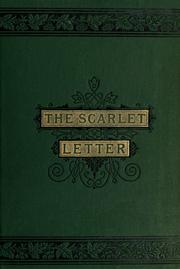 Nathaniel Hawthorne · 1850The Scarlet LetterLvl 7Slow burn
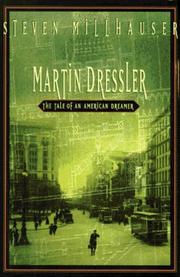 Steven Millhauser · 1996Martin Dressler: The Tale of an American DreamerLvl 5Medium pace
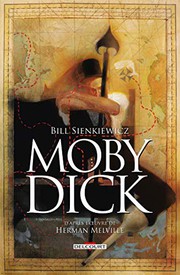 Herman Melville · 1851Moby-DickLvl 8Slow burn