
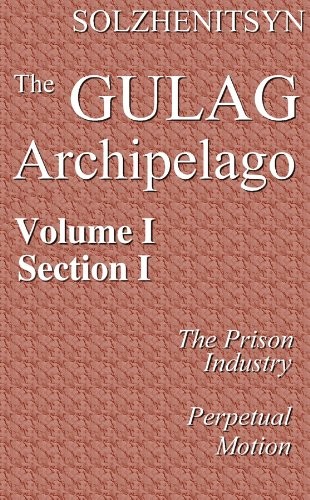
The Gulag Archipelago
Aleksandr Solzhenitsyn · 1918–2008 · Russia
Originally Arkhipelag GULag (Russian)
Why it matters
Solzhenitsyn's own eight-year sentence, braided with testimony smuggled from 227 other prisoners, becomes a documentary indictment of the entire Soviet penal system. Its 1973 Paris publication, and the exile that followed, made a single book an act of Cold War history.
At a glance
A vast three-volume record moves between personal memoir, courtroom-grade research, and mordant essayistic digression.
Deep dive
One prisoner's sentence, braided with 227 smuggled testimonies, assembled into a documentary case that the entire Soviet state depended on nobody ever compiling.
Written for readers who have finished the book. No plot recap, and nothing here is safe to read first.
Themes & symbolism
Solzhenitsyn refuses to let the book settle into a single genre, subtitling it 'An Experiment in Literary Investigation' because it is simultaneously his own memoir of arrest and interrogation, a vast documentary history assembled from 227 other former prisoners' testimony gathered in secret, and a bitterly ironic essayistic argument that the Soviet state's legitimacy depended entirely on nobody ever compiling this material in one place. His central and most explosive claim is that the camp system wasn't a Stalinist aberration grafted onto a sound Leninist project but was built into the state from its founding — a direct challenge to Western fellow-travelers who wanted to file the Gulag under 'excesses' rather than architecture.
The book's most quoted line, that the line dividing good and evil runs through every human heart rather than between classes or nations, is its real moral argument, aimed squarely at the Marxist framework that assigns guilt or innocence by class origin — Solzhenitsyn insists interrogators and prisoners alike remain morally answerable as individuals, which is why so much of the text lingers on specific small acts of betrayal or quiet resistance rather than resting on systemic analysis alone. The 'archipelago' of the title does real symbolic work too: the camps are scattered like islands across Soviet geography, invisible from the mainland of ordinary life unless you know to look, which is precisely the concealment the book exists to end.
A Book Written to Survive Its Own Seizure
Solzhenitsyn composed the manuscript in secret over roughly a decade, keeping no single complete copy in one place and distributing fragments among trusted friends specifically so the KGB could never seize the whole thing at once. That precaution failed when a copy held by his typist, Elizaveta Voronyanskaya, was seized after her interrogation, followed by her death days later, still not fully explained. Solzhenitsyn responded by authorizing immediate publication in Paris rather than risk further suppression, a decision that led directly to his own arrest and forced exile from the USSR in 1974 and turned the book itself into a Cold War event: quite possibly the single work most credited with breaking Western intellectual sympathy for the Soviet project.
Where to go next
 Aleksandr Solzhenitsyn · 1962One Day in the Life of Ivan DenisovichLvl 3Fast paced
 Aleksandr Solzhenitsyn · 1966Cancer WardLvl 5Medium pace
 Aleksandr Solzhenitsyn · 1968The First CircleLvl 6Medium pace
 Aleksandr Solzhenitsyn · 1971August 1914Lvl 7Slow burn
 Mikhail Sholokhov · 1928And Quiet Flows the DonLvl 5Medium pace
 Vasily Grossman · 1980Life and FateLvl 7Medium pace