
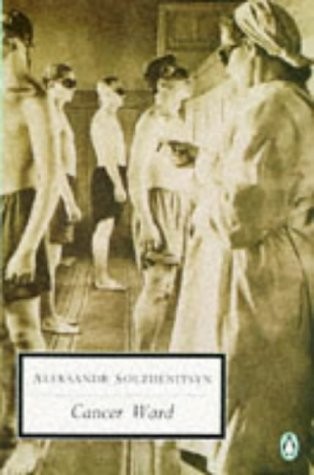
Cancer Ward
Aleksandr Solzhenitsyn · 1918–2008 · Russia
Originally Rakovy Korpus (Russian)
Why it matters
Patients in a Soviet cancer ward argue life, death, and the state that shaped them. Solzhenitsyn turns a hospital into an allegory of a nation, and illness into a reckoning with how a good life is lived.
At a glance
A large ensemble of patients trades lengthy ideological dialogue within a single setting.
Deep dive
A Tashkent oncology ward levels every rank the Soviet system built, and puts a freshly released camp prisoner in the bed next to the Party man who signed denunciations like his.
Written for readers who have finished the book. No plot recap, and nothing here is safe to read first.
Themes & symbolism
Oleg Kostoglotov arrives at Ward 13 straight from internal exile, a former prisoner whose only crime, outside these walls, was surviving; inside the ward, cancer erases the distinction the Soviet system spent his whole adult life enforcing, and the disease works down the corridor without checking anyone's file. Solzhenitsyn draws the ward as a compressed model of the country itself: doctors who withhold diagnoses the way the state withholds facts, patients trading rumor and hope in place of information nobody in authority will give them straight, a hierarchy of beds and privileges that mimics the hierarchy just outside the hospital gates.
Pavel Rusanov, a personnel officer who built his career on denunciation forms, discovers a tumor on his neck and is admitted to the same ward as men whose lives his paperwork helped ruin, and his horror at sharing a room with 'that sort' curdles, slowly, into fear of what illness has stripped from him: the rank that used to protect him from ever having to actually look at the people he reported on. Solzhenitsyn refuses him a redemption arc, letting his self-justifications keep running even as his body betrays him, which is the harsher and more honest choice.
The hormone treatment Kostoglotov undergoes without being told what it will cost him, an effective cure that also ends his sexual vitality, gives the novel its bluntest image of a state that decides what is good for a body without consulting the person inside it: he is cured and diminished by the same injection, medicine practiced with exactly the paternalism of the system that sentenced him.
A Manuscript Treated Like the Diagnoses in It
Solzhenitsyn wrote Cancer Ward out of his own 1954 treatment for the cancer he developed in the camps and in the internal exile that followed his sentence, in the same Tashkent hospital he gives to Kostoglotov, and the manuscript met the same evasive, gatekeeping caution the novel diagnoses in its doctors. Soviet journals set it for publication and then quietly withdrew it after the political weather changed following Khrushchev's fall, and it reached readers first as samizdat and then in foreign editions years before it could legally appear at home, banned outright after Solzhenitsyn's 1969 expulsion from the Writers' Union.
The last seal: what actually happens, and why it lands the way it does.
The ending, explained
Discharged and still weak, Kostoglotov spends his day of freedom wandering Tashkent, buying ordinary things he has been denied for years, and stops at the zoo, where a monkey blinded after a visitor threw tobacco in its eyes becomes the day's plainest image: cruelty needs no ideology, only opportunity. He chooses not to seek out either Zoya or Vera, the two women the hospital had opened to him, aware that the treatment that saved his life has left him with nothing to offer either of them. He boards a train back to the exile settlement he is still legally bound to, cured of the cancer and uncured of everything the state has already taken, freedom arriving as a return to the same unfreedom he left the ward to face.
Where to go next
 Aleksandr Solzhenitsyn · 1962One Day in the Life of Ivan DenisovichLvl 3Fast paced
 Aleksandr Solzhenitsyn · 1968The First CircleLvl 6Medium pace
 Aleksandr Solzhenitsyn · 1971August 1914Lvl 7Slow burn
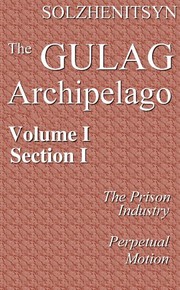 Aleksandr Solzhenitsyn · 1973The Gulag ArchipelagoLvl 6Slow burn
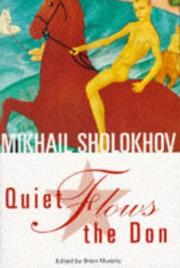 Mikhail Sholokhov · 1928And Quiet Flows the DonLvl 5Medium pace
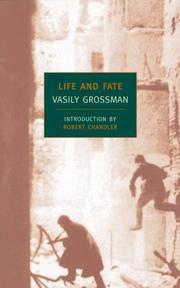 Vasily Grossman · 1980Life and FateLvl 7Medium pace