
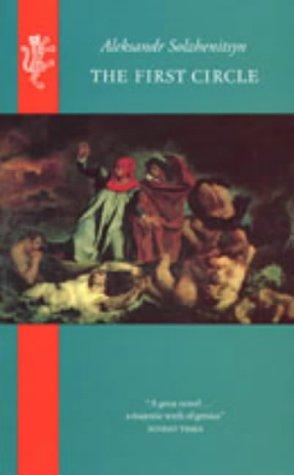
The First Circle
Aleksandr Solzhenitsyn · 1918–2008 · Russia
Originally V Kruge Pervom (Russian)
Why it matters
Prisoner-scientists in a relatively humane Moscow research prison must choose between comfort bought by collaboration and integrity bought at the price of the ordinary camps. Solzhenitsyn's Dantean title names the bargain every zek in his fiction eventually has to make.
At a glance
A wide ensemble cast debates philosophy and complicity within a single claustrophobic institution.
Deep dive
Marfino's prisoner-scientists live one rung above the ordinary camps, and a single anonymous phone call sets the sharashka's own research project to work on identifying the man who made it.
Written for readers who have finished the book. No plot recap, and nothing here is safe to read first.
Themes & symbolism
The Marfino sharashka is a prison in name only, its inmates fed decently and allowed books and conversation in exchange for research labor the state actually wants, and Solzhenitsyn uses that comparative comfort to sharpen rather than soften the moral question at the novel's center: whether accepting even a survivable, humane version of unfreedom is its own kind of collaboration. Gleb Nerzhin, Lev Rubin, and Dimitri Sologdin divide the argument three ways, Nerzhin refusing every compromise that might buy him comfort, Rubin a convinced Communist defending the system that imprisoned him, Sologdin gaming the sharashka's incentives for his own advancement, and none of the three positions gets to be simply right.
Innokenty Volodin, the diplomat whose brief, anonymous warning call to a doctor about an impending arrest opens the novel, never meets any of the scientists whose voice-identification research is being built specifically to trace his call back to him, and Solzhenitsyn keeps the two plots running in ignorance of each other until the state's machinery closes the gap. The sharashka's actual assignment, refining a device to identify a speaker by voiceprint, turns Nerzhin's own colleagues into unwitting instruments of the surveillance apparatus that will destroy the one man in the novel who acted, briefly and decently, against it. Solzhenitsyn draws directly on his own two years inside a real Moscow sharashka as a mathematician-prisoner, and the novel's granular detail about its privileges and its coercions, the decent food, the permitted books, the constant awareness that any of it can be withdrawn for insufficient cooperation, reads as reportage disguised as ensemble fiction.
The Version Solzhenitsyn Sent Abroad First
The text that first circulated in the West in 1968 was a deliberately softened, eighty-seven chapter variant, in which Volodin's call concerns medical secrets rather than an open political warning, a change Solzhenitsyn made to lower the risk to himself if a copy were seized before he was safely out of the Soviet Union. Only once he was living in exile did he restore the full ninety-six chapter text under the title In the First Circle, sharpening Volodin's act into the plainly political gesture it was always meant to be. The two versions differ enough in motive and stakes that Solzhenitsyn effectively published the same novel twice, the first draft engineered for survival, the second for the truth the first one couldn't risk telling.
The last seal: what actually happens, and why it lands the way it does.
The ending, explained
Volodin's call is traced by the very device Nerzhin's sharashka has been perfecting, and he is arrested, interrogated, and delivered into the ordinary camp system the sharashka's relative comfort has spent the whole novel holding at arm's length. Nerzhin, transferred out of Marfino in a general reshuffling of prisoners shortly after, ends the novel on a truck bound for that same ordinary system, glimpsing Volodin without either man recognizing what the other has just cost or been cost. Solzhenitsyn closes not on martyrdom but on interchangeability: the sharashka's privileged prisoners and the anonymous man they've just helped destroy are revealed, in the last pages, to be riding the identical machinery toward the identical fate, at different speeds.
Where to go next
 Aleksandr Solzhenitsyn · 1962One Day in the Life of Ivan DenisovichLvl 3Fast paced
 Aleksandr Solzhenitsyn · 1966Cancer WardLvl 5Medium pace
 Aleksandr Solzhenitsyn · 1971August 1914Lvl 7Slow burn
 Aleksandr Solzhenitsyn · 1973The Gulag ArchipelagoLvl 6Slow burn
 Mikhail Sholokhov · 1928And Quiet Flows the DonLvl 5Medium pace
 Vasily Grossman · 1980Life and FateLvl 7Medium pace