
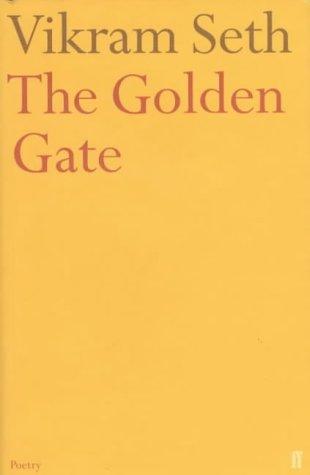
The Golden Gate
Vikram Seth · b. 1952 · India
Why it matters
Young professionals fall in and out of love in 1980s San Francisco, their entire story told in nearly six hundred Pushkin-style sonnet stanzas. Seth's audacious debut: a verse novel that shouldn't work and somehow, effortlessly, does.
At a glance
A strict, rhymed sonnet-stanza form runs throughout, unlike anything else in the genre.
Deep dive
A lonely Silicon Valley engineer gets set up on a blind date by the ex-girlfriend who still loves him, and Vikram Seth tells the whole tangle of 1980s San Francisco yuppies in the same fourteen-line stanza Pushkin used for Eugene Onegin, all the way to an ending with a very unfashionable amount of feeling behind it.
Written for readers who have finished the book. No plot recap, and nothing here is safe to read first.
Themes & symbolism
John Brown's loneliness, the kind that a successful computer career and a rotating cast of interested friends can't actually touch, is the engine under the novel's satire of Reagan-era California: Janet Hayakawa places a personal ad on his behalf out of loyalty rather than romance, and the trial lawyer Liz Dorati who answers it draws John into a social world, EST-style self-actualization seminars, nuclear-freeze activism, wine country weekends, built entirely around the promise that enough effort can fix what's actually just an unwillingness to be known.
Liz's own drift, first toward John, then toward his best friend Phil Weiss, a former nuclear engineer turned peace activist wrestling with the same industry Liz's politics oppose, gives the novel its clearest example of how thin the line runs between romantic and political conviction in this milieu: characters keep falling in love at exactly the meetings and marches where they're supposedly falling in love with a cause instead.
Ed, Liz's brother, spends the novel wrestling with his own homosexuality against the Catholicism he can't quite set down, and Seth gives him none of the comic detachment he affords John's circle of engineers and lawyers: Ed's chapters are the novel's most unguarded, a reminder that under all the verse form's formal cleverness sits a genuinely serious inventory of what 1980s San Francisco actually asked its residents to reconcile.
Borrowing Onegin's Stanza for Reagan's California
Seth builds all 590 stanzas on the same aBaBccDDeFFeGG rhyme scheme and iambic tetrameter Pushkin used for Eugene Onegin, by way of Charles Johnston's English translation, which Seth has said he read compulsively before starting his own book. The strictness is the joke and the achievement at once: watching Silicon Valley office politics, self-actualization seminars, and nuclear-freeze rallies submit to a nineteenth-century Russian verse form generates most of the novel's comedy, while the discipline the form demands keeps that comedy from curdling into mere cleverness.
A Cat Named Charlemagne and the Small Wars of Cohabitation
Liz's cat, which John can't stand and which Liz refuses to negotiate about, recurs across the novel as the kind of ordinary domestic friction that never makes it into a synopsis but quietly decides whether two people can actually live together, and Seth's willingness to spend real stanzas on a cat is itself an argument: a household is built or broken at exactly this scale of irritant, not by the grander incompatibilities everyone assumes matter more.
The last seal: what actually happens, and why it lands the way it does.
The ending, explained
John's fling with Janet, the loyal friend who placed the personal ad that started the novel, ends when she and two other friends die together in a car accident, a loss that flattens the light satirical tone Seth has sustained for hundreds of stanzas. Liz, having already left John for Phil after their own engagement collapsed, marries him, drawn together as much by shared activism as by romance, and it's Phil and Liz who ask a grieving John to stand godfather to their newborn son. The gesture doesn't undo John's isolation so much as fold him back into a family he's no longer at the center of, Seth's very unfashionable point being that the Onegin stanza's strict, almost frivolous form can still carry real grief without breaking stride.
Where to go next
 Vikram Seth · 1993A Suitable BoyLvl 3Medium pace
 Aravind Adiga · 2008The White TigerLvl 4Fast paced
 Amitav Ghosh · 1988The Shadow LinesLvl 7Slow burn
 Kiran Desai · 2006The Inheritance of LossLvl 6Slow burn
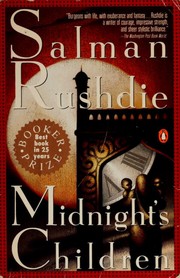 Salman Rushdie · 1981Midnight's ChildrenLvl 8Medium pace
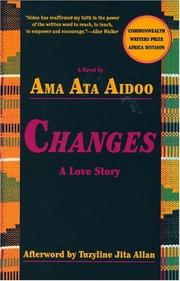 Ama Ata Aidoo · 1991ChangesLvl 3Medium pace