
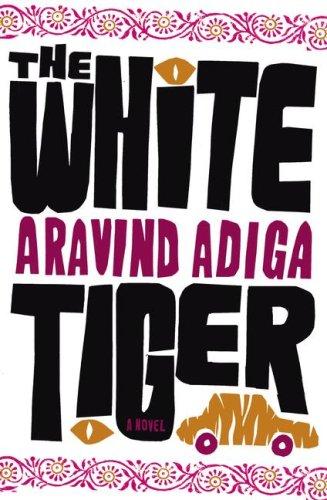
The White Tiger
Aravind Adiga · b. 1974 · India
Why it matters
A village driver claws his way out of servitude toward entrepreneurial success in Bangalore by whatever means the journey demands, confessing it all in letters to a visiting Chinese premier. A pitiless comic inversion of India's celebrated growth story, and Booker winner.
At a glance
A brisk, darkly comic epistolary confession keeps the plot propulsive and clear.
Deep dive
What the rooster coop metaphor really indicts, and why Balram's letters to a Chinese premier implicate the reader as much as India.
Written for readers who have finished the book. No plot recap, and nothing here is safe to read first.
Themes & symbolism
Adiga's governing image is the rooster coop: chickens stacked in wire cages at the market, watching each other get slaughtered one by one, never revolting because each bird has internalized that revolt is unthinkable. Balram's genius, and the novel's darkest joke, is diagnosing servitude as self-enforced rather than externally imposed — the poor police each other's loyalty on behalf of the rich, and the rare man who escapes the coop does it not through solidarity but through betrayal, because Adiga refuses to pretend collective uplift is available as an option. The novel's India comes divided into "Darkness" and "Light," villages and cities, but that split maps less onto geography than onto who gets to stop being an animal — masters are literalized as totems (the Stork, the Buffalo, the Mongoose) while Balram names himself after the one predator rare enough to break the taxonomy, a white tiger that appears "once in a generation."
Balram's murder of Ashok isn't staged as revolutionary awakening so much as a business transaction dressed as one: Ashok has spent the novel becoming a more sympathetic, more corrupted man in equal measure, funneling bribes to politicians while treating Balram with an intimacy that never once considers freeing him, and it's that intimacy — casual, unthinking, unequal — that the murder finally answers. Adiga's satire targets India's self-congratulatory growth-story directly, showing outsourcing and entrepreneurship as the coop's new wire rather than its removal.
Letters to a Premier, Complicity for a Reader
The frame — seven confessional letters to Premier Wen Jiabao ahead of a state visit — is a joke with teeth: Balram addresses a leader of another authoritarian growth miracle as though only China could appreciate what he's accomplished, while the actual audience is the anglophone, Booker-reading West that consumes India's development narrative as inspiration. By narrating his own crime as unremorseful entrepreneurial triumph, Balram forces that reader to recognize how comfortably atrocity gets absorbed into a success story, so long as the success story ends in a nice office and a fleet of drivers of his own.
Comedy as Indictment
Adiga writes servitude for laughs as often as for horror — Balram's father dying uncomplained on a hospital floor, the landlords' animal nicknames, the farcical vote-rigging that decides elections before anyone casts a ballot — and that comic register is doing deliberate work. A pitiless satire lands harder than a solemn tragedy would, because it refuses the reader the emotional release of pity; Balram's jokes keep the reader implicated and amused right up to the moment they realize what, exactly, they've been laughing along with.
The last seal: what actually happens, and why it lands the way it does.
The ending, explained
Balram lures Ashok out with a fabricated errand, smashes his skull with a broken whiskey bottle, and takes the bag of bribe money Ashok was carrying to a politician — the theft, not the killing, is what actually funds his escape into entrepreneurship in Bangalore. He narrates the murder without remorse or self-justification beyond the coop metaphor itself, framing it as the only exit ever available to a man in his position. The novel ends with Balram running a taxi company, employing his own drivers, fully aware he has become exactly the kind of master he killed — the coop's structure intact, only the tenant changed.
Where to go next
 Aravind Adiga · 2011Last Man in TowerLvl 4Medium pace
 Aravind Adiga · 2016Selection DayLvl 4Medium pace
 Rohinton Mistry · 1995A Fine BalanceLvl 4Medium pace
 Mohsin Hamid · 2007The Reluctant FundamentalistLvl 5Fast paced
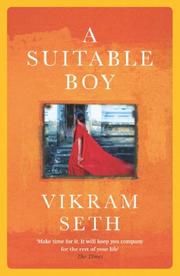 Vikram Seth · 1993A Suitable BoyLvl 3Medium pace
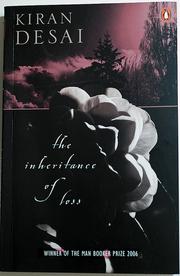 Kiran Desai · 2006The Inheritance of LossLvl 6Slow burn