
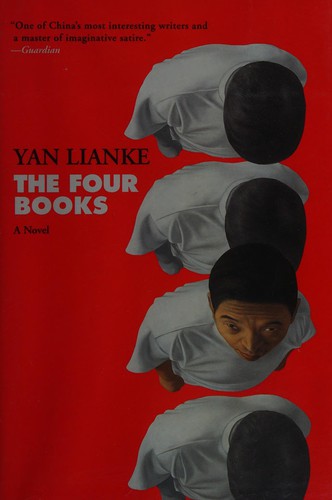
The Four Books
Yan Lianke · b. 1958 · China
Originally Sishu (Chinese) · translated by Carlos Rojas
Why it matters
Intellectuals sent to a re-education camp during the Great Leap Forward compete for freedom by informing on each other. A harrowing, formally inventive account of famine and ideological terror, banned in mainland China.
At a glance
Four interleaved documents in different registers, including scripture-like parody.
Deep dive
Intellectuals sentenced to a remote re-education camp during the Great Leap Forward are told they can win their freedom back by informing on one another, and Yan Lianke structures the whole novel like a set of scriptures written by the people the camp destroyed.
Written for readers who have finished the book. No plot recap, and nothing here is safe to read first.
Themes & symbolism
In the ninety-ninth district, a labor camp holding scholars, a musician, a theologian, and a writer known only by their professions, a boy called simply the Child administers a system of red stars and blood tallies that lets prisoners buy privileges, and eventually freedom, by informing on each other's ideological failures. Yan Lianke builds the camp's cruelty out of bureaucratic mechanism rather than overt violence at first: the real horror is how efficiently the star system turns colleagues, and eventually family, into competing informants, each report a small betrayal dressed up as reform. The novel's title borrows from the Confucian canon's Four Books while structuring itself as four interleaved documents in radically different registers, one reading as scripture, one as a criminal's confession, one as a folk chronicle, one as an unpublished manuscript, so that the form itself performs the same fracturing of a single truth into competing official narratives that the camp inflicts on its prisoners.
When the Great Leap Forward's backyard furnaces and grain quotas collapse into the famine that actually killed tens of millions of people, the ninety-ninth district's petty betrayals give way to open starvation, and Yan Lianke refuses to soften what desperation does to people who have already been trained, systematically, to sell each other out for stars. The Child, whose authority over the prisoners has been total and almost paternal for most of the book, turns out to be as trapped inside the ideology he enforces as anyone he's punished, a true believer rather than a simple tyrant, which makes his role in the novel's ending land as tragedy rather than comeuppance.
Four Texts Instead of One Official History
Yan Lianke's decision to tell the ninety-ninth district's story across four distinct documents, rather than a single narrator, is a direct rebuttal to the very campaign the novel depicts: a state that insisted on one sanctioned account of the Great Leap Forward gets answered here with four irreconcilable ones, scripture, confession, chronicle, and manuscript, none of which fully agrees with the others about what happened or who is to blame. The novel was banned in mainland China on completion, and its formal fragmentation reads as the book's own argument for why: a single official history can be edited and enforced, but four competing, partial ones can't be reconciled into anything a censor could stamp as final.
The last seal: what actually happens, and why it lands the way it does.
The ending, explained
As starvation strips the camp of any remaining order, the prisoners turn to eating their own dead, a horror Yan Lianke narrates with the same flat, scripture-cadenced prose he's used throughout rather than any escalation into melodrama, which makes it land harder. The Child, whose devotion to the system he administers has never wavered, ultimately kills himself, but not before releasing every remaining prisoner from the camp, an act of mercy from the very figure who spent the novel enforcing their suffering. Yan Lianke declines to let that final gesture redeem the ideology that built the ninety-ninth district in the first place; the Child's death frees the survivors, but nothing in the novel suggests the system that produced him has learned anything from what it did to them.
Where to go next
 Yan Lianke · 2005Serve the People!Lvl 4Fast paced
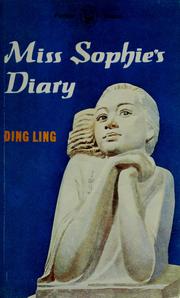 Ding Ling · 1928Miss Sophie's DiaryLvl 4Fast paced
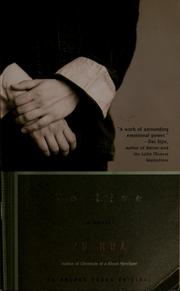 Yu Hua · 1993To LiveLvl 3Fast paced
 Eileen Chang · 1943Love in a Fallen CityLvl 5Medium pace
 Qian Zhongshu · 1947Fortress BesiegedLvl 5Medium pace
 Luo Guanzhong · 1400Romance of the Three KingdomsLvl 8Fast paced