
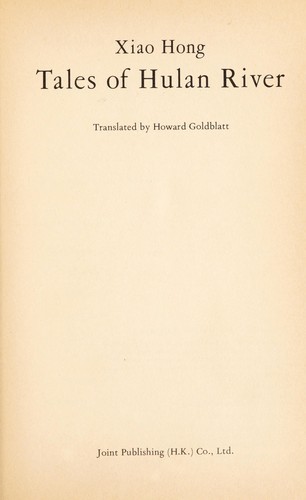
Tales of Hulan River
Xiao Hong · 1911–1942 · China
Originally Hulan He Zhuan (Chinese) · translated by Howard Goldblatt
Why it matters
Loosely strung vignettes recall a Manchurian childhood of frozen markets, cruel superstition, and a lonely grandfather's garden: grief and wonder held in the same breath. Xiao Hong's late masterpiece, finished as illness and war closed in around her.
At a glance
Fragmented, loosely connected vignettes replace linear plot with accumulating mood and memory.
Deep dive
Why Xiao Hong builds an entire remembered childhood out of a small Manchurian town's seasonal rituals and its casual cruelties before letting one household's version of both come fully into view.
Written for readers who have finished the book. No plot recap, and nothing here is safe to read first.
Themes & symbolism
Xiao Hong structures her account of Hulan River not as plot but as a season, then another season, moving through the town's markets, festivals, and superstitions with a child's unhurried attention to detail rather than a novelist's sense of momentum. The mud pit at the town's main intersection, deep enough to swallow carts, pigs, and the occasional careless pedestrian, becomes the book's running joke and its clearest emblem: the town treats a genuine, recurring hazard as entertainment, gathering to watch each new disaster rather than ever draining the pit, and that same pattern, spectacle standing in for intervention, structures everything else Xiao Hong shows us.
That pattern reaches its harshest form in the story of the neighbors' child bride, a lively twelve-year-old married into a family that decides her high spirits are a sickness to be beaten and 'cured' out of her through folk remedies, scalding baths, and public humiliation, all performed with the town's calm, half-interested attention rather than outrage. Xiao Hong narrates it through her child narrator's limited understanding, which does not soften the cruelty so much as expose how thoroughly the adults around her have normalized it: nobody in Hulan River considers what is happening to this girl remarkable enough to stop.
Second Uncle You and the Town's Permanent Fixtures
Alongside the child bride's story, Xiao Hong gives extended, affectionate space to background figures who never quite become protagonists: Second Uncle You, an itinerant laborer given to grand, self-pitying speeches nobody takes seriously, and a tofu peddler whose cart is one of the narrator's few reliable daily pleasures. These sketches have no arc and need none; they are the texture of a childhood remembered in fragments, and Xiao Hong trusts that a town is made as much from its unchanging background characters as from any single dramatic event.
Writing a Childhood She Could Never Return To
Xiao Hong wrote Tales of Hulan River in Hong Kong between 1940 and 1942, in poor health and cut off by war from the Manchurian home of her childhood, and died there in January 1942 at thirty. The novel's warmth toward her grandfather's garden, the one unambiguously safe place in the book, reads differently against that biography: a woman with no way back is reconstructing, in exact and loving detail, a town she will never see again, which gives even its cruelest episodes an undertone of elegy rather than simple reportage.
Where to go next
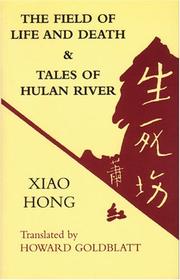 Xiao Hong · 1935The Field of Life and DeathLvl 6Slow burn
 Lu Xun · 1921The Real Story of Ah-Q and Other TalesLvl 5Fast paced
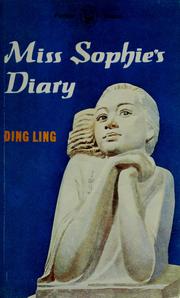 Ding Ling · 1928Miss Sophie's DiaryLvl 4Fast paced
 Lao She · 1937Rickshaw BoyLvl 3Medium pace
 Yu Hua · 1993To LiveLvl 3Fast paced
 Luo Guanzhong · 1400Romance of the Three KingdomsLvl 8Fast paced