
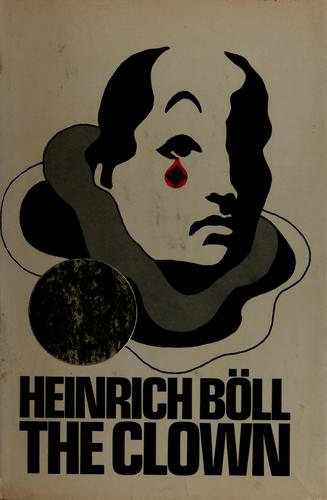
The Clown
Heinrich Böll · 1917–1985 · Germany
Originally Ansichten eines Clowns (German)
Why it matters
A professional clown, abandoned by his lover and estranged from his wealthy Catholic family, narrates his own collapse from a Bonn apartment. Böll's bitter satire of West German postwar hypocrisy and comfortable amnesia.
At a glance
A single long confessional monologue alternating memory and present-tense despair.
Deep dive
A professional clown spends one long, broke, humiliating evening telephoning everyone he knows to ask for money and news of the woman who left him, and Böll uses the calls to indict an entire country's talent for moving on.
Written for readers who have finished the book. No plot recap, and nothing here is safe to read first.
Themes & symbolism
Böll compresses Hans Schnier's entire crisis into a single evening, injured, nearly penniless, and freshly abandoned by Marie, phoning relatives, former friends, and church officials one after another, and the structure lets the novel work by accumulation rather than plot: each call peels back another layer of postwar West German hypocrisy, parents who reinvented their wartime Nazi sympathies as regrettable youthful error, a Catholic establishment that Hans holds directly responsible for engineering Marie's departure into a more socially respectable marriage. Hans's profession, a clown whose job is literally to fall down convincingly for money, becomes Böll's controlling metaphor for a country that has gotten extremely good at performing recovery without ever actually processing what it is recovering from.
Marie's departure to marry Heribert Züpfner, a rising figure in Catholic lay organizations, is never treated by the novel as a simple romantic betrayal; Böll frames it as Marie's capitulation to institutional pressure from a Catholic circle that never accepted her unmarried relationship with Hans as legitimate, which makes Hans's grief inseparable from his rage at the Church as an organization willing to dissolve a genuine love in favor of sacramental correctness. His mockery of the church officials he calls throughout the evening isn't incidental comic relief, it's the same critique the whole novel is making about his parents' generation: institutions in postwar Germany, religious and political both, prize respectable form over honest reckoning.
Hans's mother, who during the war sent her own daughter to anti-aircraft duty with rhetoric about defending German soil from 'Jewish Yankees' and now chairs a committee for Jewish-Christian reconciliation, is the novel's single sharpest embodiment of the broader phenomenon Böll is diagnosing: a national talent for rewriting recent history into a more flattering narrative, deployed by exactly the people least entitled to it, while someone like Hans, whose only real offense is refusing to stop grieving and start performing recovery, gets treated as the deranged one.
Gruppe 47 and the Refusal to Look Away
Böll was a founding figure of Gruppe 47, the loose postwar association of German writers committed to confronting, rather than aestheticizing past, the moral failures of the Nazi years and the compromises of the Adenauer-era reconstruction that followed, often called Vergangenheitsbewältigung, the ongoing work of coming to terms with the past. The Clown, published in 1963, was one of the movement's most commercially successful and controversial results precisely because it targeted the Catholic Church, a still-powerful institution in West Germany, as directly complicit in that culture of convenient forgetting rather than as a bystander to it, drawing sustained criticism from Catholic commentators that only reinforced the novel's central argument about institutional self-protection.
The last seal: what actually happens, and why it lands the way it does.
The ending, explained
By the novel's final pages, Hans has worked through nearly everyone in his address book, his father, his agent, former friends, several priests, without securing either the money or the reconciliation with Marie he has spent the evening chasing, and the calls simply stop yielding anything because there is nothing left for anyone to give him; Marie, unreachable and now genuinely married elsewhere, has effectively passed out of his life for good. Böll ends the novel not with catharsis but with Hans painting his face and sitting down on the steps of Bonn's train station to busk for coins, a professional clown reduced to literal begging, singing for spare change from commuters who have no idea what they're looking at. The final image refuses any redemptive close: Hans hasn't been rescued or reconciled to his loss, he has simply returned, exhausted, to the one thing he still knows how to do, performing a comic fall for a public too busy moving on to notice it's real.
Where to go next
 Heinrich Böll · 1955The Bread of Those Early YearsLvl 3Medium pace
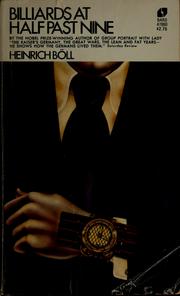 Heinrich Böll · 1959Billiards at Half-Past NineLvl 7Slow burn
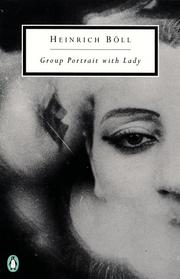 Heinrich Böll · 1971Group Portrait with LadyLvl 6Slow burn
 Heinrich Böll · 1974The Lost Honour of Katharina BlumLvl 4Fast paced
 Günter Grass · 1959The Tin DrumLvl 8Medium pace
 Bernhard Schlink · 1995The ReaderLvl 3Medium pace