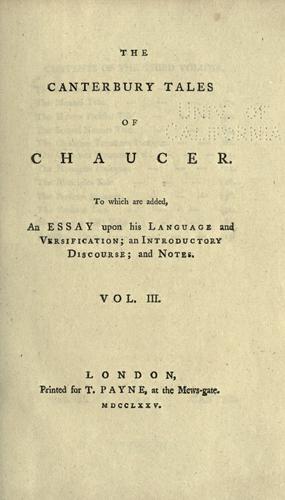
The Canterbury Tales
Geoffrey Chaucer · 1343–1400 · England
Originally The Canterbury Tales (Middle English)
Why it matters
A knight, a miller, a wife, a pardoner, and two dozen other pilgrims swap stories on the road to Canterbury, each tale exposing its teller. Medieval society's whole spectrum given individual voices: English literature's founding act of characterization.
At a glance
Middle English takes real adjustment even glossed; modernized versions trade music for ease.
Deep dive
Why the pilgrim who tells the dirtiest tale and the one who sells fake relics both get away with it, and what that says about Chaucer's real target.
Written for readers who have finished the book. No plot recap, and nothing here is safe to read first.
Themes & symbolism
The General Prologue sets up thirty pilgrims by estate, a Knight, a Prioress, a Miller, a Pardoner, and the tales that follow keep testing whether the tale-teller matches the type. Some do: the Knight's tale of courtly rivalry suits a professional soldier's investment in order and honor. Others detonate the type on contact, most famously the Wife of Bath, whose prologue about five husbands and the sovereignty women want in marriage runs four times longer than her actual tale and reads less like scene-setting than like Chaucer letting a character argue her way out of the box his own genre put her in.
Chaucer builds the collection as estates satire with real teeth, particularly aimed at church corruption: the Pardoner openly boasts, in his own prologue, that he sells fake relics and preaches against greed purely to profit from it, then tells a tale about three men destroyed by greed with total sincerity, daring the other pilgrims to buy indulgences from him immediately afterward. The Friar and the Summoner trade tales that are really insults aimed at each other's professions, each accusing the other's line of work of exactly the fraud Chaucer's own audience would have recognized from experience.
A Tale-Telling Contest Chaucer Never Finished
The Host, Harry Bailly, proposes the frame at the Tabard Inn: each of thirty pilgrims to tell two tales going to Canterbury and two coming back, with the best storyteller winning a free dinner. Chaucer completed twenty-four tales before his death around 1400 and never assigned an ending to the pilgrimage itself; the surviving manuscripts do not even agree on what order the finished tales go in, since Chaucer left no authoritative sequence, only fragments editors have been arguing over how to arrange for six centuries.
The Wife of Bath Argues With Her Own Genre
No pilgrim gets more space to make a case for herself than Alisoun of Bath, whose prologue defends serial marriage, female authority in the household, and her own sexual appetite against a tradition of antifeminist clerical writing she quotes at length specifically in order to refute it, including her fifth husband's book of wife-taming stories that she eventually tears pages out of during a fight. The tale she finally tells, about a knight forced to learn what women really want, functions almost as a coda to an argument she has already won in the prologue.