Medieval Storytelling
Dante, Boccaccio, and Chaucer stage a vernacular revolution: literature in the language people actually spoke.
For centuries, serious European writing meant Latin. Beowulf, composed in Old English by an anonymous poet, shows vernacular narrative already alive at the culture's edges, mixing pagan heroism with a Christian frame. But the real break came three centuries later, when Dante chose to write the Commedia not in Latin but in Florentine Italian: a deliberate wager that the vernacular could carry theology, politics, and cosmic vision at once, structured with mathematical precision through Hell, Purgatory, and Paradise.
Boccaccio and Chaucer answered with the frame tale turned toward this world rather than the next: ten Florentines fleeing the plague trade a hundred stories in the Decameron, and Chaucer's pilgrims riding to Canterbury argue, joke, and confess across every register from bawdy to devout: English literature's first great crowd. Malory closed the era gathering centuries of Arthurian legend into one prose compendium just as print arrived to fix it permanently. Together these writers prove the vernacular revolution's point: ordinary language could hold everything Latin once claimed alone.
How to spot it on the page
- Vernacular language chosen deliberately over Latin, as a claim about what that language can hold
- A frame narrative (pilgrims, refugees, a journey through the afterlife) organizing a hundred smaller stories
- Estates and social types paraded in sequence, each given a distinct voice
- Plague, war, or crisis as the occasion that sets storytellers talking in the first place
- Christian cosmology structuring the narrative's architecture, even in secular tales
- Oral storytelling conventions carried into written, increasingly literary form
What it left behind
The manuscript culture that carried these works gave way to print within decades of Malory's death, but the vernacular revolution itself was irreversible: no major European literature after Dante would seriously argue for Latin's monopoly again. Chaucer's pilgrim crowd and Boccaccio's frame tale run straight into the novel's own found-document conventions, and Dante's three-part cosmic architecture remains the medieval imagination's most durable export.
Defining works
For a guided order with notes, follow the reading path →
The Beowulf Poet · 1000
A hero crosses the sea to kill a monster, then its mother, and returns home to a long, celebrated reign that is tested one last time, decades later, when a dragon's disturbed hoard demands a final reckoning. The lone surviving Old English epic, elegiac about its own vanished pagan world, and English literature's deepest root.
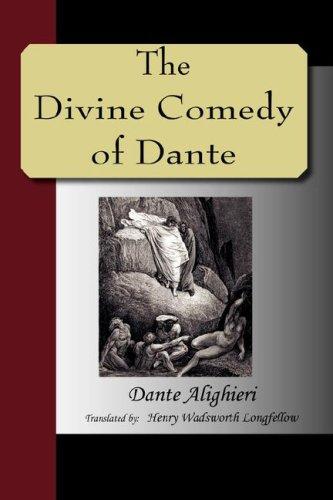
Dante Alighieri · 1320
Lost in a dark wood at thirty-five, Dante is led down through Hell's nine circles, up Purgatory's mountain, and into Paradise. The medieval cosmos built into a single poem, and a personal reckoning with love, exile, and every enemy he ever had.
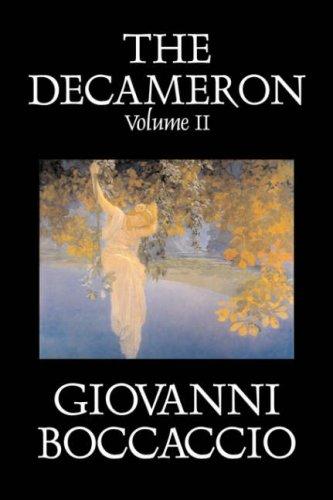
Giovanni Boccaccio · 1353
Ten young Florentines flee the Black Death to a country villa and tell a hundred stories against it: of lust, trickery, luck, and cunning. Storytelling as survival, and the direct ancestor of Chaucer, the novella, and the modern short story.
Geoffrey Chaucer · 1400
A knight, a miller, a wife, a pardoner, and two dozen other pilgrims swap stories on the road to Canterbury, each tale exposing its teller. Medieval society's whole spectrum given individual voices: English literature's founding act of characterization.
Thomas Malory · 1485
Arthur's rise, the Round Table's glory, Lancelot and Guinevere's ruinous love, and the fellowship's self-destruction, compiled into one sweep by a knight writing in prison. The source text for virtually every Arthurian retelling since.