

Geoffrey Chaucer
England
Colloquial, character-driven verse: each pilgrim's tale shifts register to match the teller, turning storytelling itself into a form of portraiture.
Chaucer worked much of his life as a civil servant: customs controller for the Port of London, clerk of the King's Works, a diplomat sent repeatedly to France and Italy, where he likely encountered Boccaccio's and Dante's work directly. Poetry was written around a demanding day job, not instead of one.
The Canterbury Tales, begun in the 1380s and left unfinished at his death, frames its stories as a contest among pilgrims riding from London to Canterbury's shrine, each tale voiced in a manner suited to its teller: a structural trick borrowed from Boccaccio but pushed toward individual character in a way nothing in English had attempted.
He wrote in Middle English at a moment when French and Latin still carried more literary prestige, and the gamble worked: he's remembered as the father of English poetry, buried in what became Westminster Abbey's Poets' Corner.
Lines of influence
Their books in the atlas
- 1400
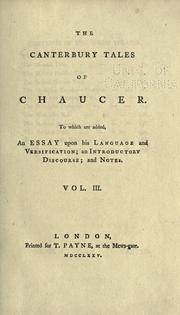 The Canterbury TalesLvl 7short story collection
Meanwhile, elsewhere


If you like Chaucer, try
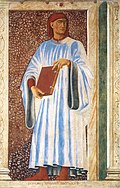 1313–1375Giovanni BoccaccioItalyshaped Chaucer · shared movement: Medieval Storytelling · both shaped by Alighieri
 1265–1321Dante AlighieriItalyshaped Chaucer · shared movement: Medieval Storytelling · both shaped by Ovid
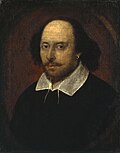 1564–1616William ShakespeareEnglandshaped by Chaucer · both shaped by Ovid · neighboring movements
 43 BCE–17 CEOvidItalyshaped Chaucer · both shaped Shakespeare · neighboring movements
 1552–1599Edmund SpenserEnglandshaped by Chaucer · neighboring movements
 1608–1674John MiltonEnglandboth shaped by Ovid · influence, once removed · neighboring movements