
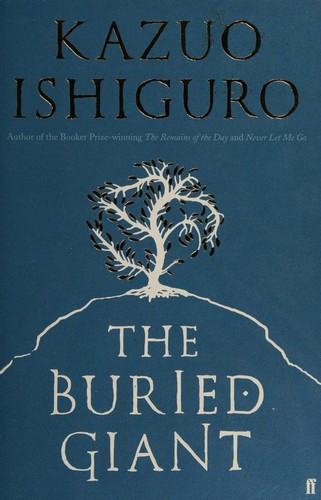
The Buried Giant
Kazuo Ishiguro · b. 1954 · England / Japan
Why it matters
An elderly couple sets out across a post-Arthurian Britain blanketed in a mist that erases memory, ogres and a dragon included. Ishiguro's amnesia device scaled up to a whole nation: what a people must forget to stop killing each other.
At a glance
Deliberately archaic, folkloric prose and an allegorical fantasy frame ask for patience.
Deep dive
What an elderly couple's search for a son they can barely picture has to do with the reason nobody in post-Arthurian Britain can properly remember anything at all.
Written for readers who have finished the book. No plot recap, and nothing here is safe to read first.
Themes & symbolism
Axl and Beatrice set out from their village to find a son neither can clearly recall, in a Britain kept under a collective fog called the mist, later revealed to be the breath of the dragon Querig, deliberately preserved by orders traced back to Arthur himself. The forgetting is not accidental: it was engineered, after Arthur's forces slaughtered Saxon villages including women and children, specifically to erase both sides' memory of the massacre so that a fragile peace between Britons and Saxons could hold without either side demanding vengeance. Ishiguro sets the story only a generation or two after Arthur's death, close enough that a few characters, Gawain chief among them, still carry fragments the mist has not fully scoured away, unstable proof that the forgetting was never quite as total as the peace required.
The mist works on marriages as much as on nations, and Ishiguro lets Axl and Beatrice's devotion to each other be quietly tested by the possibility that restored memory might surface some old betrayal or cruelty between them, not just the larger national one. Their tenderness toward each other throughout the journey is real, but the novel keeps asking whether that tenderness depends, at least partly, on neither of them being able to fully remember what they have actually done to one another over a long marriage.
Gawain, Guarding the Wrong Kind of Peace
Sir Gawain, Arthur's nephew, has spent decades alone protecting Querig from anyone who might kill her and let memory return, framing the assignment to himself as chivalric duty rather than what it actually is, complicity in covering up a massacre. His duel with the Saxon warrior Wistan, who has come specifically to end the dragon's protection and let memory, and Saxon reprisal, return, plays out as an old man's genuine, misplaced faith in an order that was rotten at its foundation from the start, loyalty outliving any reason left to justify it. His aging horse, Horace, and his dented, ill-fitting armor give the duel a mock-chivalric pathos that undercuts Gawain even as it dignifies him, a worn-out ideal creaking through one last performance of itself.
The last seal: what actually happens, and why it lands the way it does.
The ending, explained
Wistan kills Gawain in their duel and then slays Querig, and as her breath stops feeding the mist, memory begins returning across Britain, with the clear implication that Saxon knowledge of Arthur's massacre will reignite the ethnic violence the forgetting had only postponed rather than resolved. Axl and Beatrice, memories intact at last, reach a boatman who ferries couples to a distant island, but only those whose love proves genuinely, mutually true may cross together. The novel ends before confirming whether the boatman finds their bond sufficient, an ambiguity that echoes the Arthurian ferry to Avalon closely enough to read as a quiet allegory for one of them being left behind, uncertain whether he will be allowed to follow.
Where to go next
 Kazuo Ishiguro · 1982A Pale View of HillsLvl 4Slow burn
 Kazuo Ishiguro · 1986An Artist of the Floating WorldLvl 4Slow burn
 Kazuo Ishiguro · 1989The Remains of the DayLvl 5Slow burn
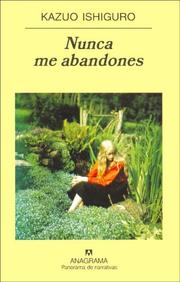 Kazuo Ishiguro · 2005Never Let Me GoLvl 4Medium pace
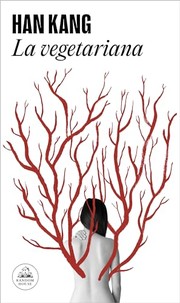 Han Kang · 2007The VegetarianLvl 6Fast paced
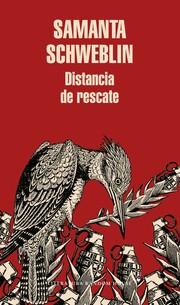 Samanta Schweblin · 2014Fever DreamLvl 6Fast paced