
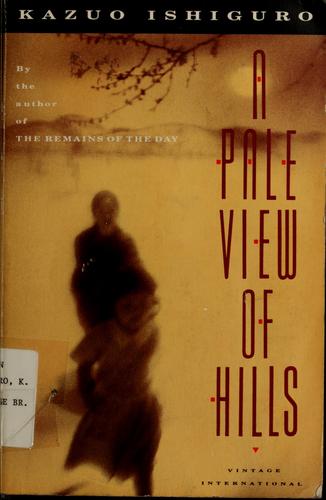
A Pale View of Hills
Kazuo Ishiguro · b. 1954 · England / Japan
Why it matters
Ishiguro's debut: a Japanese widow in England recalls a friendship in postwar Nagasaki that turns out to hide far more than it reveals, one daughter's fate hanging unspoken beneath every calm sentence. The unreliable narrator arrives already fully formed.
At a glance
Spare, elliptical prose leaves the story's darkest connections unstated.
Deep dive
Why a quiet story about a friendship in postwar Nagasaki keeps sliding, almost imperceptibly, into the narrator's own account of herself, and what she may be using it to avoid saying outright.
Written for readers who have finished the book. No plot recap, and nothing here is safe to read first.
Themes & symbolism
Etsuko narrates from England, visited by her English daughter Niki, in the aftermath of her elder daughter Keiko's death by her own hand, and lets her memory drift back to Nagasaki in the early 1950s, a city rebuilding around the absence it never names directly. Mrs. Fujiwara, who lost her entire family in the bombing and now runs a noodle shop with brisk, determined cheer, is the closest the novel comes to depicting the atomic destruction outright, the catastrophe present only as a condition everyone works quietly around rather than an event anyone describes.
Etsuko's central memory is of Sachiko, a proud, struggling single mother planning to leave Japan with an unreliable American soldier named Frank, and Sachiko's daughter Mariko, terrified of a woman she claims lives across the river and once drowned her own child, an image echoing the real postwar reports of mothers drowning children rather than facing the future. Ishiguro builds the case, through small unremarked slippages in Etsuko's telling, that Sachiko is less a separate woman remembered than a vessel Etsuko has built to approach, at a bearable distance, her own decision to uproot Keiko for a foreign country that never made her happy.
The Sentence Where Etsuko Becomes Sachiko
Walking Mariko along the riverbank near the novel's end, Etsuko suddenly narrates in the first person a promise, that if the girl doesn't like it over there they'll come straight back, that belongs by context to Sachiko reassuring Mariko about England, not to Etsuko reassuring anyone. Ishiguro leaves the pronoun slip unremarked and uncorrected. It's the clearest crack in an otherwise seamless surface, letting the reader glimpse that the whole Sachiko story may be the only vessel Etsuko can use to approach what she did to her own daughter.
Ogata-San's Quiet Argument With the New Japan
Etsuko's father-in-law Ogata-San visits partway through the novel still wounded by a magazine article in which his own former student, Shigeo Matsuda, publicly repudiates the nationalist teaching methods Ogata once practiced, and his bewildered insistence that Shigeo owes him an apology runs on a track parallel to Etsuko's own unstated revisions of what happened around Sachiko and Mariko. Ishiguro gives the novel a second, generational case study in the same evasion, an elder generation unable to hear its own past named plainly, so that Ogata's small, almost comic grievance quietly rhymes with Etsuko's far larger, unspoken one.
The last seal: what actually happens, and why it lands the way it does.
The ending, explained
Sachiko decides definitively to leave Japan with Frank despite Mariko's terror, and in one of the book's coldest scenes drowns the girl's kittens with brisk, pragmatic indifference that Mariko cannot separate from her deeper fear of the woman said to have drowned a child by the river. Etsuko's memory breaks off before confirming whether Sachiko and Mariko actually left, because their fate was never really the subject, only a way of narrating a fate closer to home. Back in the present, Etsuko admits to Niki, obliquely, that she always sensed moving Keiko to England would not make her happy, an admission that reframes the entire Nagasaki story as a rehearsal, decades early, for the decision that eventually isolated and undid her older daughter. Ishiguro never narrates Keiko's death directly, leaving the reader to supply, from the pale account just given, the guilt Etsuko cannot state outright.
Where to go next
 Kazuo Ishiguro · 1986An Artist of the Floating WorldLvl 4Slow burn
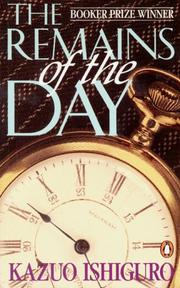 Kazuo Ishiguro · 1989The Remains of the DayLvl 5Slow burn
 Kazuo Ishiguro · 2005Never Let Me GoLvl 4Medium pace
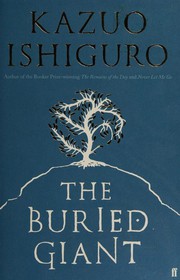 Kazuo Ishiguro · 2015The Buried GiantLvl 5Slow burn
 Han Kang · 2007The VegetarianLvl 6Fast paced
 Samanta Schweblin · 2014Fever DreamLvl 6Fast paced