
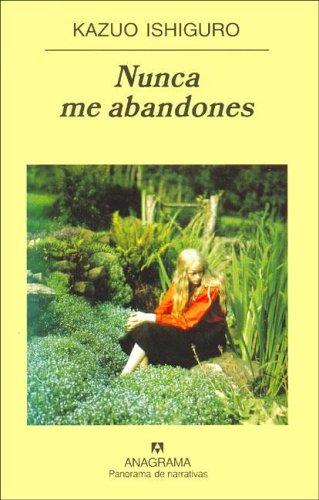
Never Let Me Go
Kazuo Ishiguro · b. 1954 · England / Japan
Why it matters
A pastoral English boarding school, except the students are being raised for their organs: dystopia narrated as nostalgia. Ishiguro's quietest device turned to its most devastating end: how gently people accept the unacceptable.
At a glance
Simple, conversational narration masks a slow-dawning dystopian horror.
Deep dive
Kathy remembers her English boarding school with a warmth that never quite explains why its students are being raised, and Ishiguro lets that gap widen for hundreds of pages before naming what it is.
Written for readers who have finished the book. No plot recap, and nothing here is safe to read first.
Themes & symbolism
Ishiguro tells the entire novel through Kathy H.'s memory of Hailsham, a school he takes real narrative risks to keep sounding ordinary, the petty rivalries, the art competitions, the crushes, right up until the vocabulary starts to slip: 'donations,' 'carers,' 'completing.' The euphemisms are never explained on first appearance; Kathy uses them the way anyone uses the language of their own institution, without translating it for an outsider, which forces readers to do the same slow work of realization the students themselves were never allowed to do openly. That withheld information isn't a mystery-plot device so much as the novel's central argument rendered structurally: this is what a life sounds like when its worst fact has been normalized into vocabulary rather than spoken as fact.
The love triangle between Kathy, Ruth, and Tommy, jealousy over a cassette tape, a stolen boyfriend, decades of unresolved tenderness, gives the novel its emotional engine precisely because Ishiguro refuses to treat the clones' capacity for petty, ordinary feeling as either proof of their humanity or beside the point. They are never shown fighting the system that will kill them; they compete for a possible art-based exemption, chase rumors about 'deferrals' for genuine couples in love, and otherwise behave exactly like teenagers anywhere, which is the harder and more damning choice than giving them a rebellion to stage. The absence of resistance is the horror, not an oversight in the premise.
Miss Lucy's brief, quickly suppressed outburst that the Hailsham students are being told both too much and not enough about their futures names the novel's method directly: Hailsham's supposedly progressive education, art classes meant to prove the students have souls worth documenting, exists to reassure the outside world about the ethics of the donation program rather than to prepare the students for anything resembling a life. Ishiguro uses the school's genteel, humane surface to indict a much colder system operating just beneath it, one the students have been trained since infancy not to question in any way that would actually change their fate.
A Dystopia With No Rebellion in It
Ishiguro sets the novel in an alternate late-twentieth-century England where human cloning for organ donation has quietly become normal, but he deliberately withholds every convention the genre trains readers to expect: no resistance movement, no escape attempt, no climactic confrontation with the authorities. Kathy, Ruth, and Tommy's brief hope for a 'deferral,' a temporary reprieve granted to couples who can prove genuine love, is the closest the book comes to a plot against the system, and even that turns out to be nothing more than institutional rumor. The choice reads as Ishiguro's real subject: how thoroughly a person can be persuaded to accept a fate as simply the shape of their life, and how that acceptance is not so different from the quieter acquiescence the novel implies in its readers, who tolerate all kinds of unexamined systems as long as the language around them stays gentle.
The last seal: what actually happens, and why it lands the way it does.
The ending, explained
Kathy and Tommy track down Madame, hoping the deferral rumor is real and that the art Hailsham once collected proved something about their inner lives worth honoring. Madame and Miss Emily confirm instead that Hailsham was an experiment meant to demonstrate that clones raised with care could produce feeling as rich as any other child's, and that the wider donation program has no interest in extending that argument into mercy; Hailsham has already been shut down. There is no deferral. Tommy has a screaming breakdown in a dark field before accepting what Kathy already suspected, then completes his donations and dies. The novel ends with Kathy alone on a Norfolk road, imagining Tommy's image walking toward her before she turns and drives on to begin her own donations, grief absorbed so completely into procedure that even mourning has learned to be orderly.
Where to go next
 Kazuo Ishiguro · 1982A Pale View of HillsLvl 4Slow burn
 Kazuo Ishiguro · 1986An Artist of the Floating WorldLvl 4Slow burn
 Kazuo Ishiguro · 1989The Remains of the DayLvl 5Slow burn
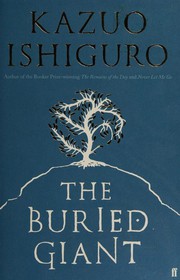 Kazuo Ishiguro · 2015The Buried GiantLvl 5Slow burn
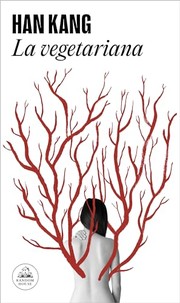 Han Kang · 2007The VegetarianLvl 6Fast paced
 Samanta Schweblin · 2014Fever DreamLvl 6Fast paced