
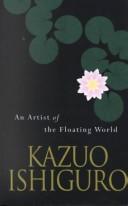
An Artist of the Floating World
Kazuo Ishiguro · b. 1954 · England / Japan
Why it matters
An aging Japanese painter circles, without ever quite admitting it, his own career spent making propaganda art for the empire that led his country to ruin. Ishiguro's second novel already has the mature device: a narrator whose evasions are the real story.
At a glance
Gently unreliable narration and indirect, formal speech require reading between the lines.
Deep dive
How a retired painter's account of his own career keeps almost, but never quite, admitting what he did to a student who trusted him, and why an ordinary marriage negotiation is the pressure that finally moves him.
Written for readers who have finished the book. No plot recap, and nothing here is safe to read first.
Themes & symbolism
Masuji Ono narrates his career as a steady rise from painting the geishas and lantern-lit pleasure districts of the "floating world" under his teacher Mori-san to becoming, in the 1930s, a nationalist propaganda painter serving the imperial cause, and he frames the shift throughout as visionary daring, an artist finally engaging with real consequence, rather than what it plainly was: willing service to a state marching toward catastrophe.
The clearest cost of that service is Kuroda, Ono's own favorite student, whom Ono reports to the wartime Committee of Unpatriotic Activities for painting work insufficiently loyal to the empire, resulting in Kuroda's arrest, interrogation, and the destruction of his paintings. Ono spends much of the novel minimizing the act as a matter of honest artistic disagreement rather than naming it as the denunciation it was, and the gap between those two descriptions is where the novel's real subject lives.
The present-tense plot, arranging a marriage for Ono's younger daughter Noriko through the traditional miai negotiation, turns Japan's ordinary social machinery into the instrument that finally, indirectly, forces Ono to answer for who he was: a previous match collapsed the year before under a shadow no one names outright, and Ono's family gently pushes him to address his wartime record before the new negotiation can proceed.
The Difference Between Ono's Apology and Ono's Story
Near the novel's end Ono visits Kuroda to apologize directly, and the scene is deliberately anticlimactic: Kuroda's response is cool and unmoved, more interested in his own former student's career than in absolving his old teacher, denying Ono the cathartic forgiveness a lesser book would supply. Ishiguro then lets Ono narrate the visit back to the reader in a way that quietly reinflates his own courage in having gone at all, proof that even a genuine, partial admission gets reprocessed by Ono's self-mythology almost as soon as it leaves his mouth.
Ichiro's Popeye, Ono's Empire
Ono's grandson Ichiro spends his scenes staging cowboy shootouts and pledging loyalty to Popeye the sailor rather than to any hero from his grandfather's generation, and Ono indulges the games with an old man's fondness that never quite registers what they mean: an entire postwar cohort defaulting to imported American icons the moment older loyalties, imperial or artistic, stop being worth pledging to. Ishiguro lets the boy's harmless play carry the book's coldest verdict on Ono's life's work, that the culture he once served has simply been replaced by a more entertaining one rather than defeated in any dignified argument he might still hope to have.
The last seal: what actually happens, and why it lands the way it does.
The ending, explained
Noriko's marriage negotiation succeeds, and nothing about the resolution actually depends on Ono's belated, partial reckoning with his wartime record: the younger generation at the celebratory dinner barely remembers or cares about the old painter's politics, more interested in imported American culture and the rebuilt city than in relitigating a war they were too young to fight. Ono walks past his old pleasure district, now filled with young office workers, and allows himself a wistful, faintly self-congratulatory pride in a career spent, as he still privately frames it, working "for a better Japan," even as the narrative around him has spent the whole book demonstrating exactly how partial that self-accounting is. Postwar Japan absorbed men like Ono through forgetting rather than reckoning, and Ono mistakes the world's plain indifference to his past for having earned its forgiveness.
Where to go next
 Kazuo Ishiguro · 1982A Pale View of HillsLvl 4Slow burn
 Kazuo Ishiguro · 1989The Remains of the DayLvl 5Slow burn
 Kazuo Ishiguro · 2005Never Let Me GoLvl 4Medium pace
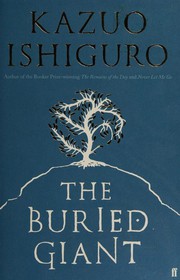 Kazuo Ishiguro · 2015The Buried GiantLvl 5Slow burn
 Han Kang · 2007The VegetarianLvl 6Fast paced
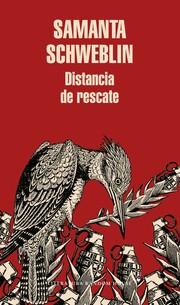 Samanta Schweblin · 2014Fever DreamLvl 6Fast paced