
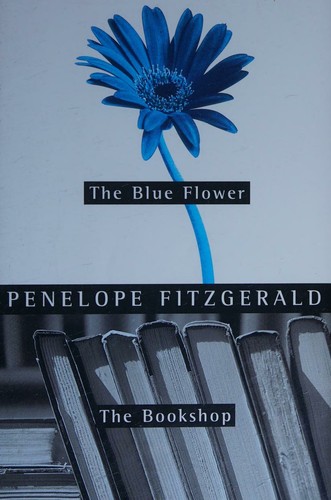
The Blue Flower
Penelope Fitzgerald · 1916–2000 · England
Why it matters
The young German Romantic poet Novalis falls in love with a twelve-year-old girl, rendered with uncanny period precision and total emotional restraint. Widely considered Fitzgerald's masterpiece, written in her late seventies.
At a glance
Elliptical, fragmentary scenes assume familiarity with German Romanticism and its figures.
Deep dive
What Fitzgerald, writing this at nearly eighty, understands about a poet's devotion that makes his choice of a twelve-year-old girl read as inevitability rather than scandal.
Written for readers who have finished the book. No plot recap, and nothing here is safe to read first.
Themes & symbolism
Fitzgerald never explains Fritz von Hardenberg's love for Sophie von Kühn, and that refusal is the novel's whole method: no interiority is supplied that would let a modern reader manage the discomfort by understanding it away. Instead she surrounds the fact with exact period texture, boiled cabbage, bad teeth, a family's chronic debt, until Sophie herself, giggling and ordinary and not remotely a muse, becomes the more surprising creation: a real child the reader has to reconcile with the transcendent devotion a great Romantic poet is about to build around her.
The blue flower of the title, which Fritz dreams before he's even met Sophie, comes from the unfinished novel he's writing inside this novel, an object his own aesthetic movement would later canonize as Romanticism's central symbol of infinite yearning. Fitzgerald's trick is to let the symbol exist inside the book as pure private image, something Fritz dreamed and cannot fully explain even to himself, before history gets to flatten it into a movement's shorthand: later Romantics turned the flower into a near-wallpaper pattern for their whole movement's longing, an irony Fitzgerald's tightly private, unresolved image seems almost to anticipate and resist in advance.
Compression as Historical Method
At 240 pages for a life this documented, Fitzgerald works by omission as much as inclusion, cutting scenes other biographical novelists would consider essential and trusting a single exact detail, a burnt stocking, a doctor's blunt diagnosis, to carry weight a whole chapter would elsewhere. Written in her late seventies after decades of research into a period and language not her own, the novel reads like the late style of someone who has finally stopped needing to prove she did the reading.
A Real Girl the Movement Turned Into a Symbol
Sophie von Kühn existed exactly as the record shows: engaged to Hardenberg at twelve, dead of tuberculosis at fifteen, her actual death is what set off the grief that produced Hymns to the Night and, with it, German Romanticism's enduring mythology of longing for what's unreachable. Fitzgerald's novel works against two centuries of that mythologizing by insisting on Sophie's giggling, ordinary presence while she's still alive on the page, refusing her the retrospective luminosity later poets and biographers granted only once she was safely dead.
The last seal: what actually happens, and why it lands the way it does.
The ending, explained
Sophie dies of the tuberculosis that has been quietly narrowing the book's horizon since her illness first appears, still engaged to Fritz, still barely more than a child, and Fitzgerald declines to follow him into the grief that history records he turned into some of German Romanticism's most searching writing. The novel simply stops, well short of his own early death a few years later, refusing the reader the consolation of watching him transform loss into art. What's left is Sophie exactly as she'd been the whole book: unaware of the symbol she was about to become.
Where to go next
 Penelope Fitzgerald · 1979OffshoreLvl 4Medium pace
 William Trevor · 1983Fools of FortuneLvl 5Medium pace
 Giuseppe Tomasi di Lampedusa · 1958The LeopardLvl 6Slow burn
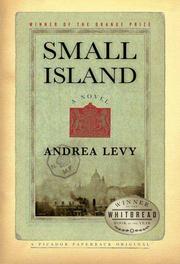 Andrea Levy · 2004Small IslandLvl 4Medium pace
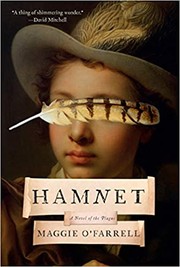 Maggie O'Farrell · 2020HamnetLvl 5Medium pace
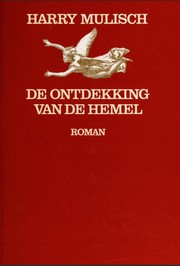 Harry Mulisch · 1992The Discovery of HeavenLvl 6Medium pace