
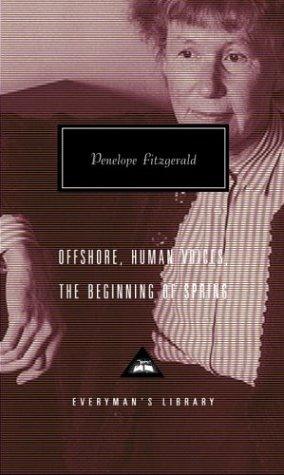
Offshore
Penelope Fitzgerald · 1916–2000 · England
Why it matters
A community of Thames houseboat dwellers drifts, literally and otherwise, between the tides and the shore. Won the Booker Prize for its precise, wry compassion toward lives caught between belonging and escape.
At a glance
Wry, compressed prose that trusts the reader to fill in emotional gaps.
Deep dive
A community of houseboat dwellers lives moored between the Thames tide and the shore, neither fully afloat nor fully landed — the exact condition of everyone's finances, marriages, and nerve. Fitzgerald's Booker winner is precise about what happens when drifting people are finally forced to choose.
Written for readers who have finished the book. No plot recap, and nothing here is safe to read first.
Themes & symbolism
The houseboats are the novel's whole argument made physical: tethered to the shore but still answering to the tide twice a day, neither respectable land-dwellers nor free of land altogether, exactly the state every resident of Battersea Reach occupies emotionally and financially. Nenna, suspended in a marriage her husband Edward won't end and won't commit to either, is the clearest case, but the whole community runs on the same principle of arrested motion — people who've left the shore-bound life without quite arriving at any alternative, moored rather than sailing.
Fitzgerald's prose enacts the same suspension formally: famously compressed, elliptical, willing to let enormous emotional weight rest on a handful of plain words and leave the rest unstated, the sentences refuse to over-explain feeling in exactly the way her characters refuse, or are unable, to resolve their own drifting lives. Maurice — a gentle, endlessly accommodating gay prostitute who lets his boat be used to store a criminal acquaintance's stolen goods simply because he can't say no to anyone — is the community's comic-tragic mirror, his genuine kindness to Nenna running on the same self-defeating passivity that keeps everyone else afloat and going nowhere.
Nenna's daughters, Martha and Tilda, are drawn with more practical competence than most of the adults around them, scavenging the foreshore for saleable junk and reading the tides better than their own mother reads her marriage, a small but pointed reversal that suggests the community's actual survival skills have skipped a generation entirely, landing on children too young to be paralyzed by the same adult indecision.
A Novel Built From Life
Fitzgerald herself lived on a Thames houseboat in the 1960s, including one that actually sank beneath her, and the novel's precision about tides, mooring lines, and the particular indignities of amphibious poverty comes from lived detail rather than research. That specificity is part of why the book's wry compassion never curdles into whimsy — the eccentricity is documentary, not decorative. Fitzgerald was in her sixties and largely unpublished when Offshore won the Booker, a late-arriving career that itself mirrors her characters' suspended, deferred lives, and the prize win was famously greeted with surprise even by judges who'd voted for it, as though the book's quiet compression made its own considerable achievement easy to underestimate.
The last seal: what actually happens, and why it lands the way it does.
The ending, explained
Nenna's long-deferred attempt to reconcile with Edward ends in the same evasive non-resolution that's defined their marriage throughout, and she returns to the boats to find her own vessel, Grace, genuinely taking on water in a storm — the metaphor of suspension finally resolved by catastrophe rather than by anyone's choice. In the chaos, Nenna makes an abrupt, barely articulated decision to board a departing ship with her daughters rather than return to Edward or keep drifting on the Reach. It reads not as triumph but as circumstance finally forcing a choice her own will couldn't produce, entirely in keeping with Fitzgerald's refusal to grant her characters clean emotional clarity even at the moment they actually move.
Where to go next
 Penelope Fitzgerald · 1995The Blue FlowerLvl 6Slow burn
 William Trevor · 1983Fools of FortuneLvl 5Medium pace
 Giuseppe Tomasi di Lampedusa · 1958The LeopardLvl 6Slow burn
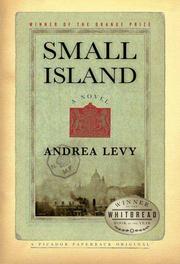 Andrea Levy · 2004Small IslandLvl 4Medium pace
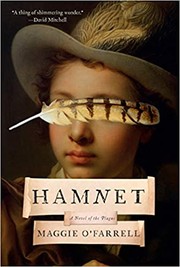 Maggie O'Farrell · 2020HamnetLvl 5Medium pace
 Harry Mulisch · 1992The Discovery of HeavenLvl 6Medium pace