
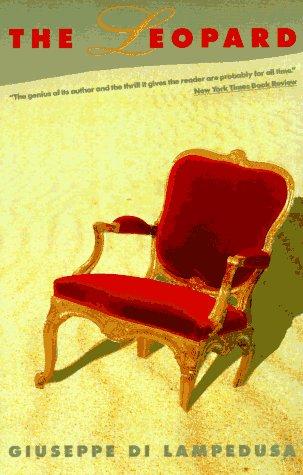
The Leopard
Giuseppe Tomasi di Lampedusa · 1896–1957 · Italy
Originally Il Gattopardo (Italian) · translated by Archibald Colquhoun
Why it matters
A Sicilian prince presides with weary clarity over the death of his own aristocratic world as Italy unifies. Published posthumously, it became the great Italian novel of change and resignation: 'everything must change so that everything can stay the same.'
At a glance
Ornate, elegiac sentences and a leisurely pace built for reflection over incident.
Deep dive
A Sicilian prince watches his own class die gracefully, and coins the line about changing everything so that nothing really does.
Written for readers who have finished the book. No plot recap, and nothing here is safe to read first.
Themes & symbolism
Tancredi's line to his uncle Fabrizio — 'if we want things to stay as they are, things will have to change' — is the novel's whole political argument compressed into one sentence, and Lampedusa means it as diagnosis rather than cynicism: the aristocracy survives Garibaldi's unification not by resisting it but by absorbing it, marrying into rising money (Tancredi's engagement to the wealthy, non-noble Angelica) and letting the forms of power shift while its substance quietly relocates to whoever's smart enough to bend. Fabrizio understands this with total clarity and total passivity, which is the novel's real subject: a man intelligent enough to see his class's extinction coming and too fatalistic, or too honest, to pretend resisting it would matter.
Fabrizio's retreat into astronomy — precise, orderly, indifferent to human political noise — reads as both genuine intellectual passion and a form of aristocratic withdrawal from a Sicily he no longer has the energy or the illusions to try to govern; the stars offer him a system that behaves the way the world used to, predictably, hierarchically, forever. The rigged plebiscite that follows Garibaldi's landing, with its absurdly unanimous returns, gives Lampedusa his bluntest irony: the 'democratic' verdict on Sicily's future is manufactured with the same casual control the old order used to exercise more honestly, so the revolution changes who gets to fake the numbers rather than whether the numbers get faked.
Sicilian fatalism is treated less as a regional stereotype than as an earned philosophical position by the novel's end: Fabrizio's own verdict, delivered to a Piedmontese emissary, that Sicilians don't want to be improved because they think themselves already perfect, reads simultaneously as self-serving aristocratic complacency and as an accurate account of an island that has absorbed and outlasted conqueror after conqueror by simply declining to change underneath whoever's currently in charge.
A Line That Escaped Its Author
'Everything must change so that everything can stay the same' has become one of the most quoted political maxims in modern usage, applied indifferently by both the left and the right to describe co-opted reform — a fate Lampedusa, an obscure aristocrat who wrote the novel late in life and saw it rejected by publishers before his death and posthumous 1958 success, could hardly have anticipated. The line's promiscuous afterlife as a general-purpose cynicism about power somewhat flattens what the novel does with it: in context it's Tancredi's youthful, self-interested rationale for his own opportunism, not an authorial verdict on all political change everywhere.
The last seal: what actually happens, and why it lands the way it does.
The ending, explained
Fabrizio dies years later in a hotel room after collapsing on a train platform, and Lampedusa gives him a death scene of unexpected tenderness: as his life recedes he tallies, with the same precision he once gave the stars, how few hours of his seventy-three years were actually happy, then perceives death arriving not as horror but as a beautiful, familiar woman he's glad to finally travel with. The novel then jumps forward decades to 1910, where his elderly, devout daughter Concetta — who sacrificed her own chance at love out of pride, decades earlier, misreading Tancredi's affections — has the family's long-dead, taxidermied Great Dane Bendicò finally discarded. As the moth-eaten stuffed animal is thrown from a window, Concetta glimpses, for one instant, the shape of a leopard in its falling form before it lands as a heap of dust — the family crest's emblem, the dynasty's loyalty and nobility both, reduced at last to garbage on a Palermo street.
Where to go next
 Natalia Ginzburg · 1963Family LexiconLvl 4Medium pace
 Grazia Deledda · 1913Reeds in the WindLvl 4Medium pace
 Elena Ferrante · 2011My Brilliant FriendLvl 3Fast paced
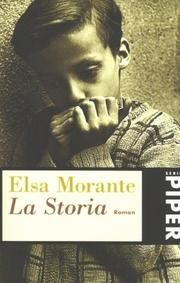 Elsa Morante · 1974History: A NovelLvl 5Medium pace
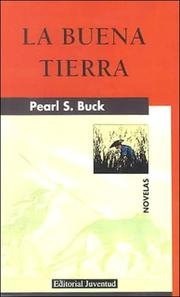 Pearl S. Buck · 1931The Good EarthLvl 3Medium pace
 Edward P. Jones · 2003The Known WorldLvl 6Slow burn