

Penelope Fitzgerald
England
Spare, exact, quietly wry prose that says remarkably little and somehow implies everything, trusting the reader to do the rest.
Fitzgerald came from a notable literary and clerical family (her father edited Punch, her uncles included the theologian Ronald Knox) but spent decades in genuine hardship: teaching, working in a bookshop, and living for a time on a leaking Thames houseboat that eventually sank, taking most of the family's possessions with it. She didn't publish her first novel until sixty, after her husband's death left her needing an income.
Offshore, drawn straight from those houseboat years, won the Booker Prize and surprised a literary establishment that hadn't known her name. She then turned to increasingly compressed historical fiction set in worlds she'd never seen (Russia, Germany, Italy), culminating in The Blue Flower, imagining the young Romantic poet Novalis's love for a twelve-year-old girl, published when she was nearly eighty and acclaimed as her finest work.
Their books in the atlas
- 1979
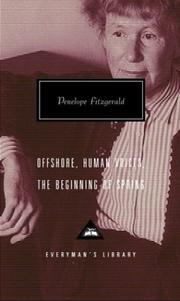 OffshoreLvl 4family saga
 - 1995
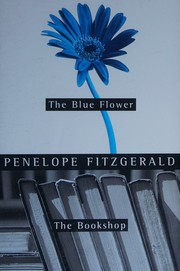 The Blue FlowerLvl 6historical fiction
Meanwhile, elsewhere
 1915–2005Saul BellowCanada / USANorth America · Canada / USA
 1909–2001Eudora WeltyUnited StatesNorth America · United States1908–2000William MaxwellUnited StatesNorth America · United States
 1911–2011Ernesto SabatoArgentinaLatin America · Argentina
 1912–2001Jorge AmadoBrazilLatin America · Brazil
 1910–2003Rachel de QueirozBrazilLatin America · Brazil
If you like Fitzgerald, try
 1896–1957Giuseppe Tomasi di LampedusaItalykindred genres: family saga, historical fiction · same region & era1956–2019Andrea LevyEnglandkindred genres: family saga, historical fiction · same region & erab. 1972Maggie O'FarrellUnited Kingdomkindred genres: family saga, historical fiction · same region & era
 1927–2010Harry MulischNetherlandskindred genres: family saga, historical fiction · same region & era
 1858–1940Selma LagerlöfSwedenkindred genres: family saga, romance · same region & era