
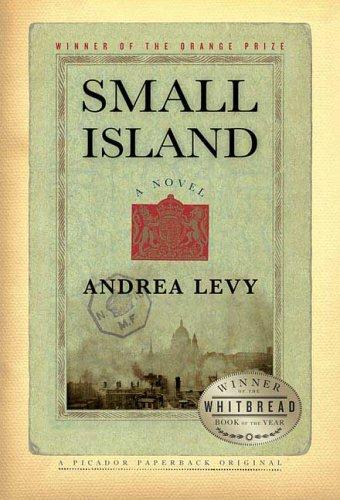
Small Island
Andrea Levy · 1956–2019 · England
Why it matters
A Jamaican couple and an English couple become landlady and lodgers in postwar London, their wartime pasts unspooling in alternating flashback. Levy's prize-sweeping novel gives Windrush-era Britain its defining fiction, from both sides of the doorstep.
At a glance
Clearly signposted multiple narrators and time-shifts keep an emotionally rich story easy to follow.
Deep dive
A Jamaican couple and an English couple end up sharing one London house after the war, and Levy tells the same handful of months four different ways to show exactly how differently each of them experienced arriving at the same doorstep.
Written for readers who have finished the book. No plot recap, and nothing here is safe to read first.
Themes & symbolism
Levy structures the novel across four first-person narrators, Hortense and Gilbert, newly arrived from Jamaica, and Queenie and Bernard, the English couple whose house they rent a room in, moving each voice between the wartime past and the postwar present so that the same historical moment, the Blitz, the RAF, the Windrush arrival, gets refracted through radically unequal vantage points. Gilbert served in the RAF during the war and returns to England expecting to be received as the ally he was; the difference between his memory of wartime camaraderie with Englishmen and his reception on English streets afterward is the novel's central and most bitterly ironic engine.
Hortense's obsession with English gentility, her elocution lessons, her trousseau packed for a life she imagines will recognize her refinement, is played for both comedy and real pathos: she has been raised by a colonial education system to revere a mother country that, on arrival, cannot see past her skin to register any of the manners she has spent a lifetime perfecting. Levy never lets that gap resolve into simple victimhood; Hortense's snobbery toward Gilbert and toward working-class English neighbors is drawn with the same unsparing clarity as the racism she encounters, so that no character in the novel gets to be only innocent.
Queenie's wartime affair with Michael Roberts, a Jamaican RAF airman she meets years before Hortense and Gilbert ever arrive, closes the novel's structural loop: the empire's presence in England is shown to predate the Windrush generation's formal arrival, already threaded through an ordinary Englishwoman's private life long before postwar migration made that presence a national anxiety.
The Doorstep as the Novel's Real Stage
Levy repeatedly stages her most charged scenes at literal thresholds, Gilbert on Queenie's doorstep asking about the room, Hortense arriving to a house far shabbier than she'd imagined, neighbors gathering outside to gossip about the family taking in 'coloureds': the doorway becomes the novel's recurring image for a Britain being asked, house by house, street by street, whether the empire it built gets to come inside. The title's own 'small island' cuts both ways, describing Jamaica and England at once, a deliberate flattening of the colonial hierarchy the characters have been raised to take for granted.
The last seal: what actually happens, and why it lands the way it does.
The ending, explained
Queenie gives birth to a son who is visibly Michael's child rather than her husband Bernard's, conceived while Bernard was missing in the war and believed dead, and the birth forces a reckoning Levy has been building toward across all four narrators. Bernard, home again and rigid with the era's prejudice, cannot accept the child as his, and Queenie, unwilling to subject a mixed-race baby to the life he would face growing up visibly different in her own household, asks Hortense and Gilbert to adopt him. The ending refuses easy uplift: the family that finally forms is not the reconciled marriage a lesser novel would supply, but a redistribution of a child across a color line the whole book has spent its length showing readers exactly how much that line still costs to cross.
Where to go next
 Maggie O'Farrell · 2020HamnetLvl 5Medium pace
 Barry Unsworth · 1992Sacred HungerLvl 6Medium pace
 Tsitsi Dangarembga · 1988Nervous ConditionsLvl 4Medium pace
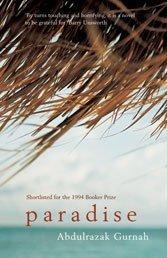 Abdulrazak Gurnah · 1994ParadiseLvl 5Medium pace
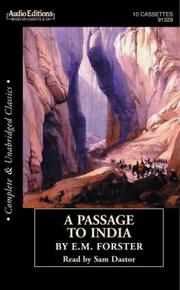 E. M. Forster · 1924A Passage to IndiaLvl 6Medium pace
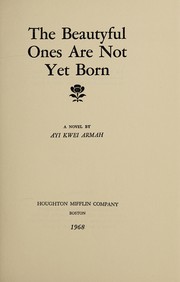 Ayi Kwei Armah · 1968The Beautyful Ones Are Not Yet BornLvl 6Slow burn