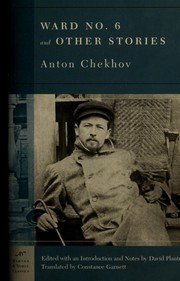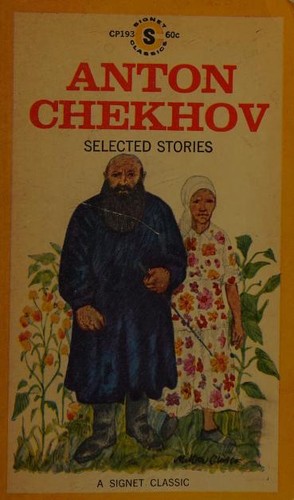
Selected Stories
Anton Chekhov · 1860–1904 · Russia
Originally Selected Stories (Russian)
Why it matters
'The Lady with the Dog,' 'Ward No. 6,' 'The Bishop': stories that end where others begin, trusting life over plot. The modern short story's constitution; nearly every practitioner since names him first.
At a glance
Plain surfaces hide deliberately unresolved endings that ask for careful, patient reading.
Deep dive
A husband who can't shake an affair he expected to be brief, a doctor who ends up on the wrong side of his own asylum's locked door, a landowner who won't stop talking about gooseberries: what none of these stories will do for you is judge them.
Written for readers who have finished the book. No plot recap, and nothing here is safe to read first.
Themes & symbolism
Chekhov's stories work by withholding exactly what a nineteenth-century reader would expect: a verdict. 'The Lady with the Dog' follows Gurov, a serial, contemptuous seducer, into an affair with Anna Sergeyevna that he assumes will end the way all his others have, and instead finds himself unable to stop loving her once he's back in Moscow, meeting her in secret in a provincial hotel room with no plan for how either of them will leave their marriages. Chekhov ends the story mid-problem, the two of them working out 'that the end was still far, far off, and that the most complicated and difficult part was only just beginning,' a closing line that refuses the affair both a tragic ending and a happy one.
'Ward No. 6' pushes the same refusal of comfort further: Dr. Ragin, a provincial physician who has convinced himself that suffering is a matter of philosophy rather than circumstance, spends years theorizing about indifference to pain while doing nothing to improve the squalid asylum he nominally runs, until his own conversations with the patient Gromov get him quietly certified and locked inside the same ward. Chekhov's target isn't cruelty here so much as a comfortable, well-read passivity that turns out to be just as capable of destroying a life as any villain, once it's tested against the reality it always kept at arm's length.
Ragin's Stoicism Meets Its Own Ward
Ragin's downfall is staged as an argument he loses to his own convictions: Gromov, correctly diagnosed as paranoid but sharper than anyone else on the ward, dismantles Ragin's Marcus Aurelius-flavored detachment point by point, and Chekhov, who trained and practiced as a doctor himself, lets the medical setting expose exactly how much privilege it takes to philosophize about pain instead of treating it. The story was read across Russia as a direct indictment of institutional indifference, with Lenin among the readers who later said it had shaped his sense of the country's cruelty.
Gooseberries and the Trilogy of Small Confinements
'Gooseberries' belongs to a loose trilogy with 'The Man in a Case' and 'About Love,' three stories told by friends to each other on a hunting trip, each about a life shrunk to fit inside a single obsession. Nikolai Ivanych spends decades scrimping toward one dream, an estate with his own gooseberry bushes, and achieves it only to become a smug, self-satisfied bore who can't stop offering his guests sour, unripe berries as though they were a triumph. His brother Ivan Ivanych, telling the story, draws the moral outright: happiness this narrow is a kind of anesthesia, and Chekhov, characteristically, lets the observation land without resolving what anyone in the frame story does about it.